Dodge's 2026 Police Charger Stays ICE, Defying Electrification Trend
Dodge announces its 2026 police Charger will retain an internal combustion engine, a strategic decision diverging from its consumer EV pivot to meet law enforcement's unique operational demands.
✨ This content was summarized and interpreted by AI; it may contain errors — please verify accuracy with the original sources. Learn more
Listen to this story
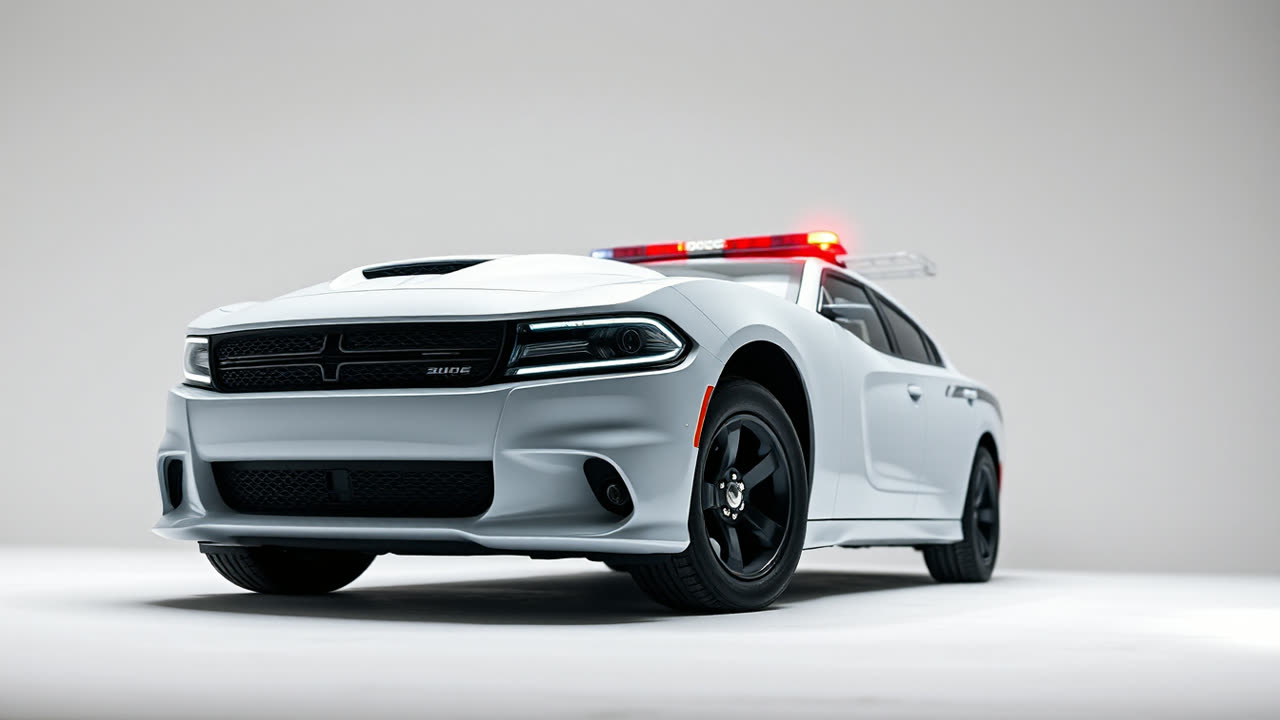
Dodge's latest police Charger, unveiled for the 2026 model year, will defy the brand's pivot to electrification, opting instead for an internal combustion engine (ICE) powertrain, a strategic move aimed at appeasing law enforcement agencies and potentially the Mopar faithful resistant to battery power. This decision marks a significant divergence from the consumer-oriented 2024 Dodge Charger Daytona, which debuted with a 670-horsepower electric powertrain in its Scat Pack variant, and the upcoming 2025 Charger Sixpack, featuring a 550-horsepower twin-turbo Hurricane inline-six engine. The police pursuit vehicle (PPV) eschewing electrification underscores the unique operational demands and infrastructure challenges faced by law enforcement, effectively granting speeders a temporary reprieve from silent electric pursuit.
This choice is not merely a technical specification; it's a profound statement on the current state of EV adoption within specialized, high-demand fleets. For law enforcement, the transition to electric vehicles presents a complex matrix of concerns, including range anxiety during prolonged patrols, the time-consuming nature of recharging, and the significant upfront investment required for charging infrastructure. Unlike consumer vehicles, police cars operate under extreme conditions, often idling for extended periods, engaging in high-speed pursuits, and carrying heavy loads of equipment, all of which can severely impact battery performance and range. By sticking with an ICE, Dodge acknowledges these practical limitations, offering a solution that minimizes operational disruption and leverages existing fuel infrastructure. The decision also tacitly admits that, despite the raw power figures of the electric Charger Daytona, the practicalities of battery technology are not yet universally suitable for the rigorous demands of police work, particularly when rapid deployment and sustained high performance are paramount.
Historically, Dodge has dominated the police pursuit vehicle market with its Charger PPV, a lineage built on robust V8 power and proven reliability. The outgoing Charger PPV, often equipped with a 5.7-liter HEMI V8 producing 370 horsepower, established a benchmark for performance and durability. While specific details on the new police Charger's powertrain remain under wraps, it is widely anticipated to utilize a variant of the Hurricane twin-turbo inline-six, likely detuned from the consumer Sixpack's 550 horsepower to prioritize longevity and consistent performance under duress. This engine choice would represent a significant upgrade in power and efficiency over the outgoing HEMI, while sidestepping the controversies surrounding electrification among a segment of Dodge's enthusiast base. Competitors like the Ford Police Interceptor Utility, primarily offered with a 3.0-liter EcoBoost V6 producing 400 horsepower, and the Chevrolet Tahoe PPV, with its 5.3-liter V8, already offer formidable performance. Dodge's move ensures it remains competitive in raw power and acceleration, critical factors for pursuit vehicles, without forcing agencies into premature EV adoption. The market for police vehicles is highly conservative, valuing proven technology, ease of maintenance, and predictable operational costs above cutting-edge, unproven solutions.
Looking ahead, this decision by Dodge is likely a calculated interim step rather than a permanent rejection of electric police vehicles. As battery technology advances, charging times decrease, and range extends, the economic and environmental benefits of EVs will become increasingly compelling, even for law enforcement. Agencies are already exploring hybrid options, such as the Ford Police Interceptor Utility Hybrid, which offers improved fuel economy without sacrificing performance. Dodge's current strategy allows them to maintain market share with a familiar and reliable platform while giving the EV ecosystem more time to mature to meet the unique demands of police work. The next generation of police vehicles will undoubtedly feature greater electrification, but the immediate future, as demonstrated by Dodge's new Charger PPV, still firmly belongs to robust internal combustion engines, ensuring that the sound of a pursuing engine will continue to be a familiar one for the foreseeable future.