Donkey Kong 64 Gets Unprecedented Native PC Port: ReKONGpiled Delivers Modern Features
The long-awaited, fully native PC port of *Donkey Kong 64*, dubbed *DK64 ReKONGpiled*, has finally arrived, meticulously recompiled in C by a dedicated team of veteran developers to run seamlessly on Windows, Linux, and Mac, offering an unprecedented level of fidelity and modernization.
✨ This content was summarized and interpreted by AI; it may contain errors — please verify accuracy with the original sources. Learn more
Listen to this story
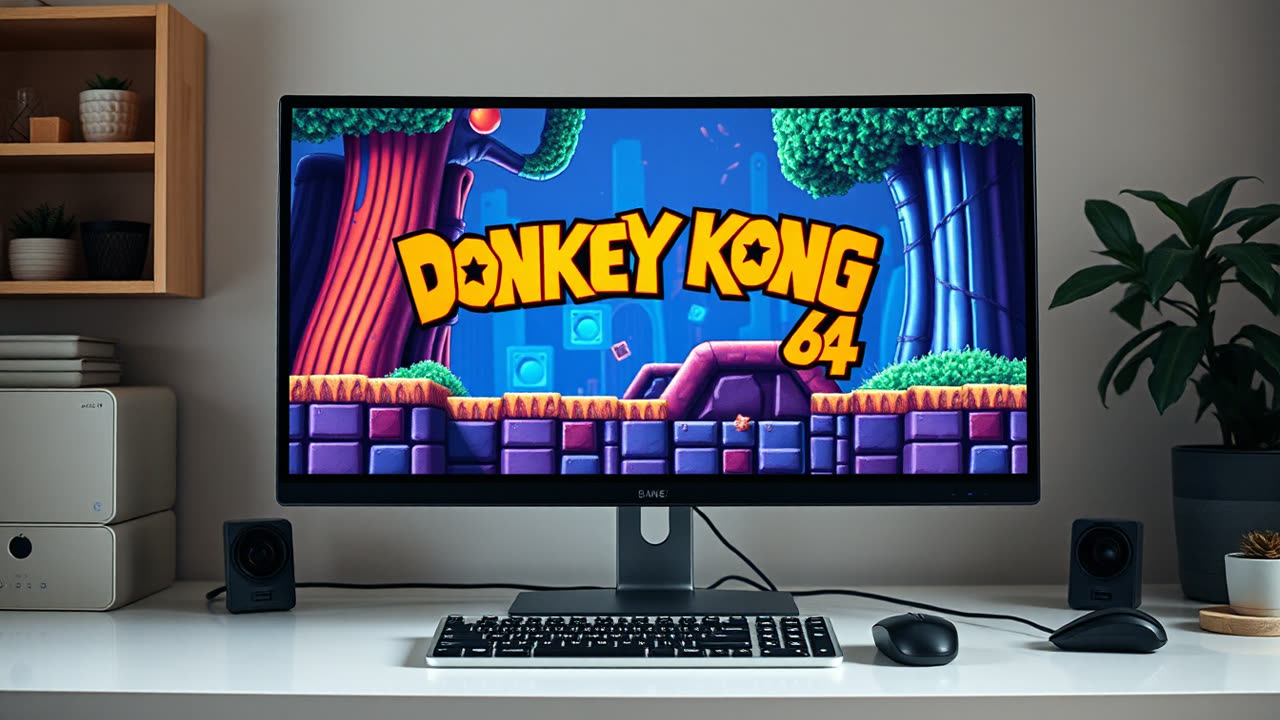
The long-awaited, fully native PC port of *Donkey Kong 64*, dubbed *DK64 ReKONGpiled*, has finally arrived, meticulously recompiled in C by a dedicated team of veteran developers to run seamlessly on Windows, Linux, and Mac, offering an unprecedented level of fidelity and modernization to the iconic N64 platformer. This ambitious undertaking, entirely free and notably developed without the use of generative AI, transcends typical retro revivals by integrating features like ultrawide monitor support, uncapped framerates, and fundamental improvements that were previously unattainable through emulation. The project's core achievement lies in its complete recompilation of the original game's assembly code into human-readable C, a process known as "decompilation," which allows for direct manipulation and enhancement of the game engine itself, rather than simply simulating the original hardware. This technical feat bypasses the inherent limitations and inaccuracies of emulators, which often struggle with perfect timing, graphical glitches, or input lag, providing a truly authentic yet enhanced experience.
The significance of *DK64 ReKONGpiled* extends far beyond mere fan service; it represents a pivotal moment for game preservation and the broader retro gaming community. Unlike official re-releases, which are often limited to specific platforms (such as Nintendo Switch Online's N64 library) and rarely offer significant technical upgrades beyond resolution bumps or save states, this native port fundamentally alters the game's operational parameters. Users can now experience *Donkey Kong 64* at resolutions and aspect ratios never intended by its original developers, with framerates that shatter the N64's 20-30 FPS ceiling, delivering a fluidity previously unimaginable. This level of control empowers players with a definitive version of the game, free from the constraints of legacy hardware or subscription services. For the industry, it highlights the immense value and technical prowess residing within the enthusiast community, often outstripping the efforts of official re-release strategies. It also underscores a growing tension between intellectual property holders and the desire for unfettered access and modernization of classic titles.
Comparing *DK64 ReKONGpiled* to its contemporaries and predecessors reveals its unique position. Emulation, while widely accessible, inherently introduces a layer of abstraction between the game and the hardware, leading to potential inaccuracies. Even the most sophisticated N64 emulators, like Project64 or Mupen64Plus, require careful configuration and still contend with the challenge of perfectly replicating the N64's complex architecture. Nintendo's own official re-releases, such as *Donkey Kong 64* on the Wii U Virtual Console or as part of the Nintendo Switch Online + Expansion Pack, offer convenient access but maintain the game's original technical limitations, often running at the same low framerate and aspect ratio, with input latency sometimes exacerbated by modern display technology. In contrast, *DK64 ReKONGpiled* stands alongside other landmark decompilation projects, such as the *Super Mario 64 PC Port*, which similarly brought true native PC support, moddability, and modern features to another N64 classic. These projects demonstrate a clear evolution beyond simple ROM hacks or texture packs, offering a foundational re-engineering of the game itself. The "zero AI code" claim by the developers is also a subtle but powerful statement in an era increasingly dominated by generative AI, emphasizing the human ingenuity and meticulous effort invested in the project.
Looking ahead, the success of *DK64 ReKONGpiled* is likely to invigorate further efforts in the game decompilation scene, particularly for other complex N64 titles that could benefit from similar modernization. The technical blueprints laid by this project and others like it provide invaluable resources for future endeavors, potentially paving the way for native PC ports of games such as *The Legend of Zelda: Ocarina of Time* or *Majora's Mask* with comparable enhancements. However, the legal landscape remains a precarious one. While decompilation itself often falls into a legal gray area under fair use or reverse engineering provisions, the distribution of copyrighted assets (like the game's ROM or textures, which are still required to run *DK64 ReKONGpiled*) can attract legal scrutiny from rights holders like Nintendo, known for their aggressive protection of intellectual property. The ongoing cat-and-mouse game between passionate preservationists and corporate legal teams will undoubtedly shape the future of such projects. Nevertheless, the technical achievement and the undeniable user demand for these modernized classics suggest that the pursuit of definitive, enhanced versions of gaming history will continue, driven by communities dedicated to pushing the boundaries of what's possible for beloved titles. The *ReKONGpiled* project not only gives *Donkey Kong 64* a new lease on life but also sets a new benchmark for how retro games can be truly preserved and experienced in the 21st century.