DoorDash Expands Beyond Food Delivery with AI Chatbot, Drone Service, and Retail Returns
DoorDash is aggressively transforming local commerce by rolling out text message ordering, expanding drone deliveries with its own FAA-certified service, and introducing retail returns, moving far beyond its traditional food delivery roots.
✨ This content was summarized and interpreted by AI; it may contain errors — please verify accuracy with the original sources. Learn more
Listen to this story
DoorDash is fundamentally transforming the scope of local commerce by rolling out text message ordering, expanding drone deliveries, and introducing retail returns, signaling an aggressive push beyond its foundational food delivery business. These initiatives, unveiled recently at its Dash Forward event, are designed to deepen customer engagement, diversify revenue streams, and solidify DoorDash's position as a comprehensive logistics powerhouse.
The new text message ordering feature, currently in beta for U.S. iOS users, evolves from the capabilities of the Ask DoorDash AI chatbot, which launched in select markets for grocery and food delivery in June 2026. This AI-powered assistant allows customers to describe their cravings, upload photos of dishes or grocery lists, or use voice inputs to build carts and place orders, effectively collapsing the traditional app's navigational funnel into a conversational interface. Early testing of the Ask DoorDash chatbot revealed significant user benefits: nearly half of all restaurant orders placed through the tool were from establishments customers had not previously ordered from, and grocery carts assembled via the chatbot were over 35% higher in value, with users completing them five times faster than through the standard app interface. This conversational commerce approach enhances user experience by offering highly personalized recommendations based on ordering history, dietary preferences, and even external sources like blog posts and social media reviews.
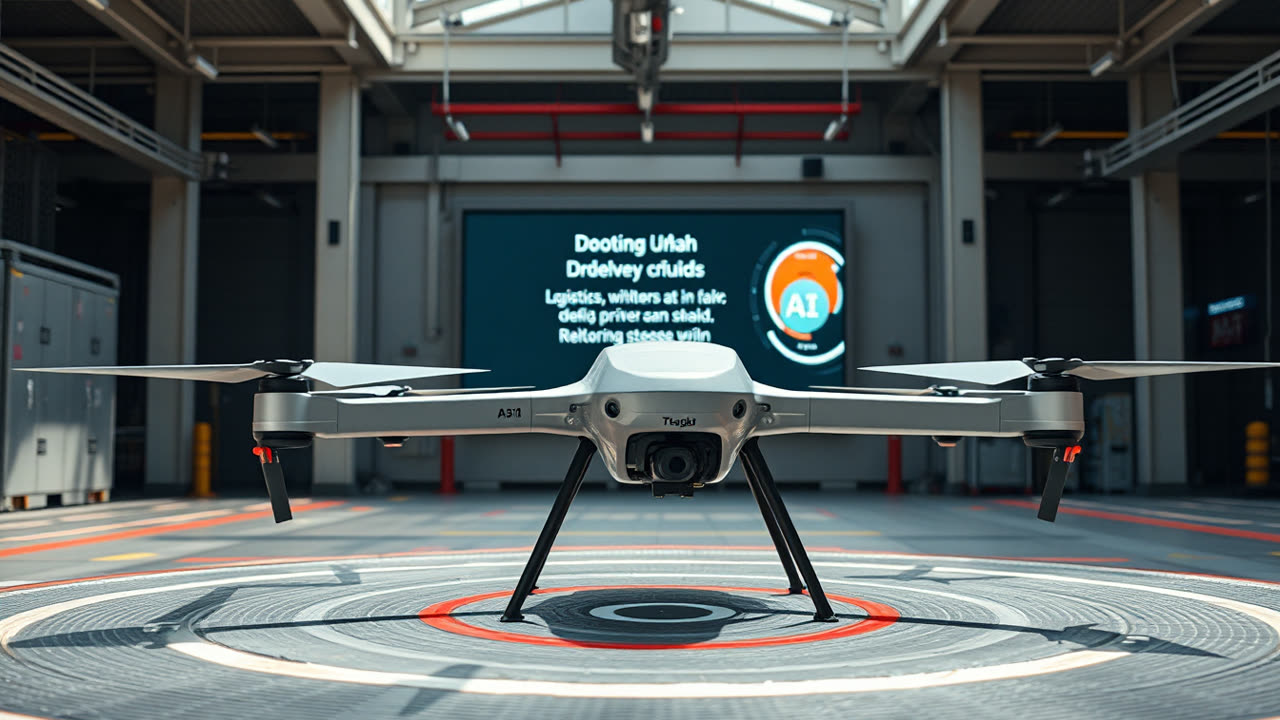
Simultaneously, DoorDash is significantly scaling its drone delivery ambitions. While already partnered with third-party operators like Wing, Flytrex, and Manna in regions such as Dallas-Fort Worth and Charlotte, NC, DoorDash recently obtained a Part 135 air carrier certification from the Federal Aviation Administration (FAA) for its proprietary drone service, DoorDash Air. This in-house service, expected to commence commercial deliveries in Fall 2026, involves DoorDash developing its own aircraft through DoorDash Labs, alongside the necessary routing, safety, and merchant-handoff systems. A recent pilot program with Lowe's in Matthews, North Carolina, demonstrates the immediate utility, enabling customers to order select home improvement items, weighing up to 2.5 pounds, for delivery in as little as 20 minutes via Wing drones. This expansion builds on existing drone operations in areas like Northern California, where DoorDash Air is piloting deliveries with partners such as Chipotle and Popeyes.
Perhaps the most unexpected new offering is "Dasher Returns," a service allowing customers to send eligible retail items back via a DoorDash driver. Launched in select cities at a flat fee of $7.99, a nationwide rollout is anticipated in November, with new marketplace brands like Macy's, Anthropologie, The North Face, Vans, and Timberland already integrated.
These strategic moves collectively redefine DoorDash's role in the delivery ecosystem. For users, the impact is a tangible increase in convenience and accessibility. Text message ordering streamlines the discovery and purchasing process, particularly appealing to those seeking quick, intuitive interactions or greater efficiency. Drone deliveries promise unprecedented speed for smaller, urgent orders, addressing the growing consumer expectation for instant gratification. The retail returns service tackles a common logistical pain point, offering a hassle-free solution for consumers and potentially driving further adoption of online shopping by mitigating return friction.
For the industry, DoorDash's strategy represents a critical diversification beyond its core food delivery market, where it holds a dominant U.S. market share of 56-68% in 2024-2025. This expansion into groceries, retail, and autonomous delivery is essential for sustaining growth in an increasingly competitive landscape, where rivals like Uber Eats and Instacart are also innovating. The deep integration of AI, from the Ask DoorDash chatbot to a new corporate-ordering connector that allows companies to integrate DoorDash into compatible workplace AI tools, positions the company at the forefront of conversational commerce and intelligent logistics. This focus on AI is expected to boost operational efficiency, enhance customer personalization, and optimize delivery routes, which are critical for navigating rising expenses and complex supply chains.
Compared to its prior generation, which was largely defined by a manual, app-based interface for food delivery, these new features represent a significant leap towards an automated, AI-driven, and multi-category logistics platform. While competitors like Uber Eats also offer diverse delivery services, DoorDash's simultaneous investment in both third-party drone partnerships and its own FAA-certified drone fleet is a notable differentiator in autonomous delivery. The retail returns service, in particular, carves out a relatively unique niche, providing a reverse logistics solution that few competitors currently offer at scale. DoorDash’s strong financial performance, with Q2 2026 revenue increasing 36% year-over-year to $4.5 billion and total orders growing 27% to 970 million, provides a solid foundation for these ambitious investments, even as GAAP net income attributable to common stockholders decreased 30% year-over-year to $200 million in the same quarter.
Looking ahead, the trajectory suggests a future where AI becomes an invisible, ubiquitous layer across the entire delivery experience, anticipating needs and streamlining every interaction. Autonomous delivery, both via drones and ground robots like DoorDash Dot, will likely expand, particularly for shorter distances and smaller items, driving down labor costs and improving delivery times. DoorDash's strategic moves indicate an ambition to become a comprehensive "everything-as-a-service" local logistics provider, moving beyond mere delivery to manage a broader spectrum of consumer and business needs, including potentially licensing its AI technology to external partners. However, the widespread adoption of these technologies will inevitably face ongoing regulatory challenges and public perception hurdles, particularly concerning drone operations and data privacy with advanced AI. The emphasis on sustainability, already a driver for drone adoption, will also continue to shape future logistical innovations.