DoorDash Launches AI Agent for Text-Based Food Orders, Challenging Rivals
DoorDash has officially unveiled a new conversational AI agent that allows users to place and customize food orders entirely via text, marking a significant strategic shift in the competitive food delivery market.
✨ This content was summarized and interpreted by AI; it may contain errors — please verify accuracy with the original sources. Learn more
Listen to this story
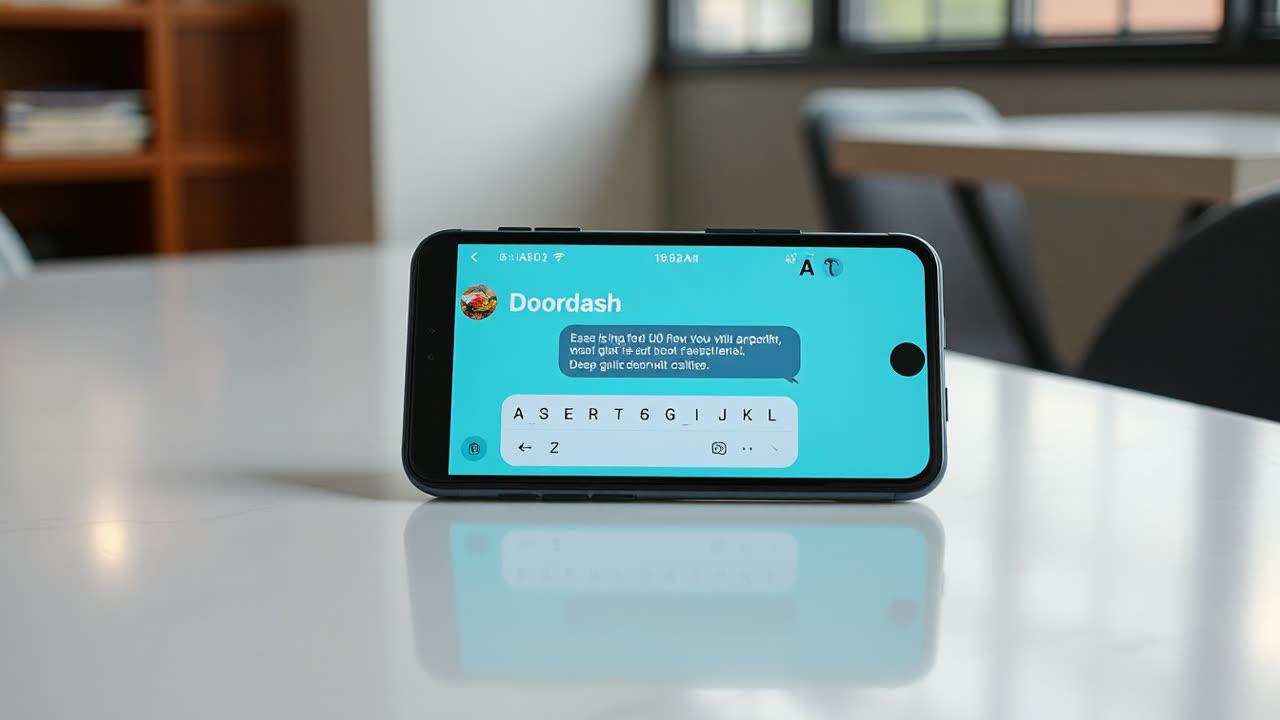
DoorDash has officially launched an AI agent capable of processing food orders via text, a strategic move poised to redefine the competitive landscape against formidable rivals like Uber Eats and Grubhub. This new conversational AI, reportedly integrated directly into the DoorDash platform, allows users to place orders, customize meals, and even manage delivery details through a simple text interface, bypassing the traditional app-based menu navigation. The agent leverages advanced natural language processing (NLP) to understand complex requests and personal preferences, aiming to streamline the ordering process and enhance user convenience.
This initiative marks a significant pivot in DoorDash's user experience strategy, moving beyond graphical user interfaces to a more intuitive, dialogue-driven interaction. The immediate impact for users is a potential reduction in friction and time spent ordering. Imagine texting "Order my usual from [Restaurant Name]" or "I want a large pepperoni pizza, no olives, delivered to 123 Main Street" and having the order processed seamlessly. This could be particularly transformative for users with accessibility needs, those who prefer texting over app interaction, or even in situations where a visual interface is cumbersome, such as driving or multitasking. For DoorDash, the AI agent represents a substantial investment in customer retention and acquisition, promising a differentiated service experience that could woo customers from competitors. Early reports suggest the AI is designed to learn from user interactions, progressively offering more personalized recommendations and anticipating future needs, thereby deepening customer engagement and loyalty.
The strategic implications for the wider food delivery industry are profound. DoorDash's move is a direct challenge to the established operational models of Uber Eats and Grubhub, which, while incorporating some AI elements for recommendations and logistics, have largely maintained a visual, menu-driven ordering process. While specific details on rivals' immediate responses are still emerging, this launch will undoubtedly accelerate the integration of advanced conversational AI across the sector. Competitors will be pressured to develop similar capabilities or risk falling behind in user experience innovation. This shift could also reduce the cognitive load on DoorDash's customer service teams, as the AI agent handles routine inquiries and order modifications, freeing human agents for more complex issues. Furthermore, the data collected from these text-based interactions will provide DoorDash with an unprecedented trove of insights into real-time customer preferences and ordering patterns, fueling further AI development and targeted marketing efforts. The potential for operational efficiencies, from reduced call center volumes to optimized order routing based on AI-derived insights, is immense.
Historically, food delivery platforms have relied on increasingly sophisticated apps, replete with filters, search functions, and curated recommendations, to guide users through vast menus. While effective, these interfaces can still present decision fatigue or require multiple taps to achieve a simple goal. DoorDash's AI agent represents an evolution, not merely an iteration, by abstracting the ordering process into a natural conversation. Prior generations of ordering often involved phone calls or clunky web forms; modern apps brought visual clarity and choice. This AI agent takes the next logical step, aiming for ultimate conversational simplicity. Though rivals like Uber Eats have experimented with voice ordering integrations through smart speakers, a direct text-based AI agent within the core delivery experience offers a distinct, always-on, and less intrusive interaction method.
Looking ahead, the success of DoorDash's AI agent will hinge on several critical factors: accuracy, reliability, and the ability to handle exceptions gracefully. Early user feedback will be crucial in refining the agent's capabilities and ensuring it genuinely simplifies, rather than complicates, the ordering process. We can anticipate an expansion of its functionalities to include proactive suggestions, dynamic pricing alerts, and even seamless integration with loyalty programs. The long-term vision likely involves the AI becoming a comprehensive personal culinary assistant, capable of managing meal planning, dietary restrictions, and even suggesting new restaurants based on evolving tastes. This move is not just about ordering food; it's about DoorDash establishing itself as a leader in applying cutting-edge AI to everyday consumer services. Should this agent prove successful, it will undoubtedly trigger a cascade effect, compelling every major player in the gig economy and e-commerce to invest heavily in similar conversational AI solutions, ultimately ushering in an era where natural language becomes the primary interface for a vast array of digital services. The race to own the most intuitive and intelligent customer interaction is officially on, with DoorDash having fired a significant opening salvo.