Engram Sampler: AI Hallucinations Transform Music Creation
Thoughtful Things' Engram sampler leverages "broken" AI hallucinations to generate unique sonic textures and rhythms, offering a radical departure from conventional music creation.
✨ This content was summarized and interpreted by AI; it may contain errors — please verify accuracy with the original sources. Learn more
Listen to this story
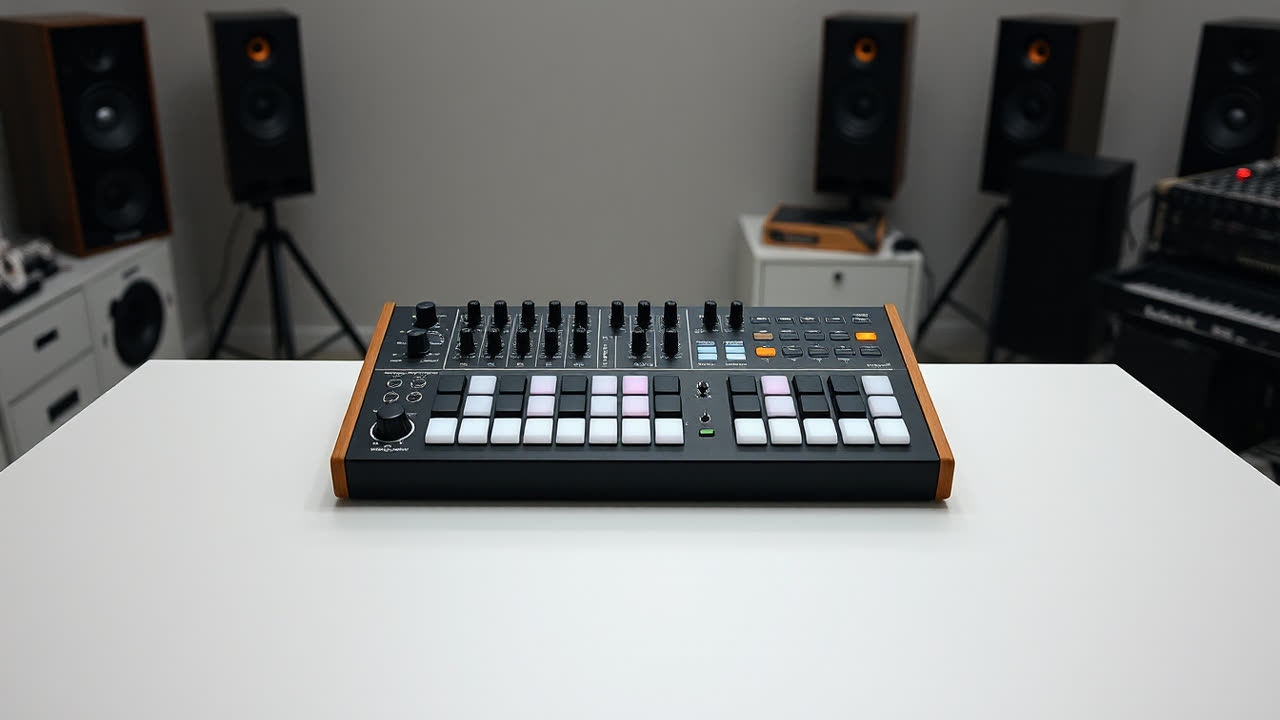
Thoughtful Things' Engram sampler, currently live on Kickstarter, introduces a radical departure from conventional music creation by leveraging "broken" AI hallucinations to generate unique sonic textures and rhythms, aiming for a delivery date in early 2025. This innovative groovebox and sampler, which has already surpassed its initial funding goal of $25,000, offers a distinct alternative to generative AI tools like Suno or Google's MusicFX, by focusing on manipulating and recontextualizing AI-generated audio rather than simply producing full tracks. Engram distinguishes itself with an onboard AI engine that can either "mangle" incoming audio or "hallucinate" entirely new sounds, providing musicians with an unpredictable yet creatively fertile ground for experimentation.
The core innovation lies in Engram's approach to AI. Unlike AI models designed for seamless, coherent song generation, Engram intentionally embraces the glitches and unexpected outputs often associated with AI "hallucinations." This philosophy transforms what might be considered errors into artistic opportunities, enabling users to sculpt chaotic sonic artifacts into structured musical elements. The device features 16 pads, a dedicated AI knob for controlling the intensity of the hallucination effect, and an intuitive interface designed for hands-on performance and sound design. The integration of traditional sampler functionalities with this novel AI processing means users can record their own audio, process it through Engram's AI, and then chop, sequence, and effect the results within the same unit, fostering a highly iterative and experimental workflow. Early bird pricing for Engram started at $399, with subsequent tiers reaching $499, making it a competitive offering in the specialized hardware sampler market, especially considering its unique AI capabilities. The campaign is set to conclude on October 24, 2024, with estimated shipping for backers expected in March 2025.
Engram's significance extends beyond its technical novelty, addressing a growing desire among electronic musicians for tools that offer genuine creative partnership rather than mere automation. While generative AI platforms like Suno excel at producing complete songs from text prompts, they often leave artists feeling detached from the creative process, offering limited control over nuanced sonic details and artistic intent. Engram, conversely, positions AI as a chaotic but controllable co-creator, providing raw, unpredictable material that musicians then shape and refine. This hybrid approach appeals to producers who value serendipity and sonic discovery, bridging the gap between algorithmic generation and tactile, human-centric production. The industry impact could be substantial, potentially inspiring a new wave of hardware instruments that integrate "creative" AI not as a replacement for human input, but as an unpredictable texture generator or a source of novel sonic palettes. This could shift the perception of AI in music from a tool for full song generation to a powerful sound design and performance modifier.
Historically, samplers have evolved from basic tape manipulation to sophisticated digital workstations like Akai's MPC series or Elektron's Digitakt, offering increasingly complex ways to record, slice, and sequence audio. Engram, while building on this lineage, introduces a new dimension by integrating live, on-device AI processing. Traditional samplers provide granular control over pre-recorded sounds; Engram adds a layer of intelligent, yet unpredictable, sound mutation. Compared to the prior generation of AI music tools, which largely focused on mimicking existing styles or generating complete compositions, Engram's focus on "mangling" and "hallucinating" sounds marks a strategic pivot towards using AI for textural exploration and abstract sound design. This positions it not as a competitor to composition-focused AI, but as a complementary instrument for sound designers, experimental musicians, and producers seeking truly unique sonic signatures.
Looking ahead, Engram's success could catalyze further innovation in AI-powered musical instruments, moving beyond the current wave of generative software. Future iterations might explore more sophisticated AI models capable of learning user preferences for "hallucination" styles, or integrating real-time neural synthesis that adapts to live performance inputs. We could see a diversification of AI applications in music hardware, from intelligent effects processors that dynamically respond to musical context, to adaptive sequencers that generate evolving patterns based on user input and AI analysis. The challenge for Thoughtful Things and other innovators will be to balance the unpredictable nature of AI with the need for reliable, controllable musical tools, ensuring that the technology enhances creativity without overwhelming the artist. Engram represents a compelling first step into this frontier, offering a glimpse into a future where AI serves as a powerful, albeit eccentric, creative partner in the studio and on stage.