EVgo to Deploy Tesla V4 Superchargers Under Its Own Brand, Accelerating NACS Dominance
EVgo's strategic move to install Tesla's advanced V4 Supercharger hardware, exclusively branded as EVgo, marks a profound shift in EV charging infrastructure, promising enhanced reliability and solidifying the North American Charging Standard.
✨ This content was summarized and interpreted by AI; it may contain errors — please verify accuracy with the original sources. Learn more
Listen to this story
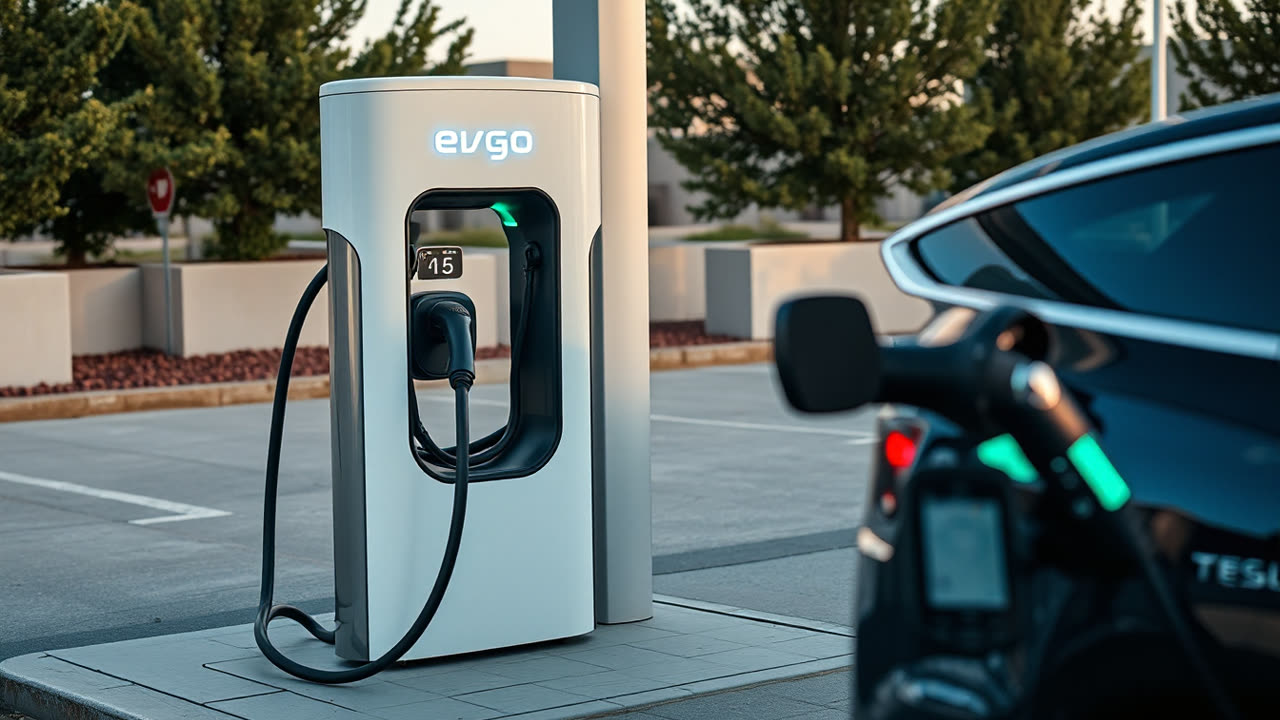
EVgo is set to deploy Tesla's advanced V4 Supercharger hardware across its own network, a significant strategic pivot that will see these high-speed stations branded exclusively under the EVgo banner. This unprecedented collaboration, first reported on August 5, 2026, signifies a deeper integration of the North American Charging Standard (NACS) beyond simple adapter compatibility, marking a critical evolution in the fragmented electric vehicle charging landscape. The move is not merely about adding NACS connectors, but about EVgo directly leveraging Tesla's proven, robust charging technology, renowned for its reliability and user experience, to bolster its own infrastructure.
This development matters profoundly for several reasons, primarily benefiting EV drivers and reshaping competitive dynamics within the charging industry. For users, the immediate impact is a substantial upgrade in charging reliability and speed at EVgo locations. Tesla's V4 Superchargers, which began rolling out in late 2023 and early 2024, are designed for higher power output, potentially exceeding 250 kW and reportedly capable of up to 350 kW in some configurations, along with a longer cable length to accommodate various EV port locations. This directly addresses a persistent pain point for non-Tesla EV owners: the inconsistent performance and frequent malfunctions reported at many third-party charging stations. By adopting Tesla's hardware, EVgo is essentially importing Tesla's engineering prowess and operational stability, promising a more seamless and less frustrating charging experience for a broader range of vehicles. This move could significantly increase EVgo's appeal, especially to the rapidly growing segment of non-Tesla EVs that now come standard with NACS ports or are adapter-equipped.
From an industry perspective, this partnership represents a powerful endorsement of Tesla's hardware superiority and an accelerating consolidation around NACS. While major automakers like GM, Ford, and Stellantis have already committed to integrating NACS ports into their vehicles from 2025 onwards, and networks like Electrify America and ChargePoint have announced NACS adapter support, EVgo's decision to *install* Tesla's physical Supercharger units is a far more impactful endorsement. It signifies a trust in Tesla's engineering and supply chain, potentially setting a precedent for other charging network operators struggling with hardware development and maintenance. This could lead to a two-tiered system where networks either develop their own robust NACS-compatible hardware or license/purchase Tesla's, further entrenching NACS as the dominant standard and potentially marginalizing smaller hardware providers that cannot compete on reliability or scale.
Historically, the EV charging ecosystem has been characterized by proprietary connectors (like Tesla's original design) and competing open standards (CCS1 in North America), leading to a confusing and often inconvenient experience for early adopters. Tesla's Supercharger network has long been lauded as the gold standard, boasting uptime rates consistently above 99% according to various reports, a benchmark that rivals have struggled to meet. EVgo, while a significant player with over 3,000 stalls across more than 900 locations as of early 2026, has faced the same reliability challenges as other public networks. This strategic alliance allows EVgo to leapfrog years of hardware development and testing, directly integrating a proven, high-performance solution. Unlike simply adding NACS cables to existing stations, which many networks are doing, deploying the entire V4 Supercharger unit means EVgo is tapping into the full benefits of Tesla’s robust design, thermal management, and potentially faster charging speeds.
Looking ahead, this collaboration foreshadows a future where the distinction between "Tesla Supercharger" and "third-party charger" becomes increasingly blurred, at least from a hardware perspective. We can expect to see a rapid acceleration in the deployment of NACS-compatible infrastructure, potentially leading to a more unified and dependable charging experience across North America. This could pressure other charging networks to either significantly improve their own hardware reliability or explore similar partnerships with Tesla. Furthermore, it raises questions about the long-term branding and operational implications. Will EVgo eventually integrate Tesla's backend software for monitoring and maintenance, or will it maintain its own proprietary systems? The success of this EVgo-branded Supercharger deployment could also pave the way for Tesla to become a major hardware supplier to the entire industry, extending its influence beyond just connector standards to the very infrastructure itself. This move is not just about a connector; it's about the fundamental architecture of public EV charging, promising a more mature, reliable, and user-centric network in the years to come.