FAA Proposes Lifting 53-Year Supersonic Flight Ban Over U.S. Land for Quiet Jets
New rules would permit supersonic airliners to traverse U.S. airspace over cities if they eliminate disruptive sonic booms, marking a major shift from the 1973 prohibition.
✨ This content was summarized and interpreted by AI; it may contain errors — please verify accuracy with the original sources. Learn more
Listen to this story
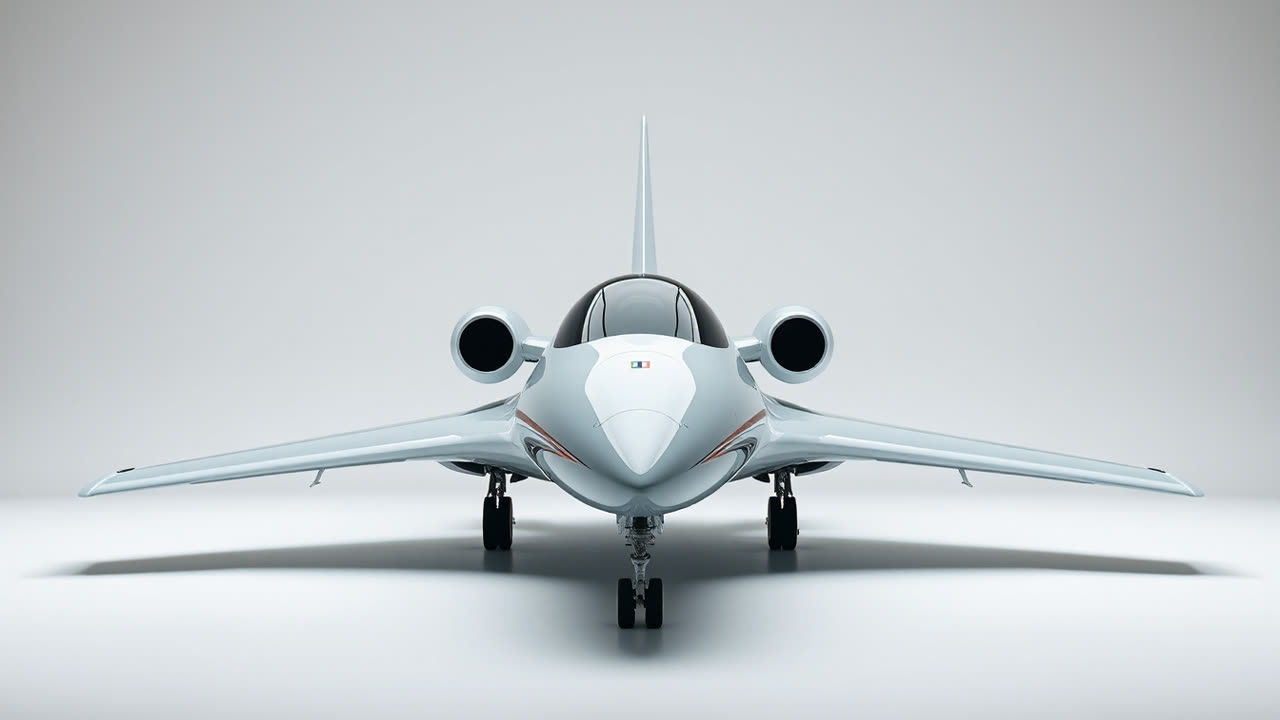
The Federal Aviation Administration (FAA) has proposed groundbreaking new rules that would permit supersonic airliners to traverse U.S. airspace over cities, provided they meet stringent noise limitations and effectively eliminate the disruptive sonic boom. This pivotal move, announced by the Department of Transportation and the FAA on June 30, 2026, signals a significant departure from the 53-year-old ban on civil supersonic flight over land, which was initially imposed in 1973 due to widespread public outcry over noise pollution.
Under the proposed framework, the outright prohibition on exceeding Mach 1 over U.S. territory would be replaced by a performance-based noise standard. Supersonic operations would be legalized if aircraft manufacturers can demonstrate that the resulting sonic boom overpressure at the surface does not surpass 0.11 pounds per square foot (psf). FAA Administrator Bryan Bedford emphasized that "advances in aerospace engineering, materials science, noise reduction, and new operational concepts will eliminate the old sonic boom," paving the way for the repeal of the decades-old ban while safeguarding communities from noise impacts. The FAA anticipates finalizing this rule, along with separate landing and takeoff noise standards, by mid-2027.
This regulatory shift is a direct result of a June 2025 executive order from President Donald Trump, which instructed the FAA to lift the overland ban and establish noise-based certification standards. It also aligns with the Supersonic Aviation Modernization Act, passed by the House in March 2026.
The industry is already responding with advanced solutions. Companies like Boom Supersonic are developing new-generation aircraft such as the Overture, designed to achieve "Boomless Cruise" by using atmospheric refraction to prevent audible sonic booms from reaching the ground during supersonic flight up to Mach 1.3. Boom's XB-1 demonstrator successfully proved this technology in early 2025, repeatedly breaking the sound barrier without detectable ground-level booms. Similarly, NASA's X-59 Quesst aircraft, which achieved its first supersonic flight in June 2026, is specifically engineered to produce a quiet "thump" rather than a loud boom, with its mission focused on gathering community response data to inform future regulatory standards.
The implications for air travel are transformative. This move could usher in a "Golden Age of Travel," potentially cutting transcontinental flight times significantly, with routes like Los Angeles to New York possibly taking as little as two hours. By replacing an outright prohibition with a measurable, performance-based noise standard, the U.S. is opening up a domestic market that the Concorde could never access due to its loud sonic booms. While commercial overland supersonic flights are still on the horizon, this proposal lays the crucial regulatory foundation, betting on American innovation to make faster air travel a quiet and practical reality.