Facial Recognition Smart Locks Redefine Home Access with Frictionless Entry
Advanced biometric smart locks are transforming home security and convenience by offering seamless, hands-free entry through passive facial recognition.
✨ This content was summarized and interpreted by AI; it may contain errors — please verify accuracy with the original sources. Learn more
Listen to this story
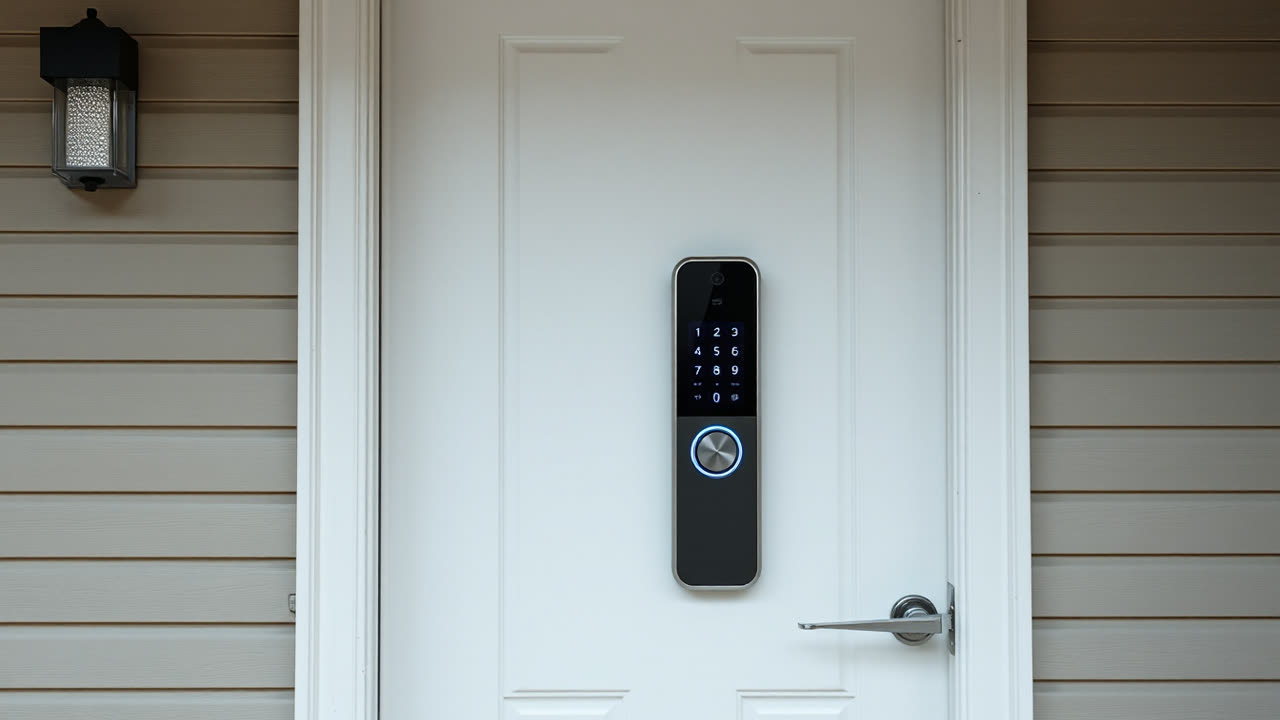
The once-futuristic promise of a door recognizing its owner and unlocking seamlessly is no longer a niche concept, with advanced facial recognition smart locks now delivering a level of hands-free convenience and security that fundamentally redefines home access. This burgeoning category of smart home technology, spearheaded by innovations like the Lockly Vision Elite and the Philips Wi-Fi Facial Recognition Smart Lock, transcends the limitations of previous generations, offering a truly frictionless entry experience that eliminates the need for keys, passcodes, or even a free hand to interact with a sensor.
The core appeal lies in the profound reduction of friction. Traditional smart locks, while offering app control or keypad entry, still demand an active input from the user. Fingerprint sensors, while quick, can be finicky with wet hands or smudges. Facial recognition, by contrast, operates passively; as a homeowner approaches their door, the integrated camera scans their face, verifies their identity, and disengages the lock, often in under a second. This "magic moment" of effortless entry is not just a convenience; it's a paradigm shift in how users interact with their homes, making the entry process as intuitive and unobtrusive as possible. The Lockly Vision Elite, for instance, integrates a high-definition camera with AI-powered facial recognition, alongside a doorbell function, to provide a comprehensive security and access solution. Similarly, the Philips Wi-Fi Facial Recognition Smart Lock boasts rapid recognition speeds and robust security features, highlighting the industry's move towards more sophisticated, integrated systems.
This evolution matters immensely for both users and the smart home industry. For users, it offers unparalleled convenience, particularly for families with children, individuals carrying groceries, or those with mobility challenges. The security implications are also significant; advanced algorithms make these systems highly resistant to spoofing attempts using photos or masks, often incorporating 3D facial mapping and infrared detection for enhanced accuracy and security. Furthermore, the integrated cameras provide a visual record of who enters and exits, adding an extra layer of surveillance and peace of mind. For the industry, facial recognition smart locks represent a critical step towards a more intelligent, autonomous smart home ecosystem. They push the boundaries of AI integration in consumer devices, demonstrating how sophisticated machine learning can solve everyday problems with elegance and efficiency. This success can pave the way for broader adoption of biometric authentication across other smart home devices, from appliances to personal assistants, deepening the integration of AI into daily life.
Compared to their predecessors and rivals, modern facial recognition locks stand out. Early smart locks often suffered from connectivity issues, slow response times, or limited battery life. While fingerprint and keypad locks offer a degree of smart access, they inherently require a physical interaction. The best facial recognition systems, however, are designed for speed and reliability, often boasting recognition rates above 99% and operating effectively in varying lighting conditions, from bright daylight to complete darkness, thanks to infrared technology. Security concerns, a common apprehension with any biometric data, are being addressed with on-device processing to minimize cloud storage of sensitive information, end-to-end encryption, and robust anti-spoofing measures. Many models also offer multiple unlocking methods—keypad, fingerprint, app, and traditional key—providing fallback options and catering to diverse user preferences.
Looking ahead, the trajectory for facial recognition smart locks is one of increasing sophistication and integration. We can expect to see even faster recognition speeds, enhanced AI algorithms capable of learning and adapting to changes in appearance (e.g., new hairstyles, glasses), and even more robust anti-spoofing technologies. Integration with broader smart home platforms will deepen, allowing these locks to trigger other actions, such as turning on lights, adjusting thermostats, or arming security systems upon recognition of a resident. The adoption of open standards and more interoperable ecosystems will be crucial for wider market penetration, allowing consumers to seamlessly integrate these locks with their existing smart home devices. Privacy will remain a paramount concern, driving innovations in local processing of biometric data and transparent data handling policies. As costs continue to decrease with economies of scale and technological advancements, facial recognition smart locks are poised to move from a premium luxury to a mainstream security staple, fundamentally transforming how we secure and access our homes.