FBI Seizes Chinese State-Sponsored Botnet Targeting US Government Agencies
The FBI has successfully disabled a sophisticated Chinese state-sponsored botnet, QScan, and its obfuscation platform, QTRouter, which had compromised numerous U.S. government agencies, critical infrastructure, and private sector entities since 2018, including NASA and the U.S. Senate.
✨ This content was summarized and interpreted by AI; it may contain errors — please verify accuracy with the original sources. Learn more
Listen to this story
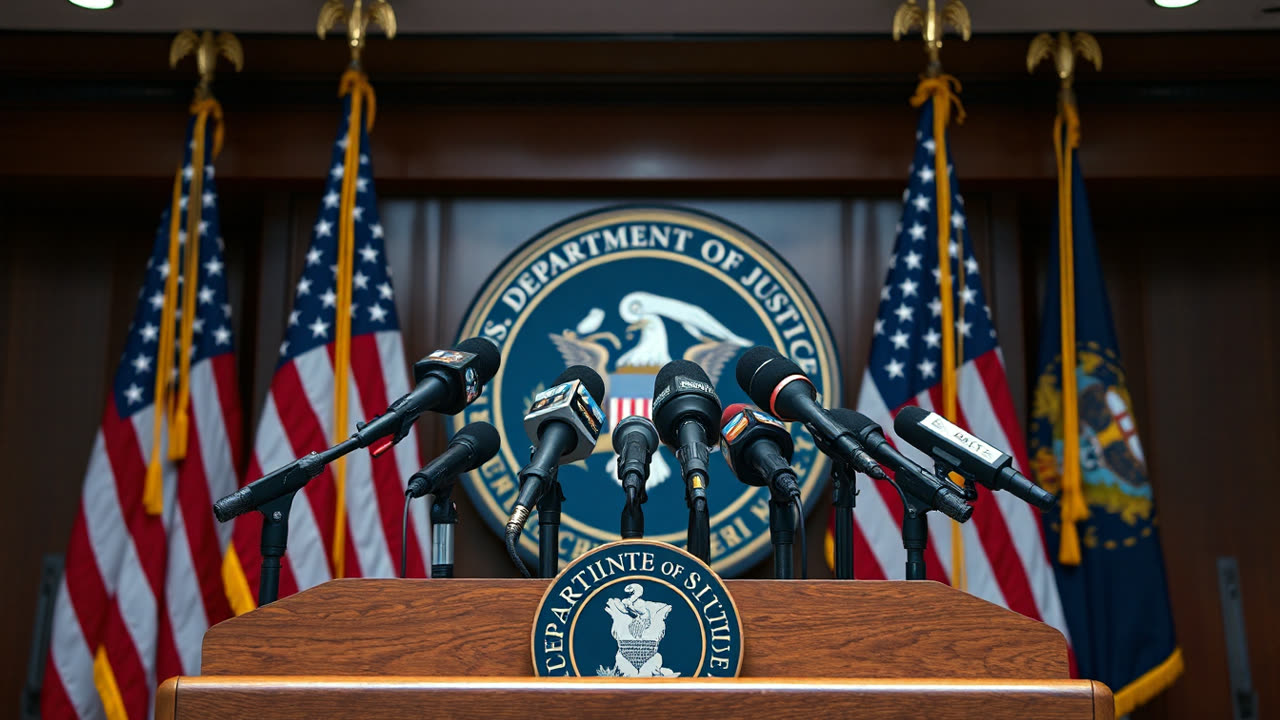
The FBI has successfully seized three internet domains essential to a Chinese state-sponsored botnet, effectively disabling a sophisticated hacking infrastructure that had compromised numerous U.S. government agencies, critical infrastructure, and private sector entities since 2018. The targeted agencies include NASA, the Federal Reserve, the Departments of Energy, Justice, and Health and Human Services, the National Institutes of Health, and the U.S. Senate, which reportedly suffered a compromise as recently as 2026. This decisive action, announced by the Justice Department and FBI, crippled the "QScan" and "QTRouter" platforms, tools attributed to a hacking group known as QTFY, operating under the direction of the China-based Nanjing Xinjiuwei Network Technology Company.
The significance of this takedown extends far beyond merely disrupting a single hacking operation; it represents a critical blow to China's evolving cyber espionage strategy and its increasing reliance on private firms to execute state-backed malicious activities. QTFY, described as a "quartermaster" in the cyber realm, offered hacking-as-a-service to clients, including China's Ministry of State Security and the People's Liberation Army, demonstrating a disturbing industrialization of cyber warfare. QScan was designed to automatically scan the internet for vulnerable Internet of Things (IoT) devices and infect thousands of them globally, while QTRouter served as an obfuscation layer, routing malicious traffic through compromised devices in over 130 countries to conceal the attackers' true origin. This intricate setup allowed the hackers to make their attacks appear to originate from legitimate local users, significantly complicating detection and attribution efforts.
The impact on users and the industry is multi-faceted. For the affected government agencies and critical infrastructure operators (including hospitals, telecommunications providers, power companies, banks, and defense contractors), the seizure provides immediate relief by cutting off the command-and-control infrastructure that was hard-coded into the malware, rendering QScan and QTRouter inoperable. This forces the adversary to rebuild their access from scratch, buying precious time for defenders. However, the sheer scale of devices exploited by QScan—processing over 2 million scanning or exploitation tasks on a single day in 2024—highlights the pervasive vulnerability of IoT devices and the ongoing challenge for ordinary users whose routers, cameras, and other smart devices are unwittingly conscripted into these botnets. While the takedown severs the link, it does not automatically remove the malware from infected devices, underscoring the need for device owners to take proactive steps to secure their networks.
This operation fits into a broader pattern of escalating cyber confrontation between the U.S. and China. Previous FBI actions against Chinese hacking infrastructure include removing PlugX surveillance malware from over 4,200 U.S. computers in 2025, disrupting the Flax Typhoon botnet of compromised IoT devices in 2024, and dismantling a network used by Volt Typhoon in 2023 to conceal attacks against critical infrastructure. Unlike some previous takedowns that focused on specific malware or smaller networks, the disruption of QTFY's infrastructure targets a comprehensive "hacking-as-a-service" platform that facilitated a wide array of cyber espionage activities. The use of private companies like Nanjing Xinjiuwei Network Technology Company by Chinese intelligence and military agencies demonstrates a shift towards outsourcing and industrialization of cyber operations, making attribution and response more complex.
Looking ahead, this seizure is a clear signal of the U.S.'s persistent engagement strategy in cyberspace, moving beyond defensive measures to actively disrupt adversary infrastructure. While effective in the short term, such operations against state-sponsored actors like China often lead to a cat-and-mouse game. Chinese state-linked APT actors, such as Volt Typhoon and Salt Typhoon, are continually evolving their tactics, including pre-positioning within information technology networks to enable lateral movement into operational technology systems, with the potential to disrupt critical functions at a time of their choosing. China's distributed cyber ecosystem also presents a challenge, as operations can shift to new providers if one is disrupted.
The ongoing reliance on freelance hacking networks and the acquisition and sale of cyber exploit items, including access to victim networks, by groups like QTFY points to a persistent threat landscape. Further government and industry collaboration, including public-private intelligence sharing, strengthening cloud infrastructure, and hardening network edge devices, will be crucial. The long-term efficacy of these takedowns will depend on whether they can fundamentally alter the economic and strategic calculus for state-sponsored hacking groups and their patrons, or if they merely force a temporary relocation and retooling of sophisticated adversaries intent on persistent access to sensitive U.S. networks. Without broader geopolitical consequences beyond cyberspace, such as economic sanctions or export controls, the cycle of disruption and reconstitution is likely to continue.