FCC Proposes Sweeping Ban on Foreign LiDAR Drones, Citing National Security
The Federal Communications Commission has initiated an unprecedented proposal to retroactively ban the sale and use of foreign-made drones equipped with LiDAR technology, classifying them as 'military-grade' and poised to fundamentally reshape the U.S. drone market.
✨ This content was summarized and interpreted by AI; it may contain errors — please verify accuracy with the original sources. Learn more
Listen to this story
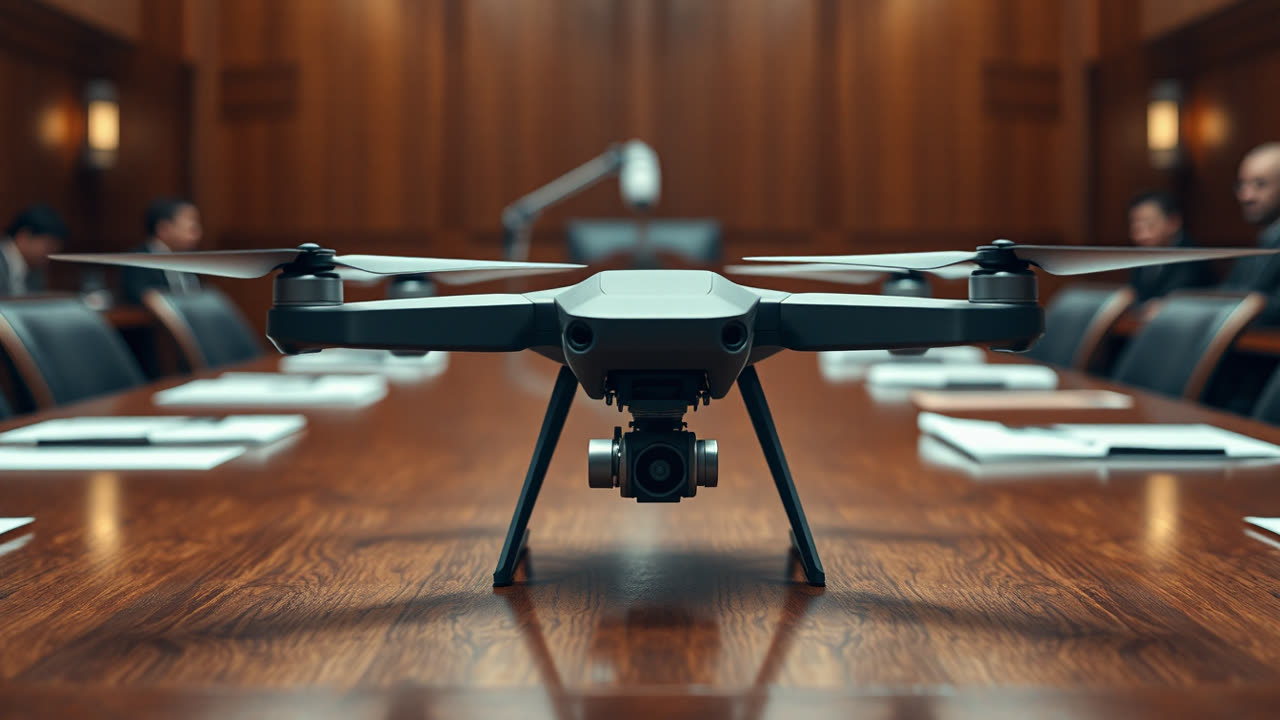
The Federal Communications Commission (FCC) has initiated a sweeping proposal to prohibit the sale and use of foreign-made drones equipped with LiDAR technology, classifying it as "military-grade," a move poised to retroactively remove popular models from the U.S. market and fundamentally reshape the commercial and recreational drone landscape. This unprecedented action, stemming from a Notice of Proposed Rulemaking (NPRM) in May 2024, seeks to leverage the Secure and Trusted Communications Networks Act of 2020 by expanding the FCC's "Covered List" to include drones and associated equipment deemed to pose national security risks. While initially targeting LiDAR, the proposal's broad language could also encompass drones utilizing advanced thermal imaging capabilities and even the synchronized swarms employed in drone light shows, effectively targeting manufacturers predominantly from China, most notably DJI, which currently dominates the global commercial drone market.
The immediate impact on users and industries would be profound. Commercial operators, from construction and agriculture to infrastructure inspection and emergency services, heavily rely on advanced foreign-made drones for their precision, reliability, and cost-effectiveness. DJI, for instance, offers a range of enterprise drones, such as the Matrice series, which integrate LiDAR for highly accurate 3D mapping, surveying, and obstacle avoidance, critical for complex industrial applications. A retroactive ban would not only halt new sales but could also render existing fleets obsolete or unsupportable, forcing businesses to absorb significant replacement costs and potentially disrupt ongoing projects. Hobbyists, while less affected by the "military-grade" classification, could see reduced options and increased prices if the market contracts significantly. Furthermore, the burgeoning drone light show industry, which relies on hundreds or thousands of synchronized drones, faces an existential threat, as the proposal's language could deem these swarms a security concern due to their collective operational capabilities.
This FCC initiative marks a significant escalation from previous U.S. government actions against Chinese technology firms, such as the blacklisting of Huawei and ZTE, by directly targeting a pervasive consumer and commercial product category with a retroactive sales ban. Previously, concerns over data security and potential espionage led to restrictions on government procurement of Chinese-made drones, but this proposal extends the ban to the entire U.S. market. The "military-grade" classification of LiDAR is particularly contentious. While LiDAR does have military applications in advanced reconnaissance and targeting, its civilian uses are widespread, offering superior precision in mapping, autonomous navigation, and object detection compared to traditional photogrammetry or basic optical sensors. For instance, LiDAR-equipped drones can map intricate power lines or inspect wind turbines with centimeter-level accuracy, capabilities crucial for maintaining critical infrastructure. The proposal implicitly suggests that the mere presence of advanced sensing technology from a foreign adversary could be weaponized or exploited, regardless of its primary civilian function. This broad interpretation creates a precedent that could extend to other advanced technologies if deemed dual-use.
The proposed ban would inevitably spur a scramble for domestic alternatives, but the U.S. drone manufacturing ecosystem, while growing, is not yet equipped to immediately fill the void left by a dominant player like DJI. While companies like Skydio and Autel Robotics (though Autel is also a Chinese company often perceived as a "safer" alternative to DJI by some due to its smaller market share and different corporate structure) have made strides in autonomous flight and specific niche applications, they generally lack the breadth of product offerings, established supply chains, and competitive pricing of their foreign counterparts. This disparity could lead to a significant price increase for enterprise-grade drones, slower innovation cycles due to reduced competition, and a potential lag in U.S. technological adoption compared to other nations not imposing similar restrictions. The industry is already bracing for potential legal challenges, as a retroactive ban on previously approved products raises complex questions about property rights and fair market practices.
Looking ahead, the FCC's proposal signals a determined effort to decouple critical technological infrastructure from perceived adversaries, prioritizing national security over market access and potentially even short-term economic efficiency. The public comment period, which typically follows an NPRM, will be crucial in shaping the final rule, with strong lobbying expected from affected industries and user groups. Should the ban proceed, it will accelerate investment in U.S. drone manufacturing and software development, albeit with an initial period of market disruption and higher costs. This could foster a more secure, albeit potentially less competitive, domestic drone industry in the long term. However, it also risks isolating the U.S. market from global innovation, potentially hindering the development of cutting-edge drone applications that rely on a diverse and competitive technological landscape. The ultimate outcome will set a powerful precedent for how the U.S. balances national security concerns with the rapid advancement of dual-use technologies in an interconnected world.