FDA Approves First Fully Automated Blood Draw Robot
The U.S. Food and Drug Administration has approved VascuLogic's venipuncture device, a groundbreaking robotic system poised to revolutionize blood draws in outpatient settings with unprecedented precision and patient comfort.
✨ This content was summarized and interpreted by AI; it may contain errors — please verify accuracy with the original sources. Learn more
Listen to this story
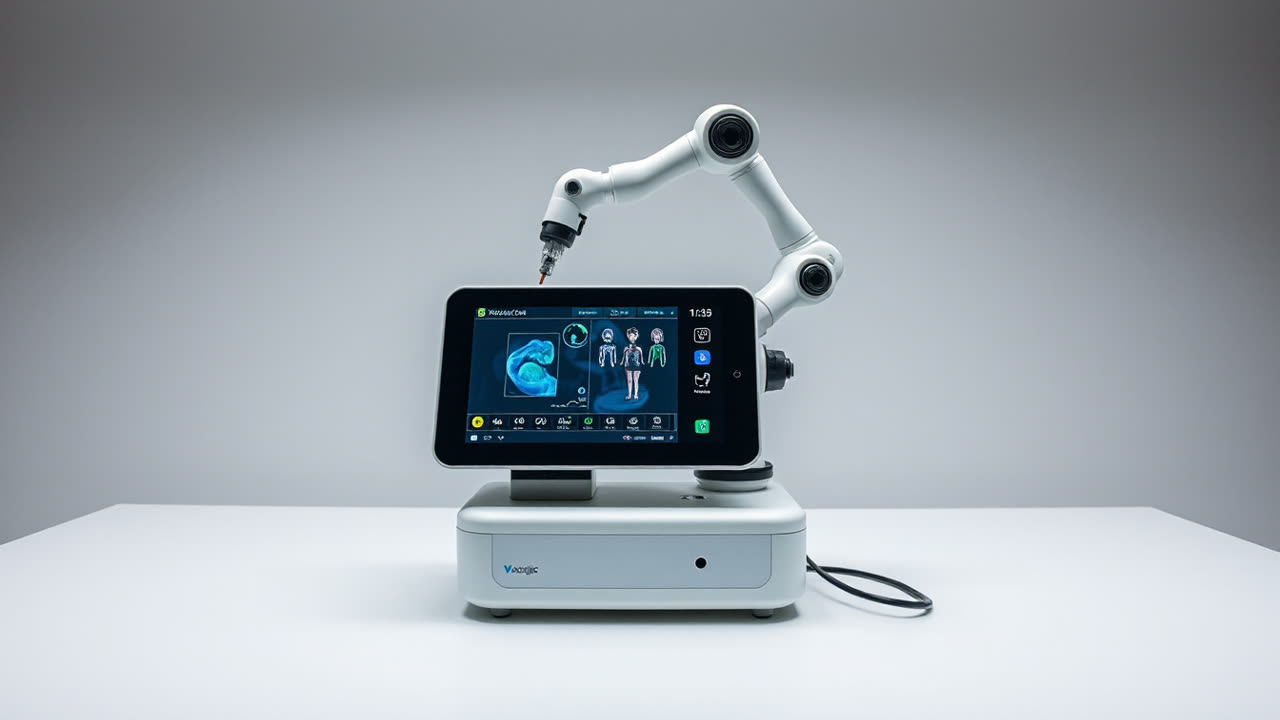
The U.S. Food and Drug Administration's recent approval of the VascuLogic Venipuncture Device, a fully automated blood draw system for outpatient settings, marks a pivotal moment in medical automation, signaling a tangible shift from conceptual robotics to practical, patient-facing applications. Developed by VascuLogic, a spin-off of Rutgers University, the device promises to revolutionize a ubiquitous, yet often anxiety-inducing, medical procedure by employing advanced imaging and robotics to precisely locate and access veins. This is not merely an incremental improvement but a fundamental re-imagining of venipuncture, moving beyond human variability to a standardized, technologically driven process.
The core innovation lies in the device's ability to combine near-infrared (NIR) imaging with ultrasound to create a detailed, real-time 3D map of a patient's vasculature. This sophisticated guidance system allows the robotic arm to accurately identify optimal venipuncture sites, even in patients with difficult-to-find veins, such as those undergoing chemotherapy, the elderly, or children. Once the target vein is identified, the robotic arm precisely inserts the needle, collects the blood sample, and then withdraws, all with minimal human intervention. Clinical trials have demonstrated impressive success rates, with studies indicating a first-stick success rate of up to 97% across various patient populations, significantly higher than the average success rates reported for manual venipuncture, which can vary widely depending on the phlebotomist's skill and patient factors. This enhanced accuracy translates directly into reduced patient discomfort, fewer repeat sticks, and potentially lower rates of complications like hematomas or nerve damage.
The implications for users are profound. For patients, particularly those with a fear of needles or a history of difficult blood draws, the automated system offers a less stressful and more comfortable experience. The consistency of a robotic approach removes the anxiety associated with an inexperienced phlebotomist or the uncertainty of multiple attempts. Furthermore, the device could improve accessibility to healthcare services in remote or underserved areas, where skilled phlebotomists might be scarce, or even facilitate home-based blood collections in the future, although the current approval is for outpatient settings. From a safety perspective, the standardization of the procedure and reduced risk of human error could lead to fewer needlestick injuries for healthcare workers, a persistent occupational hazard.
For the healthcare industry, the VascuLogic device represents a significant leap forward in efficiency and resource optimization. Phlebotomy is a time-consuming process, and reducing the time spent on blood draws, especially for difficult cases, frees up healthcare professionals to focus on more complex patient care tasks. The standardization offered by automation also ensures consistent sample quality, potentially reducing pre-analytical errors that can lead to misdiagnoses or delayed treatment. While the initial investment in such technology will be substantial, the long-term benefits in terms of operational efficiency, reduced waste from failed draws, and improved patient throughput could justify the cost. This also sets a precedent for further automation in other routine medical procedures, pushing the boundaries of what is considered "hands-on" care.
Historically, venipuncture has remained largely unchanged, relying on the tactile skill and visual assessment of trained professionals. While vein finders using transillumination or near-infrared light have aided phlebotomists, they still require manual needle insertion. The VascuLogic device differentiates itself by fully automating the insertion process, integrating imaging, AI-driven vein selection, and robotic execution into a single, seamless system. Previous attempts at robotic venipuncture were often confined to research labs or highly specialized applications, lacking the comprehensive FDA clearance for broad outpatient use. This approval signals a maturation of the technology, moving it from experimental to clinically viable.
Looking ahead, the widespread adoption of automated blood draw devices will likely be gradual but transformative. Initial deployment will probably focus on high-volume clinics, emergency departments, and specialized centers where their efficiency and precision can yield immediate benefits. The technology's evolution will likely include integration with laboratory information systems (LIS) for automated sample labeling and tracking, further streamlining the entire diagnostic process. We can anticipate future iterations with even greater autonomy, potentially incorporating AI to predict optimal draw times based on patient history or even performing basic on-site analyses. The immediate future will also see a focus on training healthcare staff to operate and maintain these devices, redefining the role of phlebotomists from purely manual operators to supervisors of sophisticated robotic systems. This FDA approval is not merely about a single device; it's a clear indicator of healthcare's accelerating trajectory towards intelligent automation, where robots augment, and in some cases, redefine the delivery of routine medical care.