Feather Robotics Unveils $29,990 'Android of Robotics' Platform for Developers
Palo Alto startup Feather Robotics, co-founded by a former Tesla engineer, introduces a customizable, general-purpose robotics platform priced at $29,990, aiming to democratize robotics development and drastically cut deployment times.
✨ This content was summarized and interpreted by AI; it may contain errors — please verify accuracy with the original sources. Learn more
Listen to this story
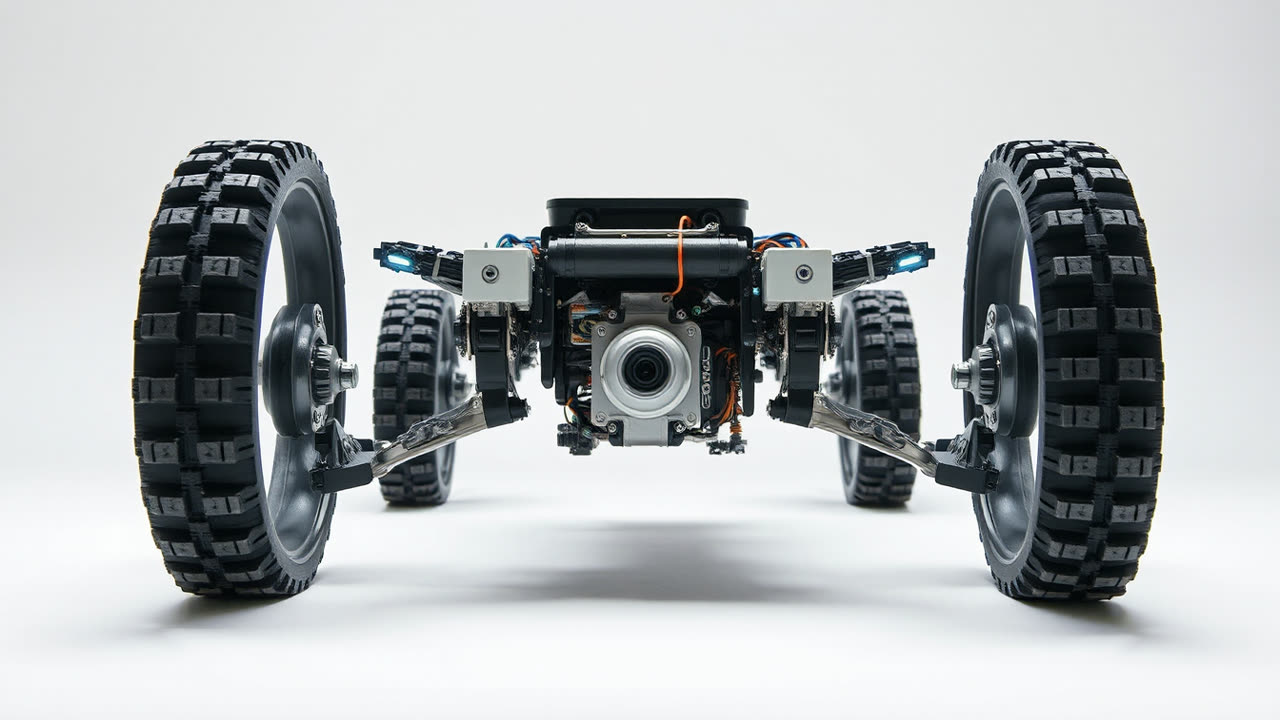
Feather Robotics has launched a customizable, general-purpose robotics platform for developers, aiming to become the "Android of robotics" with a compelling starting price of $29,990. This Palo Alto-based startup, co-founded by former Tesla engineer Parsa Bakhtiari, directly confronts the industry's pervasive challenge of protracted hardware development cycles, promising to reduce the 18 months typically required for real-world deployment of AI models to mere weeks. Their initial revenue has already surpassed $1 million, underscoring significant early market traction.
The core of Feather's offering is a robust, wheeled robotic system designed for modularity and ease of integration, featuring a 600mm vertical travel, a 1-meter reach, and a holonomic base enabling 360-degree omnidirectional movement at speeds up to 1.3 m/s. Crucially, it boasts a 10-hour battery life facilitated by dual hot-swappable batteries, ensuring zero downtime between shifts. Each unit includes a modular end effector, swappable onboard compute capabilities, built-in teleoperation, inverse kinematics, collision detection, and comprehensive simulation support. This streamlined design, emphasizing fewer parts, is intended to minimize failure points and enhance reliability in demanding environments. By providing an open SDK built on Python and ROS2, Feather aims to free developers from the complexities of hardware R&D, allowing them to concentrate solely on application development and AI breakthroughs.
This initiative carries profound implications for both individual developers and the broader robotics industry. For developers, Feather directly tackles a significant bottleneck: the chasm between successful simulation and practical, real-world deployment. The current landscape often forces robotics software engineers to grapple with intricate hardware-software integration, real-time data synchronization, and troubleshooting mismatches across diverse components like sensors and actuators. By offering a pre-engineered, reliable hardware platform with an open SDK, Feather drastically lowers the barrier to entry, democratizing advanced robotics development and accelerating innovation. This approach resonates with the growing demand for more accessible tools, as evidenced by the rise of open-source simulation and learning frameworks like Isaac Lab 2.2.
Industrially, Feather's platform represents a strategic pivot towards more affordable, general-purpose robots, a stark contrast to the often fixed and specialized industrial robots that have dominated for decades. At a starting price of under $30,000, Feather positions itself as a disruptive force against high-cost competitors such as Tesla's Optimus, Figure, and Apptronik, which typically exceed $100,000. Feather claims its system is one-third the cost of these rivals and projects an impressive return on investment, asserting that two Feather robots can replace four human operators, saving customers approximately $280,000 annually at an operational cost of about $30,000 per year per robot. This economic advantage, coupled with its modularity and versatility, makes it particularly attractive for manufacturing settings initially, with plans to expand into variable environments like restaurants, retail, and hospitality.
The broader robotics ecosystem currently features a mix of open-source frameworks like ROS2, which remains a cornerstone for much of modern robotics development, and integrated commercial platforms such as NVIDIA Isaac. While ROS2 provides extensive libraries and tools, it often requires significant effort to integrate with reliable hardware. Feather's strategy appears to bridge this gap, offering robust, production-ready hardware that seamlessly integrates with the popular ROS2 and Python ecosystems. This contrasts with purely open-source hardware projects that demand extensive assembly and customization, as well as with closed commercial alternatives that often lock users into proprietary ecosystems and incur higher licensing costs. The company's focus on wheeled mobility also differentiates it from the complex and notoriously difficult-to-program legged humanoids, which Feather's co-founder notes will not operate reliably for a long time.
Looking ahead, Feather Robotics has ambitious growth targets, aiming to sell 100 units in 2026, translating to $3.5 million in revenue, and scaling to 35,000 units annually by 2029, projecting over $1.2 billion in revenue. Their long-term vision includes building a foundation model and eventually bringing their robots into homes by 2030, following a phased business model that prioritizes reliable hardware and a mature developer API before venturing into increasingly complex and variable environments. This trajectory aligns with the broader industry shift towards intelligent, adaptable, and general-purpose robots that can collaborate with humans in diverse settings. As the demand for automation and AI integration in manufacturing continues to surge, Feather's accessible and customizable platform could significantly accelerate the adoption of robotics, particularly for small and medium-sized enterprises (SMEs) deterred by the high initial costs and specialized programming skills traditionally required. The future of robotics hinges on lowering these barriers, and Feather's "Android of robotics" approach promises to be a pivotal step in that direction.