Federal Scrutiny Intensifies Over GM Blazer EV Brake Malfunctions
Federal scrutiny has intensified over General Motors' electric vehicles, particularly the 2024 Blazer EV, following alarming reports of brake malfunctions, including one incident where a driver was forced to deliberately steer into a concrete curb to avoid a catastrophic intersection collision.
✨ This content was summarized and interpreted by AI; it may contain errors — please verify accuracy with the original sources. Learn more
Listen to this story
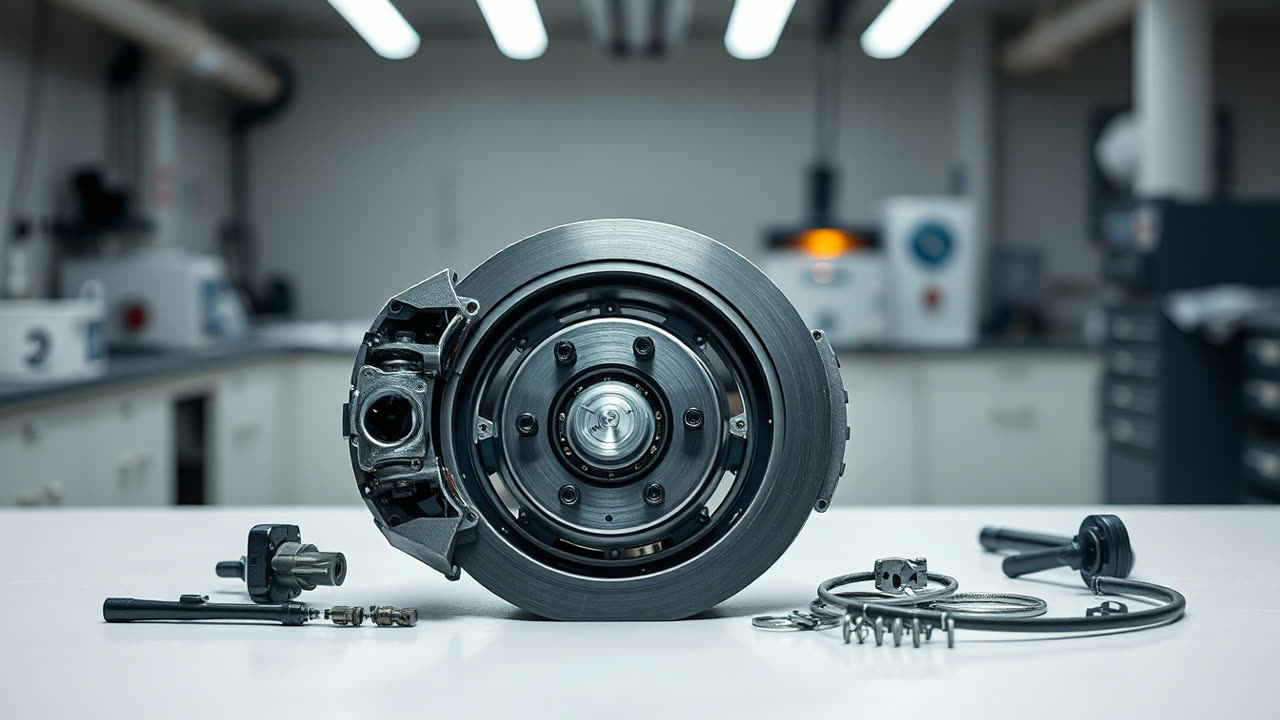
Federal scrutiny has intensified over General Motors' electric vehicles, particularly the 2024 Blazer EV, following alarming reports of brake malfunctions, including one incident where a driver was forced to deliberately steer into a concrete curb to avoid a catastrophic intersection collision. This severe incident, among others, has prompted the National Highway Traffic Safety Administration (NHTSA) to escalate its investigation into GM's braking systems, raising significant concerns about the safety and reliability of critical EV components.
The core of the issue appears to center on the regenerative braking system and its integration with conventional friction brakes, a complex interplay crucial for EV efficiency and safety. While specific details of the technical fault remain under investigation, driver complaints describe a sudden loss of braking power or inconsistent braking response, creating hazardous situations. The reported incident with the Blazer EV, where a driver had to resort to an extreme measure to prevent a crash, underscores the potential severity of these defects. GM has acknowledged the issues, with some reports indicating software updates or hardware inspections are being performed on affected vehicles. The exact number of vehicles impacted by these specific brake problems is not yet publicly confirmed by GM or NHTSA, but the deepening federal probe suggests a potentially widespread concern beyond isolated incidents.
This escalating situation carries profound implications for both users and the broader automotive industry. For consumers, the immediate concern is safety. Brake failures in any vehicle are critical, but in new, high-tech EVs, they can erode public confidence in a nascent technology already facing adoption hurdles. Potential buyers, already wary of range anxiety or charging infrastructure, may now add "brake reliability" to their list of concerns, potentially slowing the transition to electric vehicles. Owners of affected GM EVs face not only the immediate safety risk but also the inconvenience of recalls, repairs, and the diminished resale value that often accompanies such high-profile safety investigations. Beyond individual safety, the incident could tarnish GM's reputation as a leader in EV innovation, particularly as the company heavily invests in its Ultium platform, which underpins many of its new electric offerings.
From an industry perspective, the federal scrutiny on GM's EV brakes highlights the increasing complexity of modern vehicle systems and the stringent demands placed on manufacturers. The integration of advanced software, regenerative braking, and traditional hydraulic systems in EVs presents unique engineering challenges. Failures in one area, such as software glitches affecting brake-by-wire systems, can have cascading effects. This situation could prompt regulators to implement even more rigorous testing and certification processes for EV braking systems, potentially increasing development costs and timelines for all manufacturers. Furthermore, it serves as a cautionary tale for other automakers, emphasizing the critical importance of robust validation and verification processes for all safety-critical EV components before market launch. The competitive landscape could also shift; if GM's issues lead to prolonged sales disruptions or a significant loss of consumer trust, rival EV makers, particularly those with established reliability records, could gain market share.
Historically, GM has faced significant recalls, notably the ignition switch scandal in the 2010s, which led to widespread safety concerns and substantial financial penalties. While the current brake issue is distinct, it echoes past challenges in terms of managing critical safety defects. Compared to rivals, other EV manufacturers have also encountered software-related issues or recalls, but widespread brake failure forcing extreme driver intervention is particularly alarming. Tesla, for instance, has faced scrutiny over its Autopilot system and phantom braking incidents, but the nature of the GM complaints appears to be a more fundamental loss of braking capability rather than an advanced driver-assistance system anomaly. This specific type of brake failure in a brand-new model places GM in a particularly challenging position, as it directly impacts a core safety function that consumers expect to be infallible.
Looking ahead, GM faces a critical period. A swift and transparent response is paramount, involving not only rapid identification and rectification of the technical fault but also clear communication with customers and regulators. This likely includes comprehensive recalls, software updates, and potentially hardware modifications across affected models. The long-term outlook will depend heavily on the thoroughness of GM's fix and its ability to restore consumer confidence. NHTSA's investigation will likely result in mandates for corrective actions and potentially civil penalties if negligence is found. For the broader EV market, this incident, while concerning, could ultimately lead to stronger safety standards and more robust engineering practices across the industry, ensuring that the rapid innovation in electric powertrains is matched by uncompromising safety in all vehicle systems. The incident underscores that while the future of mobility is electric, fundamental safety principles remain paramount, and their implementation in new technologies demands the highest level of scrutiny and engineering integrity.