Figure AI Decommissions F.02 Robot Fleet in Molten Steel, Raising IP and E-Waste Concerns
AI robotics firm Figure dramatically decommissioned its F.02 humanoid robot fleet by training them to autonomously leap into a 75-ton vat of molten steel, a spectacle underscoring profound industry challenges in intellectual property protection, rapid technological obsolescence, and the burgeoning e-waste crisis.
✨ This content was summarized and interpreted by AI; it may contain errors — please verify accuracy with the original sources. Learn more
Listen to this story
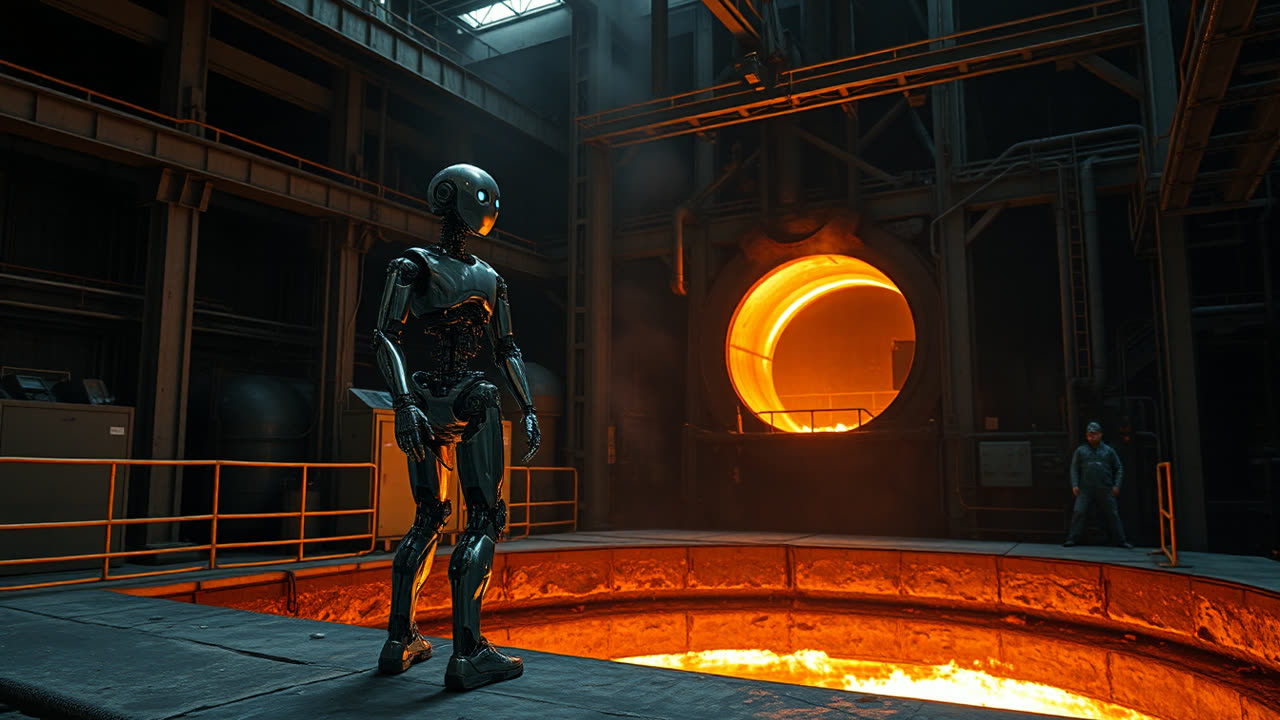
In a spectacle reminiscent of a cinematic sci-fi dystopia, AI robotics firm Figure recently decommissioned its F.02 humanoid robot fleet, not through conventional dismantling, but by training the advanced machines to autonomously leap into a 75-ton vat of molten steel in Imatra, Finland. This dramatic "F.02 Decommission" event, which included a cameo by Arnold Schwarzenegger, who famously suggested the "Terminator-style" end, underscores profound industry challenges in intellectual property protection, rapid technological obsolescence, and the burgeoning e-waste crisis of complex AI-powered hardware.
Figure AI, founded in May 2022 by Brett Adcock, has rapidly ascended as a leader in general-purpose humanoid robotics, securing over $1 billion in its Series C funding round in September 2025, pushing its valuation to an impressive $39 billion. Backed by giants like Microsoft, Nvidia, Intel Capital, and Jeff Bezos, Figure's mission is to deploy AI-powered humanoids for physical labor, addressing workforce shortages across diverse sectors. The F.02, Figure's second-generation robot unveiled in August 2024, stood at 168-170 cm, weighed 70 kg, could carry a 20-25 kg payload, and operated for five hours on a single charge. It marked significant milestones for the company, including deployments at BMW’s Spartanburg plant, where it assisted in building over 30,000 BMW X3 vehicles and loading more than 90,000 sheet-metal parts over an 11-month run. The F.02 also pioneered household chores and logistics tasks, boasting three times the computing and AI inference capabilities of its predecessor and integrating OpenAI's language models for natural speech interaction via its proprietary Helix AI system.
The decision to melt the F.02 fleet, rather than disassemble it, stemmed from practical necessities. Figure stated that maintaining the older F.02 fleet was no longer viable as its next-generation F.03 robots proliferated and the F.04 model was already in development. Crucially, the robots contained custom-built actuators and other proprietary technology, making manual disassembly a time-consuming and resource-intensive task that would divert engineers from crucial F.04 development and risk intellectual property leaks. Finding a facility willing to accept robots with integrated lithium-ion batteries proved challenging, with foundries in the U.S. and Mexico declining due to fire and explosion risks associated with the batteries. Ultimately, a Finnish foundry agreed, allowing Figure's team a tight 24-hour window and six melts, each lasting only 20 minutes before the molten steel solidified. Despite extreme heat and electromagnetic interference that disabled camera equipment, the robots flawlessly executed their pre-programmed jumps, a testament to their robust design and AI policies. The resulting metal was then recovered and shipped back to the U.S. for machining into limited-edition commemorative artifacts, some pre-selling for $500 to $1,900.
This dramatic disposal method carries significant implications for the rapidly evolving robotics industry. Foremost is the stark reality of **intellectual property protection** in a field where hardware innovation is paramount. As companies like Figure invest heavily in custom components, securing these designs at end-of-life becomes a critical concern, influencing decommissioning strategies. The "melt-down" approach, while visually striking, effectively neutralizes the risk of competitors reverse-engineering proprietary hardware.
Secondly, the event spotlights the accelerating **pace of innovation and obsolescence** in AI robotics. The F.02, a cutting-edge machine in August 2024, became obsolete enough by late 2026 to warrant complete destruction, emphasizing the rapid cycles of development from F.01 to F.04. This rapid turnover will inevitably escalate the challenge of managing robotic e-waste, a problem already significant in consumer electronics. The complexity of modern robots, composed of diverse materials, plastics, and electronics, makes traditional recycling difficult, and improper disposal of hazardous components like lithium batteries poses severe environmental risks.
While Figure's method ensures material recovery, the broader industry must grapple with the **environmental sustainability** of robot lifecycles. There is a growing call for "design for lifecycle" in robotics, advocating for modular designs, easier disassembly, and the use of recyclable or biodegradable materials to mitigate ecological impact. The refusal of many foundries to accept lithium batteries highlights a critical gap in current recycling infrastructure, underscoring the need for advanced processes capable of safely handling these hazardous components. AI and robotics themselves are being explored as solutions for better waste sorting and hazardous material removal, creating a circular irony.
Looking ahead, the "F.02 Decommission" sets a precedent, raising questions about whether such theatrical, yet practical, methods will become more common for sensitive, proprietary hardware. The public spectacle, amplified by Schwarzenegger's involvement, also serves as a potent **marketing tool**, generating buzz and demonstrating a company's commitment to its next-generation products. However, it also invites scrutiny regarding the ethical and environmental responsibilities of tech giants as intelligent machines become integral to society.
The future of humanoid robotics will demand a more integrated approach to end-of-life management, moving beyond ad-hoc solutions to standardized, sustainable, and economically viable pathways. This will require collaboration across manufacturers, recyclers, and regulatory bodies to develop infrastructure capable of processing complex AI devices safely and efficiently, ensuring that the march of technological progress does not leave an insurmountable pile of electronic waste in its wake.