Flock Safety's AI Tracks Drivers by Behavior, Not Just Plates
A new AI system from Flock Safety is reportedly piloting the ability to identify individuals based on their unique driving behaviors, marking a significant expansion of surveillance capabilities beyond traditional license plate recognition.
✨ This content was summarized and interpreted by AI; it may contain errors — please verify accuracy with the original sources. Learn more
Listen to this story
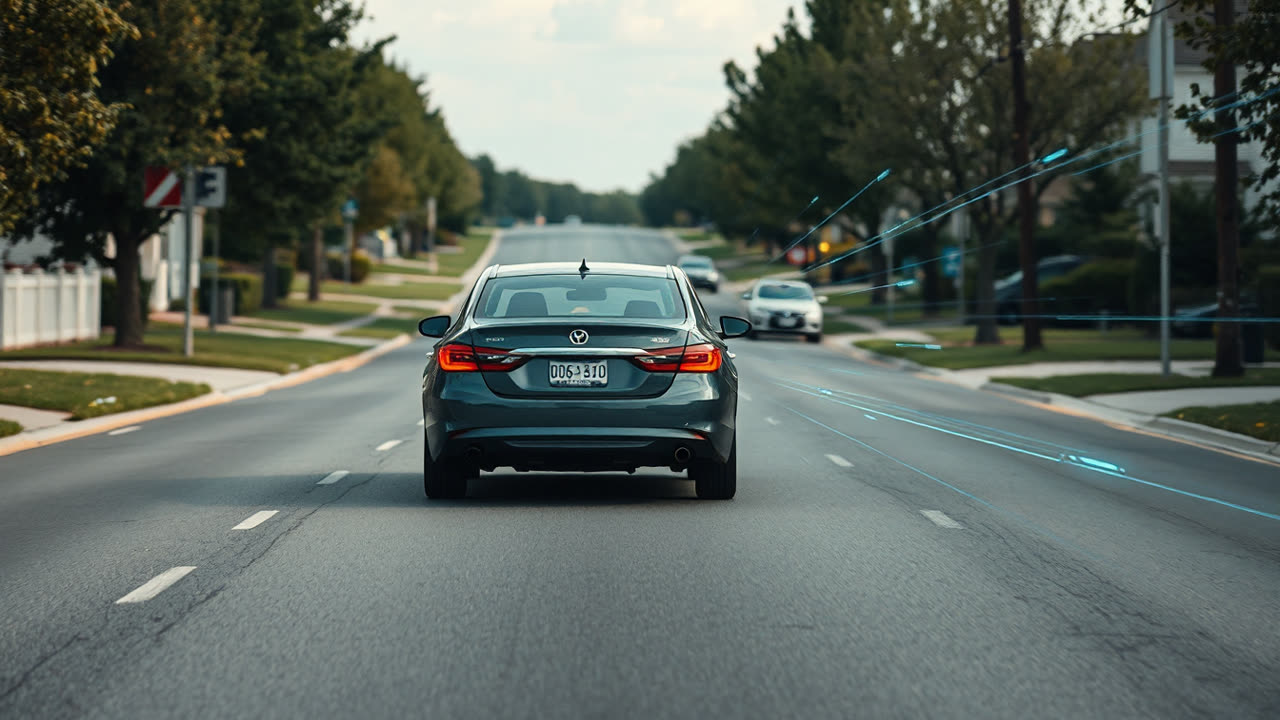
Flock Safety is reportedly piloting a sophisticated AI system capable of identifying individuals not merely by their license plates, but through analysis of their unique driving behaviors, a significant leap beyond conventional vehicle surveillance and into the realm of individualized behavioral tracking. This new capability, which moves beyond the company's established automated license plate reader (ALPR) technology, leverages advanced machine learning to discern patterns in how a vehicle is operated—including acceleration, braking, turning radius, and even lane positioning—to create a distinct digital fingerprint for each driver. The system, currently in undisclosed testing phases, represents a profound expansion of surveillance capacity, effectively allowing law enforcement and potentially other entities to build profiles on drivers based on their habits behind the wheel, rather than just vehicle ownership or registration.
The implications for individual privacy and civil liberties are immense, far surpassing the concerns already raised by ubiquitous ALPR networks. While ALPR systems primarily identify vehicles associated with known criminal activity or outstanding warrants, Flock's new AI tool aims to identify the *person* operating the vehicle, irrespective of the vehicle's registration. This creates a persistent, behavioral surveillance layer, generating data trails that could reveal daily routines, travel patterns, and even driving styles that might be interpreted as "suspicious" by an algorithm. For users, this translates to a pervasive sense of being constantly observed, eroding the anonymity traditionally afforded by public roads. The potential for mission creep is substantial; what begins as a tool for serious crime prevention could easily expand into monitoring for minor traffic infractions or even for identifying individuals participating in protests based on their driving to and from specific locations. The data collected could be used to infer socioeconomic status, work commutes, and personal relationships, painting an an unprecedentedly detailed picture of a person's life without their explicit consent or even knowledge.
Flock Safety has, over recent years, solidified its position as a dominant force in public safety technology, deploying over 50,000 ALPR cameras across 4,000 cities and communities in the United States, capturing billions of license plate scans monthly. Their existing Raven ALPR cameras and Flock Aware software have become standard tools for police departments, often marketed as effective deterrents against property crime and for locating stolen vehicles and suspects. This new behavioral identification AI builds directly upon that existing infrastructure, transforming passive vehicle identification into active driver profiling. Previous generations of traffic monitoring focused on static data points like speed or red-light violations. Even advanced ALPR systems, while powerful, operate on the premise of identifying a known vehicle against a watchlist. Flock's new system, by contrast, seeks to establish a unique identity for an *unknown* driver based purely on their dynamic interaction with a vehicle, a technological leap that distinguishes it sharply from rivals like Rekor Systems or Motorola Solutions' Vigilant Solutions, which primarily focus on ALPR data integration and analytics. While these competitors offer robust ALPR networks and data analysis, none have publicly announced or deployed a system capable of identifying drivers based on behavioral patterns in the same granular way Flock is reportedly testing.
The long-term outlook for this technology is fraught with both promise and peril. Proponents will undoubtedly argue its potential to enhance public safety by more effectively tracking dangerous drivers, identifying suspects fleeing crime scenes, or even improving accident reconstruction by understanding driver behavior leading up to an incident. However, the ethical and legal frameworks governing such pervasive behavioral surveillance are severely underdeveloped. The absence of clear guidelines risks creating a "surveillance creep" where the technology's capabilities outpace democratic oversight and individual rights protections. We can anticipate significant legal challenges centered on Fourth Amendment rights against unreasonable searches and seizures, as well as broader privacy statutes. Legislative bodies, still grappling with the implications of facial recognition and traditional ALPR, will be under immense pressure to establish guardrails for this new frontier of behavioral AI. Furthermore, the accuracy and potential for bias in such AI systems will be a critical point of contention; algorithms trained on specific datasets might disproportionately affect certain demographics or driving styles. The coming years will likely see a heated debate between security imperatives and fundamental privacy rights, with Flock's new AI tool serving as a potent flashpoint in the ongoing struggle to define the boundaries of digital surveillance in a free society.