Florida County Finds 14 Unpermitted Flock Safety Cameras, Igniting Privacy Outcry
The discovery of 11 cameras with no identified owner among 14 unauthorized devices in St. Lucie County highlights a troubling lack of oversight and significant data privacy risks associated with automated license plate readers.
✨ This content was summarized and interpreted by AI; it may contain errors — please verify accuracy with the original sources. Learn more
Listen to this story
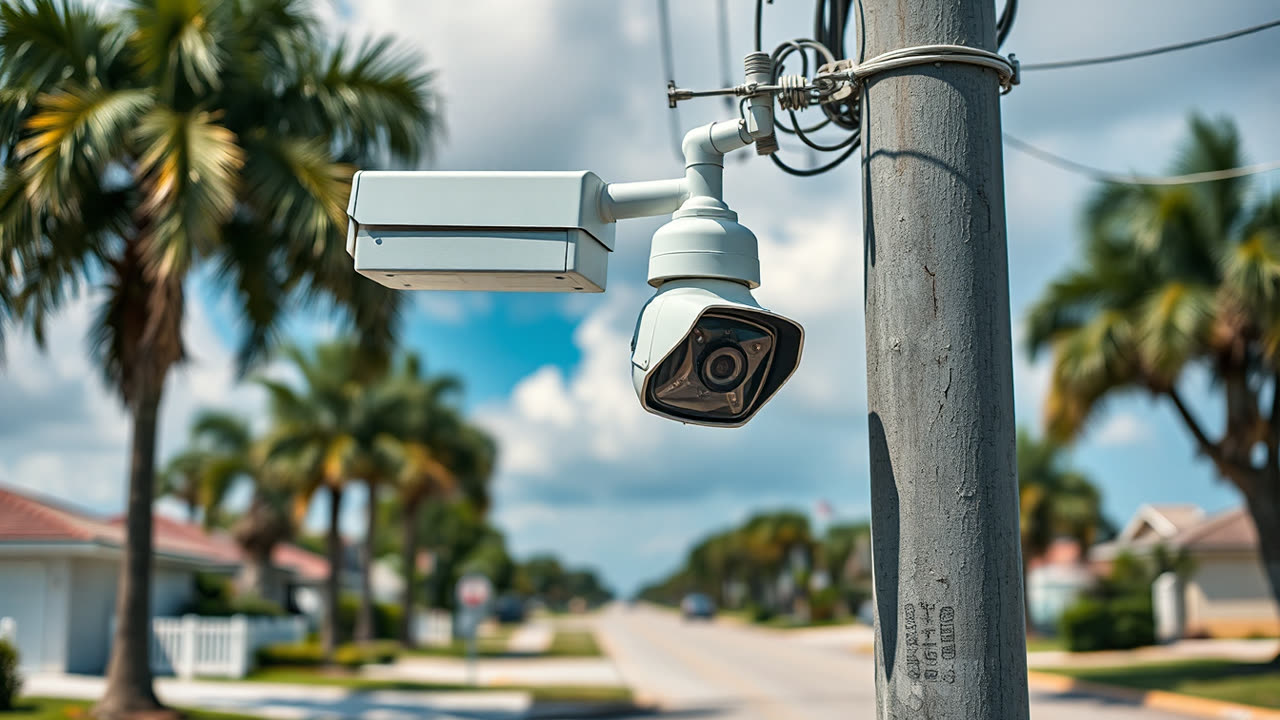
St. Lucie County, Florida, discovered 14 unpermitted Flock Safety cameras during a planned removal of its existing 52 authorized devices, raising profound concerns about unchecked surveillance and data privacy in an increasingly monitored society. Of these newly found cameras, 11 have no publicly identified owner, prompting county officials to issue 30-day removal notices and temporarily cover them to prevent further data collection. This alarming revelation follows a broader trend of scrutiny over Flock Safety's automated license plate readers (ALPRs) and similar technologies, with Florida's Department of Transportation (FDOT) recently mandating the removal of all such cameras from state roads due to misuse and privacy concerns.
The immediate impact on St. Lucie County residents is a palpable sense of unease and a significant erosion of trust in both government oversight and the technology itself. Residents like Ty Grant, living near one of the unclaimed cameras, expressed feeling "very unsafe" knowing officials had no knowledge of who installed or operated the device. This incident underscores a critical vulnerability inherent in the proliferation of ALPR systems: the potential for a clandestine, privately operated surveillance network to exist alongside, or even unbeknownst to, authorized public safety infrastructure. While Flock Safety asserts its cameras are designed to capture vehicle details—license plate, make, model, color, and other visible characteristics—rather than identify individuals, critics argue that the aggregated data can still reveal intimate details about a person's life, including medical visits, religious affiliations, and political activities. The company maintains that data is deleted by default after seven days, although jurisdictions can retain it longer, and every search is logged for review. However, the lack of transparency surrounding the unpermitted cameras in St. Lucie County completely bypasses these supposed safeguards, creating a "data honeypot" of unknown origin and access.
This situation is not isolated to St. Lucie County. A 2024 Forbes investigation uncovered unpermitted Flock camera installations in multiple states, including Florida, Massachusetts, and Utah. In September 2026, a Flock camera was found on city property in Millcreek, Utah, without the knowledge of either the city or police. Similarly, Palm Bay, Florida, suspended its Flock system after discovering cameras were installed without required final inspections. These incidents highlight a systemic issue of inadequate permitting and oversight for ALPR technology, raising questions about Flock Safety's installation practices and the diligence of local authorities in monitoring such deployments.
The broader industry context reveals a rapidly expanding ALPR market, projected to reach $10.1 billion in 2026 and $15.22 billion by 2030, driven by demand from law enforcement, smart cities, and private security. Key players like Motorola Solutions (Vigilant), Axon, Rekor, and Genetec (AutoVu) compete with Flock Safety, offering varying levels of integration, analytics, and deployment options. However, the industry as a whole faces increasing pressure regarding data privacy, compliance, and transparency. The ACLU, a prominent critic, argues that ALPRs constitute a mass surveillance system that tracks, logs, and shares movements without warrants, pushing for bans or strict regulations. Indeed, the ACLU's ongoing work includes model legislation for ALPR use and legal challenges based on Fourth Amendment concerns.
The misuse of ALPR data by law enforcement further intensifies these privacy concerns. In September, a former Fort Pierce police officer, Josepher Crutchfield, was arrested for allegedly accessing Flock's database 382 times to track his ex-girlfriend's vehicle while off duty. This follows other documented cases of officers using ALPR systems to stalk former partners in states like Kansas. Such abuses underscore the critical need for robust auditing mechanisms and severe penalties for misuse, issues that Flock Safety claims to address with mandatory Audit Assistance systems designed to flag suspicious activity. However, the effectiveness of these internal audit tools has not been independently evaluated.
Florida Governor Ron DeSantis has publicly voiced strong reservations about the state becoming a "digital AI surveillance state," advocating for an "AI bill of rights" to protect citizens' privacy and calling for targeted tools for law enforcement rather than broad surveillance systems. This stance, coupled with FDOT's directive for camera removal, signals a significant shift in the regulatory landscape within Florida. While some law enforcement agencies, like the Tallahassee Police Department, acknowledge the value of ALPRs in solving serious crimes such as kidnappings and homicides, many are now suspending or ending their Flock programs. Leon County Sheriff Walt McNeil, for instance, suspended Flock camera use pending further oversight and regulation, requesting accreditation commissions to establish standards for audits and public reporting.
Looking ahead, the St. Lucie County incident will undoubtedly serve as a potent case study in the ongoing debate over surveillance technology. It highlights the urgent need for clear, enforceable regulations governing the installation, ownership, and data handling of ALPR systems, particularly in an environment where private entities can deploy such devices without public knowledge or consent. The lack of accountability for the 11 unclaimed cameras demands a deeper investigation into who is operating these devices and for what purpose. This episode could catalyze stronger legislative action in Florida, potentially leading to more stringent permitting requirements, mandatory public registries of all ALPR cameras, and independent oversight mechanisms for data access and use. The broader ALPR industry will likely face increased pressure to enhance transparency, implement robust privacy-by-design principles, and demonstrate verifiable accountability to maintain public trust. Without such measures, the promise of enhanced public safety risks being overshadowed by the chilling specter of pervasive, unregulated surveillance.