Foldable Smartphones Threaten Compact Tablets as Displays Expand
The latest generation of foldable smartphones, with their expansive 7.6 to 8.4-inch unfolded displays, are directly challenging the utility of compact tablets like the 8.3-inch iPad Mini, prompting a serious re-evaluation of device ecosystems.
✨ This content was summarized and interpreted by AI; it may contain errors — please verify accuracy with the original sources. Learn more
Listen to this story
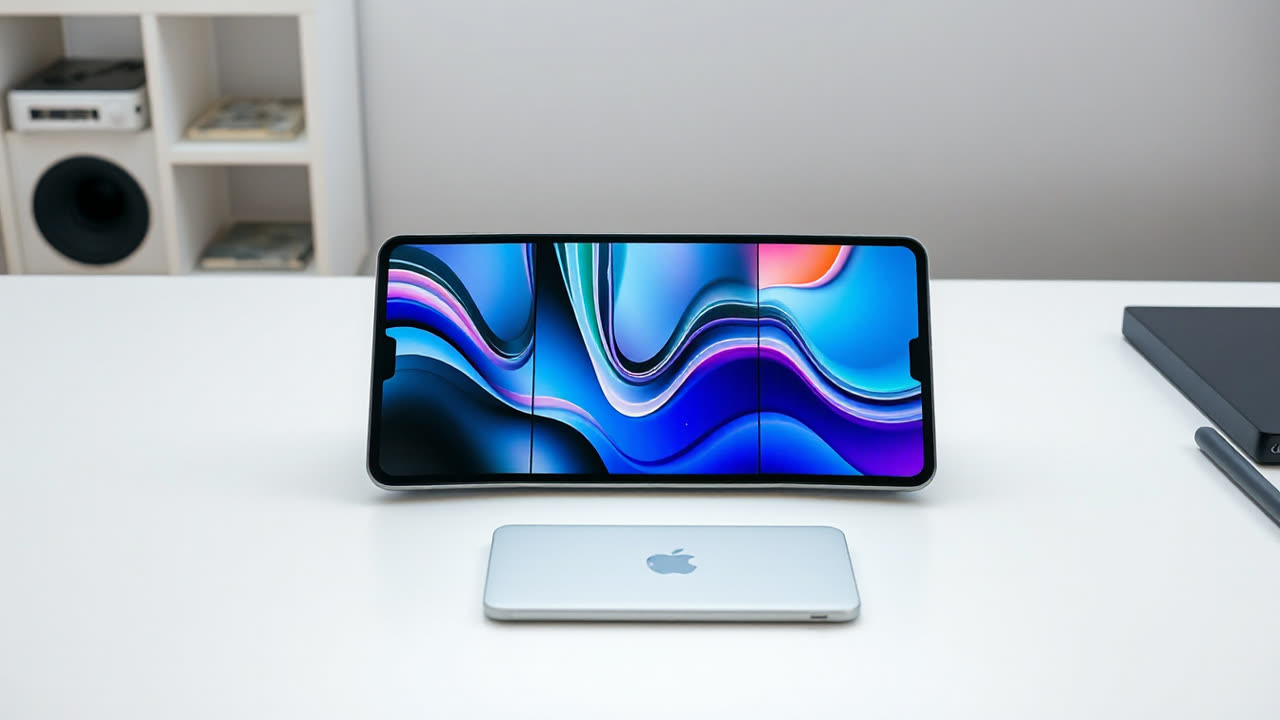
The latest generation of foldable smartphones, with their expansive displays now routinely reaching 7.6 to 8.4 inches unfolded, are directly challenging the utility of compact tablets like the 8.3-inch iPad Mini, prompting a serious re-evaluation of device ecosystems for many users. This significant leap in screen real estate, often achieved within a device that still folds down to a pocketable form factor, represents a pivotal moment for both the smartphone and tablet markets, blurring lines that were once distinct.
The core of this disruption lies in the technological maturity of foldable displays and hinge mechanisms. Companies like Samsung, Google, and OnePlus have refined their offerings, with devices such as the Samsung Galaxy Z Fold 5 featuring a 7.6-inch main display and the Google Pixel Fold offering a 7.6-inch internal screen, both approaching the iPad Mini's 8.3-inch diagonal. More recent entrants, including some Chinese manufacturers, have pushed even further, with models boasting unfolded screens exceeding 8 inches, effectively mirroring the compact tablet experience in a smartphone chassis. These advancements are not merely about size; they encompass improved display durability, reduced crease visibility, and more robust hinges designed for tens of thousands of folds, addressing initial consumer anxieties.
This evolution matters profoundly because it offers a compelling "two-in-one" proposition that traditional smartphones and tablets cannot. For users, the primary impact is unparalleled portability without sacrificing screen real estate for productivity or media consumption. A professional can use the larger unfolded screen for email, document editing, or video conferencing on the go, then fold it into a standard smartphone form factor for calls and quick tasks. Media consumption, from reading e-books to streaming video, becomes significantly more immersive on a near-tablet-sized display that fits into a jacket pocket. This convenience factor directly challenges the need for a separate compact tablet, especially for those who value minimizing the number of devices they carry. The initial premium pricing, often exceeding $1,500, has been a barrier, but as manufacturing scales and competition intensifies, prices are gradually becoming more accessible, further accelerating adoption.
From an industry perspective, the rise of foldables is forcing a strategic pivot for both smartphone and tablet manufacturers. For smartphone makers, it represents a lucrative high-end segment, driving innovation in display technology, battery efficiency, and industrial design. The differentiation offered by foldables is a powerful antidote to the incremental upgrades seen in traditional slab phones. For tablet makers, particularly those focused on the smaller form factors, foldables pose an existential threat. If a foldable phone can deliver 80-90% of a compact tablet's utility while also serving as a primary phone, the market for devices like the iPad Mini could shrink considerably, pushing manufacturers to innovate in other tablet segments, such as larger professional-grade tablets or specialized devices. Software optimization is also critical; operating systems and applications are increasingly being tailored to take advantage of the foldable form factor, offering enhanced multitasking capabilities like split-screen views and drag-and-drop functionality that mimic desktop environments.
Comparing current foldables to their predecessors reveals significant strides. Early foldable generations were plagued by durability concerns, visible screen creases, and often compromised camera systems due to design constraints. Today's foldables feature ultra-thin glass (UTG) for improved scratch resistance, advanced water resistance ratings, and increasingly sophisticated camera arrays that are competitive with, if not identical to, their flagship slab phone counterparts. Battery life, a perennial concern for devices with large, power-hungry displays, has also seen improvements through more efficient chipsets and larger battery capacities, often allowing for a full day's use. While foldables still carry a weight penalty compared to traditional smartphones, they are often lighter than carrying both a smartphone and a separate tablet.
Looking ahead, the trajectory for foldable phones suggests continued refinement and broader market penetration. We can anticipate further reductions in display crease visibility, potentially invisible hinges, and even more diverse form factors, including rollable screens or tri-fold designs that could push unfolded dimensions well beyond current tablet sizes. The integration of stylus support, already present in some models like the Galaxy Z Fold series, will become standard, enhancing their appeal for note-taking and creative tasks. As manufacturing costs decrease, foldables are expected to trickle down into more mid-range price points, making them accessible to a much wider audience. This widespread adoption will likely accelerate the decline of the small tablet market, solidifying the foldable phone's position as the ultimate convergence device, capable of seamlessly transitioning between a pocketable smartphone and a highly capable mini-tablet, ultimately redefining personal computing for many.