Former President Trump Pledges "Super Intelligence Force" and "AI Czar"
Former President Donald Trump has pledged to establish a "Super Intelligence Force" led by an "AI czar" if he returns to the White House, marking a highly centralized approach to national artificial intelligence strategy.
✨ This content was summarized and interpreted by AI; it may contain errors — please verify accuracy with the original sources. Learn more
Listen to this story
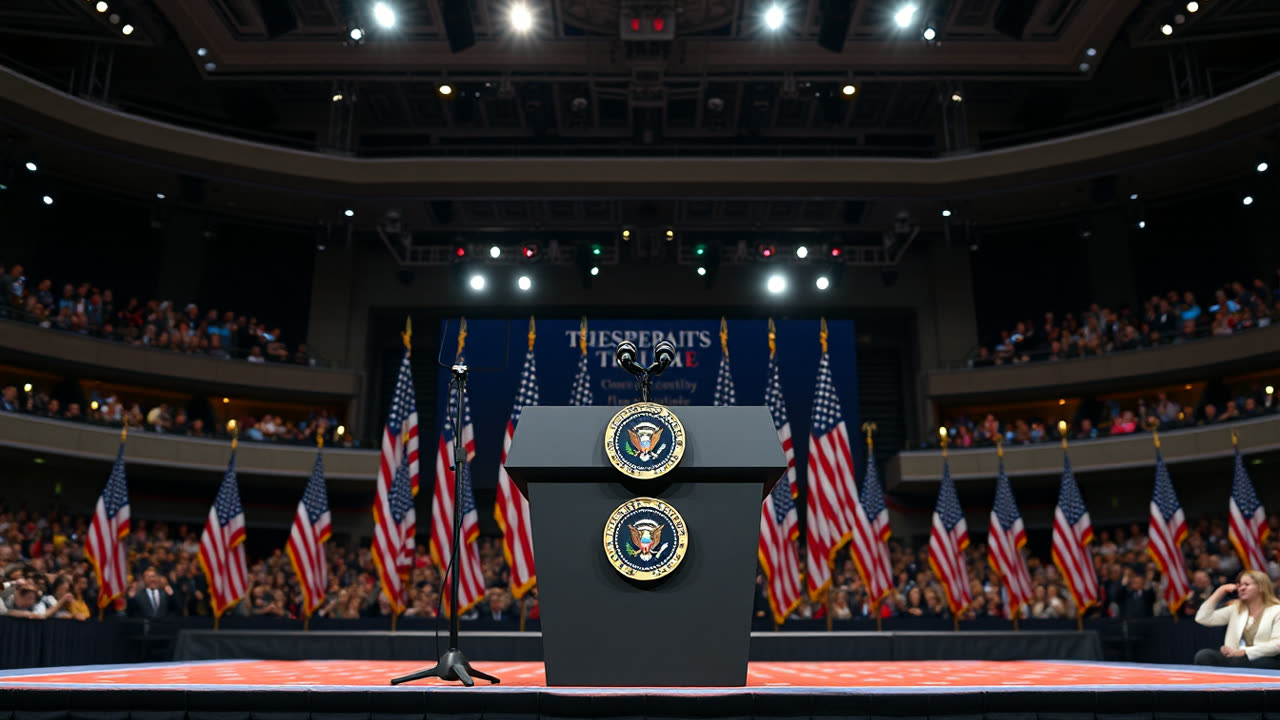
In a striking move that underscores the escalating geopolitical and technological race, former President Donald Trump has pledged to establish a "Super Intelligence Force" led by an "AI czar" should he return to the White House. This declarative policy, initially articulated during a rally in Commerce, Georgia, on March 26, 2022, represents a distinctive, highly centralized approach to national artificial intelligence strategy, framing advanced AI development directly under a militaristic and executive-controlled mandate. While details remain sparse, Trump emphasized the initiative's critical role in national security and economic competitiveness, signaling a potential paradigm shift from the more distributed, multi-agency AI strategies currently favored.
The proposed "Super Intelligence Force" and its "AI czar" carry profound implications for both the technological landscape and the broader public. The very name, evocative of speculative fiction and military operations, immediately suggests a focus on AI as a tool of power and control rather than a collaborative or ethical endeavor. This nomenclature could influence public perception, fostering fear or an overestimation of current AI capabilities, rather than encouraging informed dialogue about its responsible development. For users, a highly centralized, potentially security-focused AI apparatus could raise significant concerns about data privacy, surveillance capabilities, and the potential for government-mandated AI applications to infringe on civil liberties. The "czar" model, while promising swift decision-making, also risks stifling diverse perspectives and innovation by concentrating authority in a single, politically appointed individual, potentially leading to a narrow vision of AI's societal benefits.
Within the industry, such a structure could usher in an era of unprecedented government involvement in AI research and development. While it might channel significant federal funding into specific projects deemed strategically important, it could also create a regulatory environment that prioritizes national security over commercial innovation or open-source collaboration. This could lead to a bifurcation of the AI ecosystem, with certain companies benefiting from government contracts while others face increased scrutiny or restrictive guidelines. The appointment of an "AI czar" could also signal a move towards "national champions" in AI, potentially at the expense of smaller startups or academic research not aligned with the central command's objectives. Furthermore, the emphasis on a "force" could divert talent and resources towards defense and intelligence applications, potentially drawing away from AI's transformative potential in healthcare, education, and climate change.
This proposed strategy contrasts sharply with the existing, more nuanced approaches to AI governance. The Biden administration, for instance, has championed a "whole-of-government" approach, establishing the National AI Initiative Office and issuing executive orders aimed at promoting responsible AI innovation, competition, and safeguarding civil liberties. These efforts have focused on developing ethical guidelines, investing in AI research across various agencies, and fostering international collaboration, emphasizing a balance between innovation and risk mitigation. Globally, rivals like China have pursued a state-driven, top-down AI strategy, leveraging massive public and private investment to achieve technological supremacy, often with significant government oversight and data collection. The European Union, conversely, has prioritized a human-centric approach, focusing heavily on comprehensive regulatory frameworks like the AI Act to ensure transparency, accountability, and fundamental rights. Trump's "Super Intelligence Force" appears to lean closer to the Chinese model in its centralized authority, but with a potentially more overt military and intelligence orientation, diverging significantly from the open, collaborative, and ethically-driven frameworks gaining traction in Western democracies.
Looking ahead, the implementation of a "Super Intelligence Force" faces considerable challenges. Defining the scope and authority of such a body, attracting top-tier AI talent into a potentially bureaucratic structure, and securing sustained bipartisan funding would be formidable tasks. The "czar" model itself, historically used for temporary, high-priority issues, might struggle with the long-term, evolving nature of AI development and its pervasive societal impact. The most immediate outcome, should this policy be enacted, would likely be a significant reorientation of federal AI priorities, with a strong emphasis on capabilities deemed critical for national defense and economic dominance. The long-term outlook suggests a potential acceleration of certain AI applications, particularly in defense and intelligence, but also a risk of alienating parts of the private sector and academic community if the approach is perceived as overly restrictive or politically driven. The international community would undoubtedly scrutinize such a move, potentially leading to further fragmentation of global AI governance, as nations grapple with differing philosophies on how best to harness and control this transformative technology. The ultimate success or failure of a "Super Intelligence Force" would hinge on its ability to balance centralized control with the inherent need for innovation, collaboration, and ethical considerations that define the frontier of artificial intelligence.