Fortnite to Introduce AI-Powered Voices for User-Generated Content
Epic Games is set to allow Fortnite creators to publish experiences with AI-powered character voices starting July 30th, launching with 36 initial AI 'personas'.
✨ This content was summarized and interpreted by AI; it may contain errors — please verify accuracy with the original sources. Learn more
Listen to this story
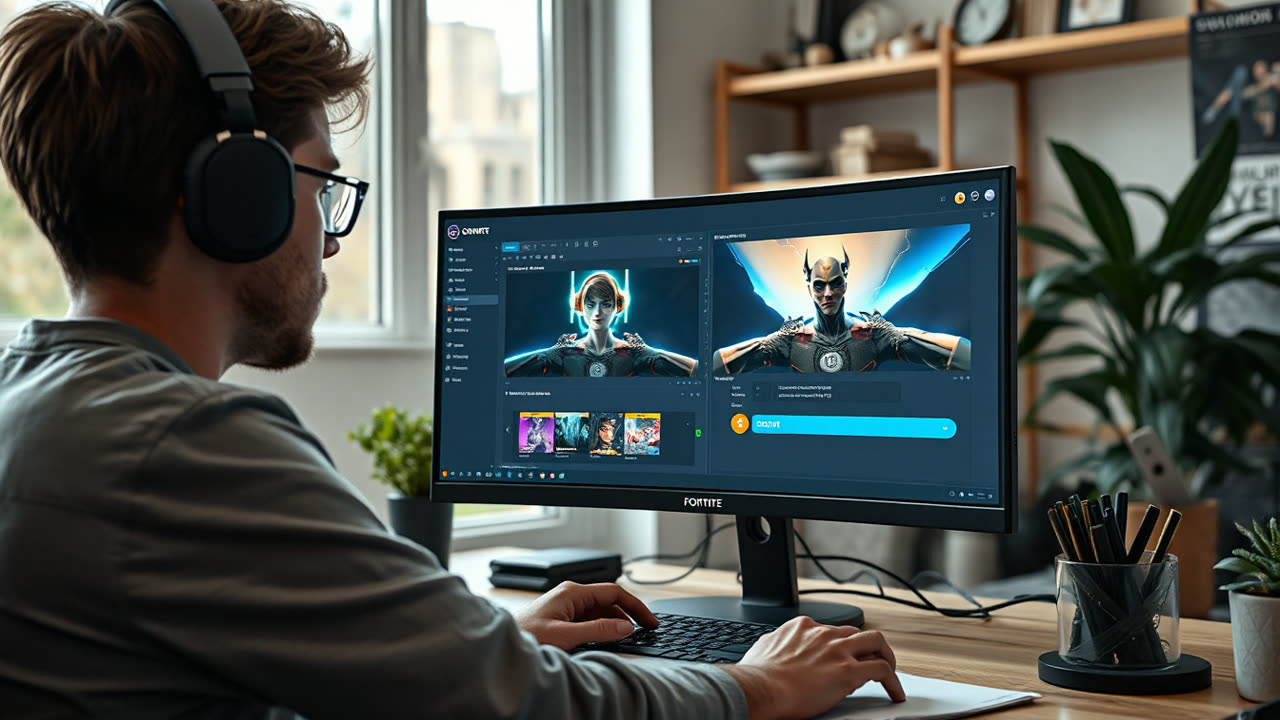
Fortnite is set to revolutionize its user-generated content landscape by enabling creators to publish experiences featuring characters with AI-powered voices starting July 30th, a move spearheaded by Epic Games which has already developed 36 initial AI "personas" to kickstart the initiative. This integration marks a significant leap from static, text-based interactions or pre-recorded dialogue, promising a new era of dynamic and immersive storytelling within the platform. The immediate impact for players will be a richer, more responsive interaction with non-player characters (NPCs) in custom maps and modes, potentially leading to truly adaptive narratives where character responses evolve based on player actions and context, rather than following rigid scripts. This technological advancement directly addresses a long-standing limitation in user-generated content (UGC): the often-stiff, repetitive, or entirely absent voice acting that can detract from immersion in otherwise creative experiences.
For the burgeoning creator economy within Fortnite, particularly those leveraging the Unreal Editor for Fortnite (UEFN), this development drastically lowers the barrier to entry for producing high-quality, voiced characters. Historically, adding voice acting required significant resources, whether through hiring professional voice actors, finding talented volunteers, or laboriously recording dialogue oneself – processes that are time-consuming and often cost-prohibitive for independent creators. By providing AI-powered voices, Epic Games is essentially democratizing a sophisticated production capability, allowing a wider array of creators to imbue their worlds with personality and narrative depth without incurring substantial financial or logistical overhead. This could lead to an explosion of more complex and engaging custom games, fostering a more vibrant and diverse ecosystem of content that rivals professionally developed experiences in terms of narrative richness. Furthermore, the 36 pre-created personas offer a readily available palette of voices and personalities, accelerating the development process for creators who can simply plug these AI characters into their designs, effectively providing a shortcut to sophisticated character interaction.
This strategic pivot by Epic Games also signals a deeper commitment to AI as a core component of its future platform strategy, extending beyond mere cosmetic enhancements. Integrating AI voices into UEFN positions Fortnite not just as a game, but as a leading platform for AI-driven interactive entertainment, potentially attracting a new wave of creators interested in experimenting with cutting-learning-edge technologies. The broader industry implications are substantial: as platforms like Fortnite enable more sophisticated AI within UGC, it pressures rivals such as Roblox and Minecraft to accelerate their own AI integration efforts to maintain competitiveness in attracting creators and players. While Roblox has made strides in offering AI tools for asset generation and code assistance, Epic's direct integration of AI-powered conversational agents into character design sets a new benchmark for dynamic in-game interaction within UGC platforms. Older generations of Fortnite Creative mode, while groundbreaking, relied heavily on static assets and pre-defined logic, whereas this AI integration promises a paradigm shift towards generative and adaptive content.
Looking ahead, the initial launch of AI-powered voices is likely just the beginning of Epic's broader AI ambitions for Fortnite. Future iterations could see these AI personas evolve beyond pre-defined personalities to exhibit truly dynamic learning capabilities, adapting their behavior and dialogue over extended play sessions based on player interactions. This could pave the way for NPCs that remember past encounters, develop preferences, and even form relationships with players, blurring the lines between scripted narrative and emergent gameplay. The next logical step might involve AI-driven quest generation or even real-time, context-aware dialogue systems that allow for open-ended conversations with characters, moving beyond the current framework of distinct "personas." However, this rapid advancement also introduces new challenges, particularly in content moderation and ensuring responsible AI deployment. Epic will need robust systems to prevent the misuse of AI voices for generating inappropriate or harmful content, and to manage the ethical implications of increasingly autonomous digital characters. Ultimately, this move solidifies Fortnite's position at the forefront of the metaverse concept, demonstrating how AI can be leveraged to create endlessly evolving, deeply personal, and creator-driven virtual worlds.