Framework Laptop 13 BIOS Update Bricks AMD Ryzen 7040 Mainboards, Company Offers Replacements
A critical BIOS 3.20 update for Framework Laptop 13 (AMD Ryzen 7040 Series) mainboards has rendered numerous devices inoperable, prompting Framework to offer replacements for some out-of-warranty units and explore an emergency BIOS flashback mode.
✨ This content was summarized and interpreted by AI; it may contain errors — please verify accuracy with the original sources. Learn more
Listen to this story
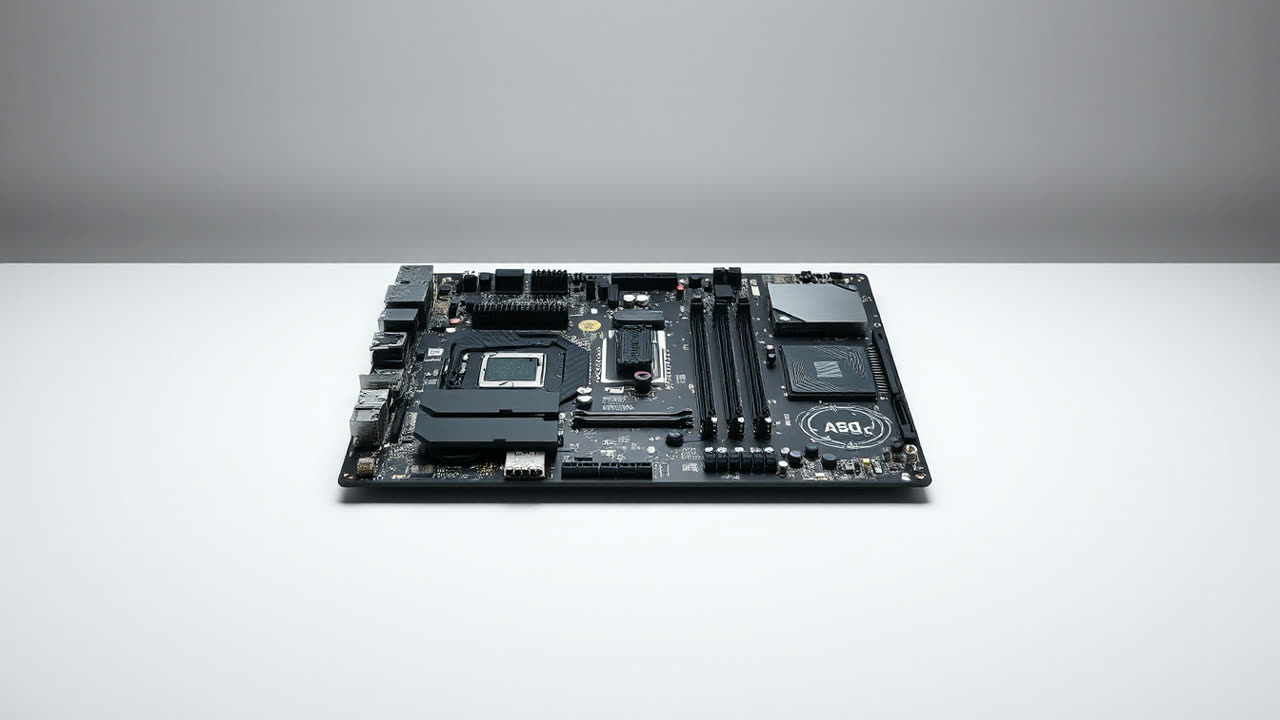
A critical BIOS update, version 3.20, for Framework Laptop 13 (AMD Ryzen 7040 Series) mainboards has been widely reported to brick devices, prompting Framework to offer replacements for some out-of-warranty units and investigate implementing an emergency BIOS flashback mode. This significant failure, affecting numerous users who attempted to update from prior versions like BIOS 3.18, has resulted in laptops displaying corrupt images, hanging during the update process, or failing to boot entirely. The incident directly challenges Framework's core promise of repairability and long-term user ownership, forcing affected customers into complex, self-directed repairs or costly mainboard replacements.
The core issue stems from the BIOS 3.20 update, distributed for both Windows and Linux (via LVFS), which, for an unsettling number of users, renders their Framework 13 AMD Ryzen 7040 series mainboards inoperable. While not every update attempt has resulted in a bricked system—some users reported successful updates on multiple 7840U and 7640U units—the prevalence of failures has generated considerable concern within the Framework community. Initially, Framework support responses to out-of-warranty users were met with frustration, as customers were reportedly offered no recovery path and directed to purchase new mainboards, priced at over CA$500. This stance directly contradicted the company's ethos of empowering users to maintain and repair their devices. However, a recent shift indicates Framework is now replacing *some* out-of-warranty AMD mainboards, acknowledging a deeper responsibility for the manufacturer-provided software update's destructive impact. The company is also actively exploring the development of an emergency BIOS flashback mode, a feature that would provide a crucial failsafe against future firmware update mishaps.
This crisis strikes at the very heart of Framework's brand identity and its unique position in the computing industry. The company has built its reputation on challenging planned obsolescence by offering highly modular laptops designed for easy repair and upgradeability. The ability to swap out components, including the mainboard itself, is a cornerstone of this philosophy. When a firmware update, directly from the manufacturer, causes a catastrophic failure, it erodes the trust users place in the system's longevity and the company's commitment to support. For a company that champions user agency, requiring a user to spend approximately $20 on specialized tools—such as a CH347 SPI programmer, a 1.8V level shifter, and a WSON8 pogo pin probe—to manually reprogram a Winbond W25Q256JW BIOS chip, highlights a significant gap in user-friendly recovery options. This level of technical intervention is far beyond what the average user, even a tech-savvy one, expects from a routine software update.
The incident also casts a shadow on the broader modular laptop market, which is experiencing substantial growth, with projections indicating a global market size of USD 7.18 billion by 2034, growing at a CAGR of 17.6% from 2026. Framework is a leading innovator in this niche, with products like the Laptop 16 further pushing the boundaries of modularity. While competitors like Schenker offer modular PCs, some still incorporate soldered components, such as 8GB of DDR5 RAM on their Element 16, presenting a less flexible upgrade path than Framework's fully swappable mainboards. This BIOS bricking issue, however, underscores that even with physical modularity, software integrity remains paramount. Previous Framework BIOS versions have also had critical flaws, such as BIOS 3.17, which could brick systems if the update process ran on the wrong platform. Furthermore, reports of connectivity and display stability issues on AMD Ryzen 7040 series Framework laptops after a year of use suggest a pattern of firmware-related challenges that Framework must address more robustly.
Looking ahead, Framework's response to this crisis will be pivotal for its long-term credibility. The decision to replace some out-of-warranty mainboards is a positive, albeit delayed, step towards rectifying the damage and rebuilding user trust. More critically, the investigation into an emergency BIOS flashback mode is essential. Such a feature, common on many desktop motherboards, would provide users with a vital self-recovery mechanism, aligning perfectly with Framework's repairability mission. Without it, the promise of a long-lasting, user-maintainable laptop is undermined by the risk of an unrecoverable software-induced failure. The modular computing market thrives on the promise of extended lifespan and reduced e-waste. For Framework to truly lead this movement, it must ensure that the software underpinning its hardware is as resilient and user-friendly as its physical components. This incident serves as a stark reminder that true repairability encompasses not just the ease of swapping parts, but also the robustness and recoverability of the underlying firmware.A critical BIOS update, version 3.20, for Framework Laptop 13 (AMD Ryzen 7040 Series) mainboards has been widely reported to brick devices, prompting Framework to offer replacements for some out-of-warranty units and investigate implementing an emergency BIOS flashback mode. This significant failure, affecting numerous users who attempted to update from prior versions like BIOS 3.18, has resulted in laptops displaying corrupt images, hanging during the update process, or failing to boot entirely. The incident directly challenges Framework's core promise of repairability and long-term user ownership, forcing affected customers into complex, self-directed repairs or costly mainboard replacements.
The core issue stems from the BIOS 3.20 update, distributed for both Windows and Linux (via LVFS), which, for an unsettling number of users, renders their Framework 13 AMD Ryzen 7040 series mainboards inoperable. While not every update attempt has resulted in a bricked system—some users reported successful updates on multiple 7840U and 7640U units—the prevalence of failures has generated considerable concern within the Framework community. Initially, Framework support responses to out-of-warranty users were met with frustration, as customers were reportedly offered no recovery path and directed to purchase new mainboards, priced at over CA$500. This stance directly contradicted the company's ethos of empowering users to maintain and repair their devices. However, a recent shift indicates Framework is now replacing *some* out-of-warranty AMD mainboards, acknowledging a deeper responsibility for the manufacturer-provided software update's destructive impact. The company is also actively exploring the development of an emergency BIOS flashback mode, a feature that would provide a crucial failsafe against future firmware update mishaps.
This crisis strikes at the very heart of Framework's brand identity and its unique position in the computing industry. The company has built its reputation on challenging planned obsolescence by offering highly modular laptops designed for easy repair and upgradeability. The ability to swap out components, including the mainboard itself, is a cornerstone of this philosophy. When a firmware update, directly from the manufacturer, causes a catastrophic failure, it erodes the trust users place in the system's longevity and the company's commitment to support. For a company that champions user agency, requiring a user to spend approximately $20 on specialized tools—such as a CH347 SPI programmer, a 1.8V level shifter, and a WSON8 pogo pin probe—to manually reprogram a Winbond W25Q256JW BIOS chip, highlights a significant gap in user-friendly recovery options. This level of technical intervention is far beyond what the average user, even a tech-savvy one, expects from a routine software update.
The incident also casts a shadow on the broader modular laptop market, which is experiencing substantial growth, with projections indicating a global market size of USD 7.18 billion by 2034, growing at a CAGR of 17.6% from 2026. Framework is a leading innovator in this niche, with products like the Laptop 16 further pushing the boundaries of modularity. While competitors like Schenker offer modular PCs, some still incorporate soldered components, such as 8GB of DDR5 RAM on their Element 16, presenting a less flexible upgrade path than Framework's fully swappable mainboards. This BIOS bricking issue, however, underscores that even with physical modularity, software integrity remains paramount. Previous Framework BIOS versions have also had critical flaws, such as BIOS 3.17, which could brick systems if the update process ran on the wrong platform. Furthermore, reports of connectivity and display stability issues on AMD Ryzen 7040 series Framework laptops after a year of use suggest a pattern of firmware-related challenges that Framework must address more robustly.
Looking ahead, Framework's response to this crisis will be pivotal for its long-term credibility. The decision to replace some out-of-warranty mainboards is a positive, albeit delayed, step towards rectifying the damage and rebuilding user trust. More critically, the investigation into an emergency BIOS flashback mode is essential. Such a feature, common on many desktop motherboards, would provide users with a vital self-recovery mechanism, aligning perfectly with Framework's repairability mission. Without it, the promise of a long-lasting, user-maintainable laptop is undermined by the risk of an unrecoverable software-induced failure. The modular computing market thrives on the promise of extended lifespan and reduced e-waste. For Framework to truly lead this movement, it must ensure that the software underpinning its hardware is as resilient and user-friendly as its physical components. This incident serves as a stark reminder that true repairability encompasses not just the ease of swapping parts, but also the robustness and recoverability of the underlying firmware.