Fujifilm Instax Pal 2 Redefines Hybrid Photography with Direct USB-C Connection
Fujifilm's new Instax Pal 2 camera introduces a groundbreaking direct USB-C connection for instant smartphone image transfer, moving beyond the often-unreliable wireless pairing of its predecessor to streamline the hybrid digital-to-analog photography workflow.
✨ This content was summarized and interpreted by AI; it may contain errors — please verify accuracy with the original sources. Learn more
Listen to this story
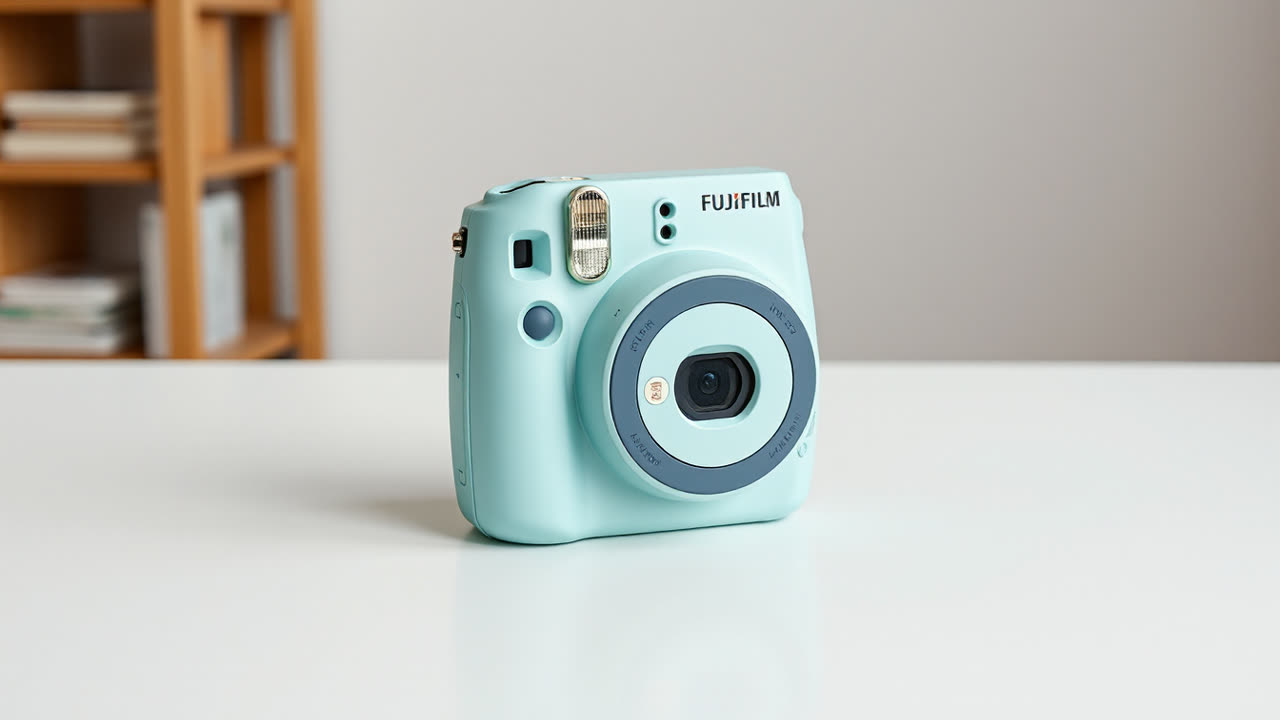
Fujifilm's new Instax Pal 2 camera introduces a groundbreaking direct USB-C connection for instant smartphone image transfer, moving beyond the often-unreliable wireless pairing of its predecessor and many competitors to streamline the hybrid digital-to-analog photography workflow. Priced at $99.95, the diminutive device, roughly the size of a golf ball, is designed to be a companion camera, capturing images digitally and then allowing users to select and edit them on their smartphone before sending them to an Instax Link printer for physical output. This direct connectivity, a significant upgrade from the Bluetooth-only transfer of the original Instax Pal, not only promises faster and more consistent transfers but also firmly positions the Pal 2 as a seamless extension of the smartphone experience, rather than a separate, occasionally cumbersome gadget.
This evolution in connectivity fundamentally reshapes the user experience, addressing a pervasive friction point in the world of connected gadgets: the often-frustrating dance of Bluetooth or Wi-Fi pairing. For the target demographic—younger users accustomed to instant gratification and seamless digital integration—the ability to physically plug the Pal 2 directly into a smartphone for immediate image access is a compelling advantage. It reduces the barrier between capture and share/print, making the entire process feel more intuitive and less prone to technical glitches. While the camera itself captures 1080p video and 5-megapixel stills, its true value lies in its role as a digital gateway to the tactile world of Instax prints. The integrated software filters and tactile controls, including a shutter button that doubles as a power button and a function button for switching between modes, further enhance its user-friendly appeal, inviting experimentation and creative expression before images ever leave the digital realm.
The significance of the Instax Pal 2 extends beyond mere convenience, reflecting a strategic pivot for Fujifilm and the instant photography market as a whole. In an era dominated by high-resolution smartphone cameras, the Pal 2 doesn't attempt to compete on image quality, but rather on process and output. It leverages the ubiquity and processing power of the smartphone for editing and sharing, while providing a dedicated, pocketable device for spontaneous capture that avoids filling a phone's camera roll with potentially low-quality or redundant shots. This hybrid approach caters to a growing segment of consumers who appreciate the nostalgic, tangible appeal of instant prints but demand the flexibility and creative control afforded by digital tools. The camera's built-in speaker, which can play one of ten customizable shutter sounds, also adds a playful, personalized element, further distinguishing it from the sterile functionality of a smartphone camera.
Comparing the Instax Pal 2 to its predecessor, the original Instax Pal, highlights Fujifilm's responsiveness to market feedback. The first iteration, while innovative in its concept, was often criticized for its reliance on Bluetooth for image transfer, which could be slow or unreliable. The Pal 2’s direct USB-C connection is a direct answer to this, significantly enhancing usability. Against rivals, the Pal 2 carves out a unique niche. Traditional instant cameras like the Instax Mini 12 or Polaroid Now+ offer immediate physical prints but lack the digital flexibility of the Pal 2. Conversely, dedicated compact digital cameras like older Sony RX100 models or Canon PowerShot G7 X Mark III offer superior image quality but require more complex workflows for printing. The Instax Pal 2 uniquely bridges this gap, acting as a digital capture device specifically designed to feed the Instax printing ecosystem. Its primary digital rivals might be other compact, smartphone-connected cameras like the DJI Osmo Pocket, though the Pal 2's explicit focus on still photography and integration with Instax printing differentiates it significantly. Furthermore, the Pal 2’s lack of a built-in screen or printer reinforces its role as a digital "front-end" for the Instax Link printers, which are essential companions for generating physical prints.
Looking ahead, the Instax Pal 2 marks a crucial step in Fujifilm's ongoing strategy to diversify and modernize its Instax lineup. This move suggests a future where the line between digital capture and analog output continues to blur, with greater emphasis placed on seamless user experience and creative control. We can anticipate future iterations or even entirely new product categories from Fujifilm that further integrate digital capabilities, perhaps offering more advanced in-camera editing, AI-driven filters, or enhanced integration with social media platforms, all while retaining the core appeal of the tangible Instax print. The direct smartphone connection could also inspire other camera manufacturers to explore similar robust wired transfer options, particularly for devices that act as companions to a primary computing device. As the market for hybrid photography solutions matures, Fujifilm's commitment to solving fundamental user pain points, like unreliable wireless transfer, positions the Instax Pal 2 not just as a successful product, but as a potential blueprint for the next generation of connected, creative imaging tools.