Fujitsu Unveils Monaka Server CPU with 144 Arm Cores and 5nm Stacked Cache
Fujitsu's Monaka server CPU, revealed at Hot Chips 2026, marks a significant architectural pivot with 144 Arm cores, an innovative 5nm stacked cache die, and a strategic move to dual 256-bit SVE2 vector units, targeting a broader market beyond specialized supercomputing.
✨ This content was summarized and interpreted by AI; it may contain errors — please verify accuracy with the original sources. Learn more
Listen to this story
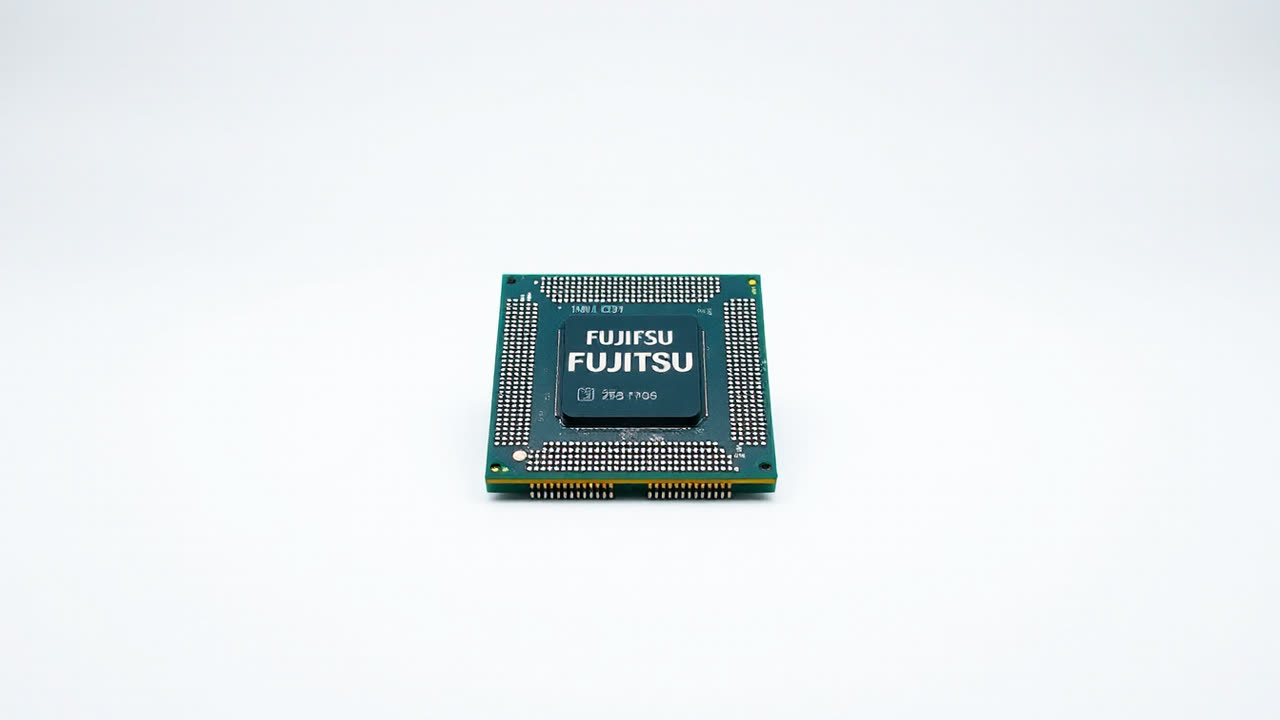
Fujitsu's Monaka server CPU, unveiled with comprehensive detail at Hot Chips 2026 on August 24, represents a significant architectural shift, confirming 144 Arm cores, a novel stacked 5nm cache die, and a deliberate move to dual 256-bit SVE2 vector units, departing from the 512-bit SVE of its A64FX predecessor. This strategic re-engineering, targeting 350W and 500W SKUs for a 2027 release, underscores Fujitsu’s intent to carve a more versatile niche in the intensely competitive data center and high-performance computing (HPC) landscape, prioritizing efficiency and broader applicability over raw, specialized vector width.
The decision to narrow the vector units from 512-bit SVE to dual 256-bit SVE2 is perhaps the most striking technical adjustment, directly impacting Monaka’s potential performance profile. While A64FX gained notoriety for its exceptional double-precision floating-point performance, especially in HPC workloads like those powering the Fugaku supercomputer, its 512-bit SVE implementation was often underutilized by general-purpose applications that struggle to saturate such wide vector pipelines. By embracing dual 256-bit SVE2, Monaka aims for a sweet spot: maintaining robust vector processing capabilities essential for AI inference, scientific simulations, and multimedia processing, while simultaneously improving instruction set utilization and power efficiency for a wider array of enterprise and cloud workloads. This move suggests a pivot from extreme specialization to a more balanced, mainstream server offering, potentially broadening its addressable market beyond the confines of top-tier supercomputing.
Central to Monaka’s design is its innovative use of a separate 5nm die dedicated entirely to cache, a testament to the increasing importance of memory bandwidth and latency in modern CPU architectures. This disaggregated cache approach, likely leveraging advanced packaging technologies, allows Fujitsu to optimize the cache die independently for density and speed using a cutting-edge 5nm process, while the main compute cores might reside on a different, potentially less expensive, or more mature process node. Such a design mitigates the challenges of integrating vast amounts of cache directly onto a complex compute die, improving yields, power efficiency, and potentially scalability. The implications for users are substantial: reduced memory bottlenecks, improved data access speeds for latency-sensitive applications, and potentially larger effective cache sizes that can significantly boost performance in data-intensive tasks, from large-scale databases to in-memory analytics. This chiplet-based strategy is becoming a cornerstone of high-performance computing, mirroring trends seen in rivals like AMD, which extensively uses chiplets for scalability and cost efficiency in its EPYC processors.
The 350W and 500W TDP (Thermal Design Power) ratings position Monaka firmly in the high-performance server segment, directly competing with top-tier offerings from Intel’s Xeon and AMD’s EPYC lines. These power envelopes indicate a focus on maximizing computational density per socket, critical for data centers striving for efficiency and reduced operational costs. For context, current high-end server CPUs from competitors often operate in similar or even higher TDP ranges to deliver peak performance. The challenge for Fujitsu will be to translate these power budgets into compelling performance-per-watt metrics, particularly against the backdrop of an industry increasingly scrutinizing energy consumption. The 144-core count, while impressive, needs to be evaluated in terms of its single-thread performance and overall throughput compared to the fewer, but often more powerful, cores of x86 rivals. The Arm architecture, with its inherent power efficiency advantages, could give Monaka an edge in specific workloads, especially if software optimization for SVE2 becomes more prevalent.
Looking ahead to its 2027 release, Monaka enters a server market undergoing rapid transformation, driven by the insatiable demands of AI, cloud computing, and advanced analytics. Its success will hinge not only on raw performance benchmarks but also on the strength of the Arm server ecosystem, including software compatibility, developer tools, and the availability of optimized libraries. While Fujitsu has a strong track record in HPC with A64FX, transitioning that success to a broader enterprise market requires robust ecosystem support. The strategic shift to 256-bit SVE2 is a calculated risk, betting on broader appeal and better software utilization, but it will face fierce competition from x86 incumbents who continue to refine their own vector processing capabilities and chiplet designs. Furthermore, the rise of specialized accelerators for AI, such as GPUs and custom ASICs, means that general-purpose server CPUs like Monaka must demonstrate compelling performance in hybrid environments, efficiently offloading tasks to specialized hardware while excelling in their own domain. Fujitsu's Monaka, with its innovative cache architecture and refined vector processing, represents a potent new contender, poised to challenge established norms and potentially redefine the performance-per-watt expectations for next-generation Arm-based servers.