FunnyPlaying Launches FPGB Mini: Affordable FPGA Retro Handheld Challenges Premium Market
FunnyPlaying's new FPGB Mini offers hardware-accurate Game Boy and Game Boy Color gameplay at an unprecedented $69.99, democratizing high-fidelity retro gaming.
✨ This content was summarized and interpreted by AI; it may contain errors — please verify accuracy with the original sources. Learn more
Listen to this story
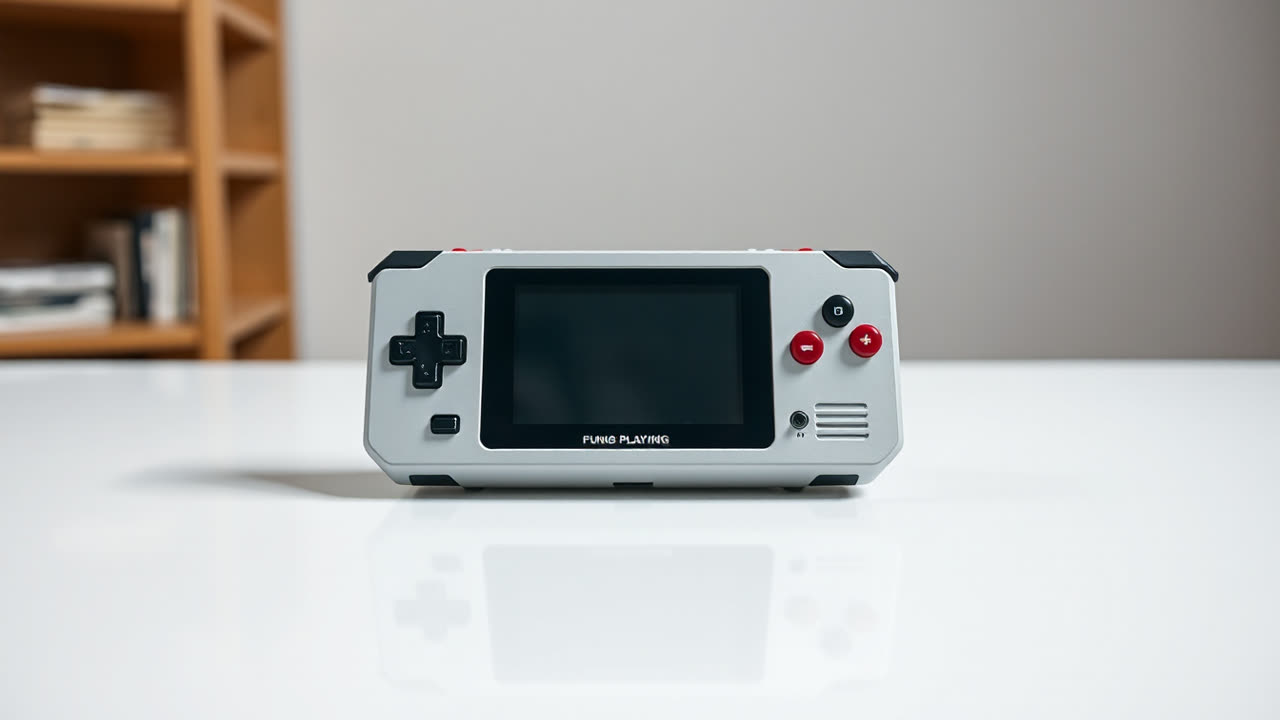
FunnyPlaying, a Chinese company renowned for its Game Boy modding kits and upgrade parts, has officially launched the FPGB Mini, a compact handheld designed to play original Game Boy (GB) and Game Boy Color (GBC) cartridges at an early bird price of $69.99. This device, also known as the Retro Pixel MiniGB, enters a burgeoning retro handheld market, aiming to democratize hardware-accurate gameplay with a significantly lower entry barrier than premium rivals like the Analogue Pocket.
The FPGB Mini is a testament to the enduring appeal of classic Nintendo handhelds, offering a modern way to experience a vast library of games. It features a 2.98-inch IPS TFT display with an 800x720 resolution, capable of providing 4x upscaling for GBC titles, ensuring crisp visuals far superior to the original hardware. Powering this experience is a removable 1800mAh Li-Po battery, promising 4-6 hours of playtime and charging via USB-C in approximately 2-3 hours. Measuring a diminutive 113 x 64 x 22 mm and weighing just 135g with the battery, the FPGB Mini lives up to its "Mini" moniker, making it exceptionally pocketable and comfortable for extended play sessions. Beyond physical cartridges, the handheld supports ROM files stored on a microSD card (up to 32GB), leveraging internal emulation for digital game access. It also includes a Real-Time Clock (RTC) module and supports link cable functionality, albeit requiring a separately purchased proprietary USB-C cable for multiplayer interactions.
This launch matters profoundly for several reasons, impacting both users and the broader retro gaming industry. For consumers, the FPGB Mini presents an unprecedented opportunity for affordable, hardware-accurate retro gaming. While the Analogue Pocket, priced around $220-$240, offers a premium FPGA experience, its cost has been a barrier for many. FunnyPlaying's sub-$70 device effectively shatters this price ceiling, making the benefits of Field-Programmable Gate Array (FPGA) technology accessible to a much wider audience. FPGA, unlike software emulation, meticulously recreates the original console's circuits at a silicon level, promising pixel-perfect accuracy, original timing, and virtually zero input lag—a significant draw for purists and those seeking an authentic experience beyond what software emulation can typically provide. However, users should note its limitations: compatibility is strictly limited to GB and GBC cartridges, lacking the Analogue Pocket's broader support for Game Boy Advance, Game Gear, Neo Geo Pocket, and other systems via adapters. Furthermore, FunnyPlaying warns that not all FlashCarts or clone cartridges may function, and the compact design might preclude the use of cartridges with built-in rumble motors or other hardware add-ons.
On an industry level, the FPGB Mini intensifies competition in the burgeoning retro handheld market, which is projected to reach $4.18 billion in 2026 and an impressive $8.5 billion by 2033. FunnyPlaying, established in 2015 and known primarily for its modding kits and custom IPS screens, is now directly challenging Analogue's high-end niche with a complete, ready-to-play device. This strategic move could force Analogue and other premium manufacturers to innovate further or reconsider their pricing, especially as other contenders like ModRetro's Chromatic and upcoming M64 also vie for attention in the FPGA space. The FPGB Mini's success, evidenced by its initial batch of 20 units selling out in just 10 minutes on September 18, 2026, underscores a strong demand for budget-friendly, high-fidelity retro hardware. This demand signals a shift: while many affordable retro handhelds rely on software emulation, the FPGB Mini demonstrates that hardware-accurate FPGA solutions can also be produced economically, potentially pushing the entire segment towards greater fidelity.
FunnyPlaying's history as a key supplier for the Game Boy modding scene, having previously developed the FPGBC (a DIY FPGA Game Boy Color kit) and the Linux-based Retro Pixel handheld, positions them uniquely to understand the desires of retro enthusiasts. The FPGB Mini can be seen as a natural evolution, moving from component sales to a fully integrated product. Compared to its spiritual predecessor, the FPGBC, the Mini offers a more polished, consumer-ready package without the need for DIY assembly. Its smaller size and dedicated body also differentiate it from previous efforts that often repurposed original Game Boy shells.
Looking ahead, FunnyPlaying will undoubtedly ramp up production, with more batches expected after the upcoming PRC National Day holidays. The initial limited run might have been a strategic soft launch to gauge demand and gather early feedback. Future iterations could address current limitations, such as expanding flash cart compatibility or even exploring adapters for other systems, though the latter would directly encroach on Analogue's primary selling point. The broader retro handheld market will likely see continued diversification, with a clear segmentation between ultra-affordable emulation devices, mid-range FPGA clones like the FPGB Mini, and premium, multi-system FPGA consoles such as the Analogue Pocket. This competitive landscape ultimately benefits consumers, driving innovation in display technology, battery life, and hardware accuracy, all while making game preservation more accessible. The FPGB Mini's arrival marks a significant moment, proving that genuine FPGA retro gaming doesn't have to carry a prohibitive price tag, thus broadening the horizons for how enthusiasts engage with gaming history.