Future EVs Could Get More Range From This Tiny TI Sensor
A tiny new sensor from Texas Instruments (TI) could help future EVs squeeze more range from their batteries while delivering smoother acceleration and less motor noise.
✨ This content was summarized and interpreted by AI; it may contain errors — please verify accuracy with the original sources. Learn more
Listen to this story
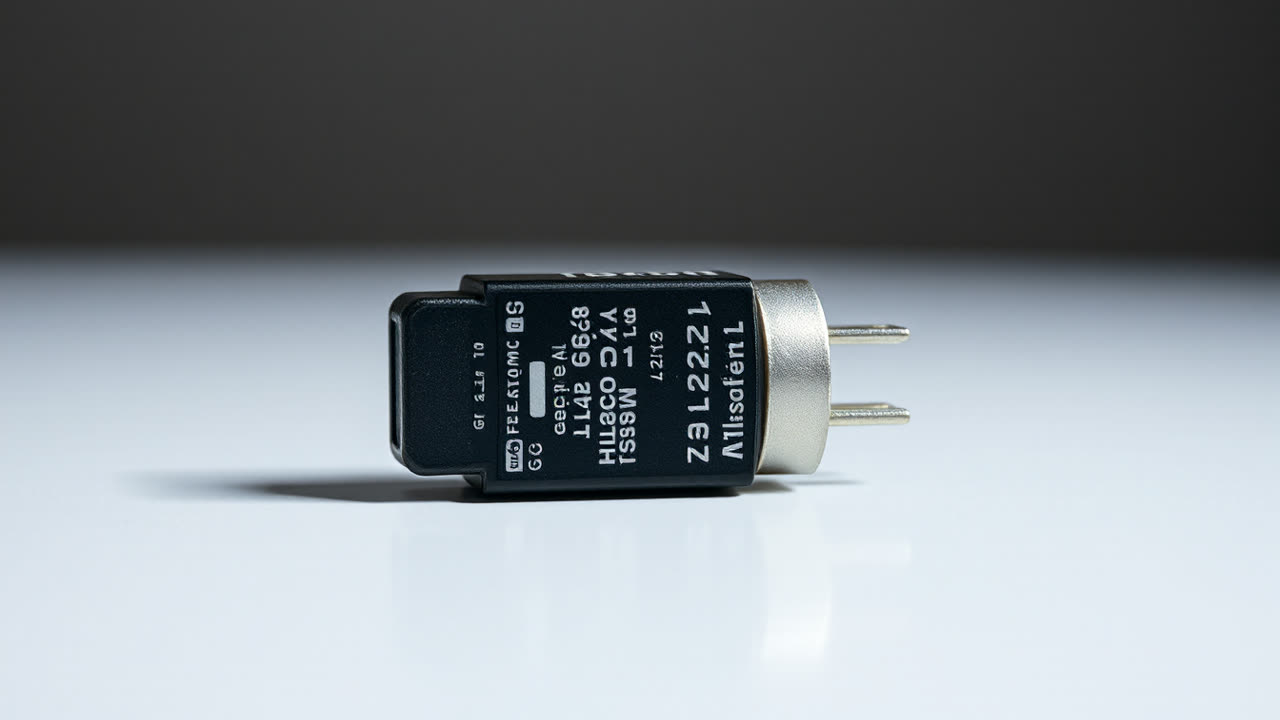
Texas Instruments (TI) has unveiled a new multiaxial coreless Hall-effect current sensor, the TMCS2100-Q1, poised to significantly enhance electric vehicle (EV) performance by improving range, acceleration smoothness, and reducing motor noise. This compact sensor, designed for integration within the traction inverter, addresses critical limitations of existing motor control technologies by providing 20 times greater accuracy than current single-direction coreless sensors, maintaining measurement errors below 1% even with slight positional shifts of 0.4 millimeters. Such precision is particularly vital for newer 800-volt EV systems, which demand extremely accurate power delivery.
This innovation marks a substantial leap in EV powertrain efficiency, moving beyond incremental battery improvements to optimize the fundamental conversion of electrical energy into mechanical motion. The traction inverter acts as the "power manager" for the EV motor, converting DC power from the battery into AC power for the motor and requiring precise current flow data to deliver the right amount of power at the right moment. Inaccurate measurements lead to "torque ripple," which drivers experience as less-smooth acceleration and which results in energy loss through heat and motor noise. By measuring the magnetic field around the electrical current horizontally and vertically simultaneously, the TMCS2100-Q1 compensates for vibrations that can affect sensor readings, ensuring consistent, high-fidelity data. This capability directly translates into more efficient battery utilization, smoother torque delivery, and reduced energy losses, all of which contribute to an extended driving range and a more refined driving experience for consumers.
The significance of TI's TMCS2100-Q1 extends across the entire EV ecosystem. For users, the promise of greater range addresses a primary concern that continues to hinder widespread EV adoption: range anxiety. While specific percentage gains in range are yet to be quantified by TI, even a modest improvement derived from more efficient motor control could allow for smaller, lighter, and potentially less expensive battery packs for a given range target, or significantly extend the range of existing battery sizes. Furthermore, the reduction in motor noise and smoother acceleration directly improves the driving experience, making EVs more appealing to a broader market segment. This enhanced performance could accelerate the transition from internal combustion engine (ICE) vehicles, impacting everything from urban air quality to global energy consumption patterns.
From an industry perspective, this sensor represents a critical enabler for advanced EV design. Current sensors are a vital component in the EV sensor market, which is projected to grow from USD 12.5 billion in 2025 to USD 57.5 billion by 2035, with position sensors, including current sensors, leading the market share. The TMCS2100-Q1's compact size and high accuracy offer automotive OEMs greater flexibility in powertrain design, potentially leading to more compact and lighter motor control units. The ability to maintain precision despite vibration also simplifies mechanical integration challenges, reducing design complexity and potentially lowering manufacturing costs. This is particularly relevant as the industry moves towards 800V architectures and wider adoption of silicon carbide (SiC) and gallium nitride (GaN) semiconductors in inverters, which demand even higher precision and faster switching speeds to maximize efficiency gains. TI's established presence in the automotive semiconductor market, with a broad portfolio of current sensing and motor control solutions, positions it well to capitalize on this innovation.
Historically, EV motor control has relied on various sensor technologies, each with trade-offs. Resolvers, while highly robust and resistant to extreme temperatures, vibration, and EMI, are typically larger, heavier, and more expensive, often used in high-performance or safety-critical applications. Traditional Hall-effect sensors are smaller and more cost-effective but have historically offered limited precision and can be susceptible to temperature variations and external magnetic interference, particularly in single-direction coreless designs. Optical encoders provide high precision but are delicate and unsuitable for the harsh automotive environment. Magnetic encoders have emerged as a middle ground, balancing precision, cost, and size. TI's new multiaxial coreless Hall-effect sensor directly addresses the limitations of previous coreless Hall-effect designs by leveraging simultaneous horizontal and vertical magnetic field measurements to compensate for positional shifts, effectively delivering resolver-like accuracy in a compact, cost-optimized Hall-effect package. This technical differentiation allows OEMs to avoid the compromise between size/cost and precision/robustness that characterized prior generations of sensors.
Looking ahead, the TMCS2100-Q1 is likely to see rapid adoption, especially as automakers prioritize efficiency and performance in an increasingly competitive EV market. The electric vehicle motor controller market, valued at an estimated USD 350 million in 2025, is projected to grow to USD 4.24 billion by 2035, indicating a strong demand for advanced control solutions. TI's focus on collaborating with OEMs early in the design cycle suggests that this sensor is being integrated into next-generation EV platforms, potentially becoming a standard component for optimizing powertrain efficiency. Beyond traction inverters, the underlying multiaxial Hall-effect technology could find applications in other critical EV systems requiring precise position sensing, such as electric power steering (EPS) and advanced driver-assistance systems (ADAS), where accuracy and reliability are paramount. The broader trend in power electronics for EVs points towards integrated systems, intelligent control strategies, and the continued adoption of wide-bandgap materials, all of which will benefit from highly accurate and reliable sensor feedback. The TMCS2100-Q1 represents not just a component improvement, but a foundational step towards unlocking the full potential of future EV powertrains, paving the way for vehicles that are not only more efficient and longer-ranging but also fundamentally smoother and quieter to drive.