G.Skill's Trident Z5 NeoX RGB DDR5-6000 C30 RAM with EXPO ULL Achieves Peak AMD AM5 Performance
This memory kit, featuring AMD EXPO Ultra Low Latency technology, offers a one-click solution to unlock the optimal 6000 MT/s CL30 'sweet spot' for Ryzen 7000/9000 processors, delivering significant gaming and application performance gains.
✨ This content was summarized and interpreted by AI; it may contain errors — please verify accuracy with the original sources. Learn more
Listen to this story
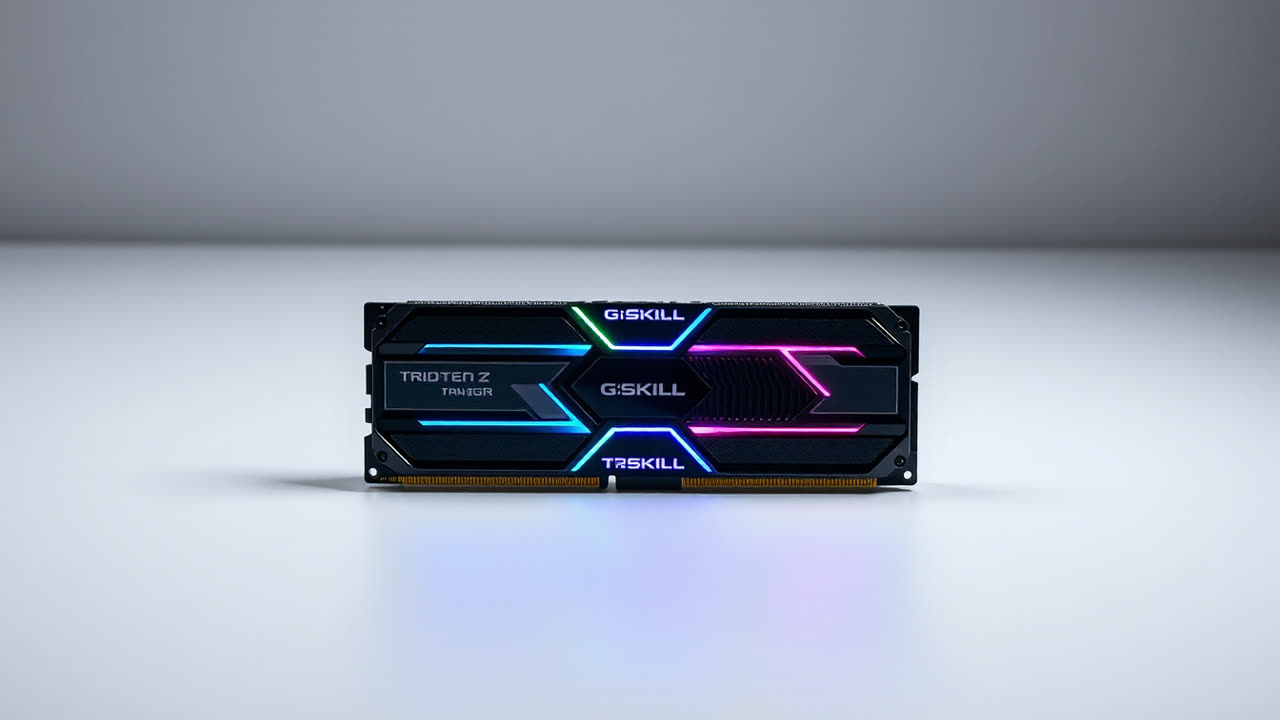
The G.Skill Trident Z5 NeoX RGB DDR5-6000 C30 2x16GB memory kit emerges as a crucial development for AMD's AM5 platform, distinguishing itself with integrated AMD EXPO Ultra Low Latency (ULL) technology. This feature aims to streamline the process of achieving peak memory performance for Ryzen processors, offering a one-click solution that previously required extensive manual tuning of sub-timings.
The Trident Z5 NeoX RGB DDR5-6000 C30 operates at a formidable 6000 MT/s with tight CL30-38-38-23 timings when the EXPO ULL profile is enabled at 1.35V, a significant leap from its default JEDEC DDR5-4800 40-40-70 specification. G.Skill maintains its signature Trident Z5 aesthetic, offering the kit in matte black, matte white, or glossy black variants, all featuring customizable RGB lighting compatible with major motherboard ecosystems like ASUS Aura Sync and MSI Mystic Light Sync. Beneath its sleek heat spreaders, the modules utilize SK Hynix 2GB M-Die integrated circuits (ICs), a common choice for high-performance DDR5.
This specific memory kit matters immensely for AMD users because DDR5-6000 CL30 is widely recognized as the "sweet spot" for Ryzen 7000 and 9000 series processors. At this frequency, AMD's Infinity Fabric operates in a 1:1 ratio with the memory controller, which is critical for maximizing data transfer efficiency and minimizing latency penalties inherent to the Ryzen architecture. The EXPO ULL feature, a refinement of AMD's existing EXPO profiles, goes a step further by allowing memory manufacturers to bake extremely tight sub-timings—such as tREFI, tRRDS, and tWR—directly into the module's SPD. This granular optimization translates directly into tangible performance gains, with AMD claiming up to a 13% increase in average frames per second (FPS) compared to generic JEDEC memory kits and an average 4% gain over standard EXPO memory in gaming scenarios. Reviews further corroborate this, showing the Trident Z5 NeoX 6000 surpassing even CL28 DDR5-6000 and some 8000 MT/s kits in popular titles like Counter-Strike 2 and Spider-Man Remastered. For a user, this means a significantly smoother and more responsive computing experience, particularly in demanding applications and competitive gaming, without the headache and potential instability of manual memory overclocking.
The introduction of EXPO ULL also signifies a crucial industry trend: the standardization of deeper memory optimization. Previously, achieving such fine-tuned sub-timings was largely the domain of experienced enthusiasts using third-party tools. By integrating these optimizations into a one-click profile, AMD and memory manufacturers like G.Skill are democratizing high-performance memory tuning, making it accessible to a broader user base. This initiative strengthens AMD's AM5 platform ecosystem, ensuring it remains competitive against Intel's XMP standard for easy memory overclocking. G.Skill, a perennial leader in high-performance memory, continues to leverage its expertise to push the envelope, influencing other manufacturers to adopt similar advanced features.
Comparing this to prior generations, the transition from DDR4 to DDR5 brought significant increases in bandwidth, crucial for modern workloads and future gaming. However, the early adoption of DDR5 was plagued by high costs and compatibility issues, a situation compounded by a global memory shortage driven by unprecedented demand from the AI industry. A 32GB Corsair Vengeance RGB DDR5-6000 kit, for instance, saw its price surge from approximately $100 in late 2024 to around $440 by late 2025. Despite this volatility, DDR5-6000 CL30 has consistently proven to be the most balanced option for Ryzen 7000/9000, offering the best blend of performance, stability, and relative cost-effectiveness. While higher speeds like DDR5-7200 or DDR5-8000 exist, they often yield diminishing returns or introduce instability on current AM5 platforms, negating their theoretical bandwidth advantages. Rival kits, such as Corsair Vengeance 6000 CL30 and Kingston Fury Beast RGB DDR5-6000, also offer compelling options, some even supporting both EXPO and XMP for dual-platform compatibility.
Looking ahead, the memory landscape will continue to evolve rapidly. We can anticipate further refinements in DDR5 technology, with ongoing optimization of EXPO ULL profiles and new revisions pushing latency even lower. Motherboard manufacturers are already rolling out BIOS updates to extend EXPO ULL support across their 600-series boards, ensuring broader compatibility. However, the current high prices of DDR5 memory are projected to persist through 2026-2028, primarily due to the AI sector's insatiable demand for High Bandwidth Memory (HBM), which diverts manufacturing resources. This economic reality will likely cement DDR5-6000 CL30 as the practical performance sweet spot for the foreseeable future. Beyond DDR5, the industry is already looking towards DDR6, expected to debut first in data centers and AI accelerators before filtering into consumer platforms, promising even higher speeds and greater efficiency. Concurrently, innovations like Compute Express Link (CXL) and advanced HBM designs are poised to redefine memory architecture by enabling memory pooling, sharing, and closer integration with processing units, blurring the traditional lines between main memory and storage to unlock unprecedented computational capabilities.