GaN and USB-C PD: The End of Bulky Laptop Chargers
Bulky laptop chargers are rapidly becoming obsolete, replaced by dramatically smaller, lighter, and more versatile GaN and USB-C Power Delivery solutions.
✨ This content was summarized and interpreted by AI; it may contain errors — please verify accuracy with the original sources. Learn more
Listen to this story
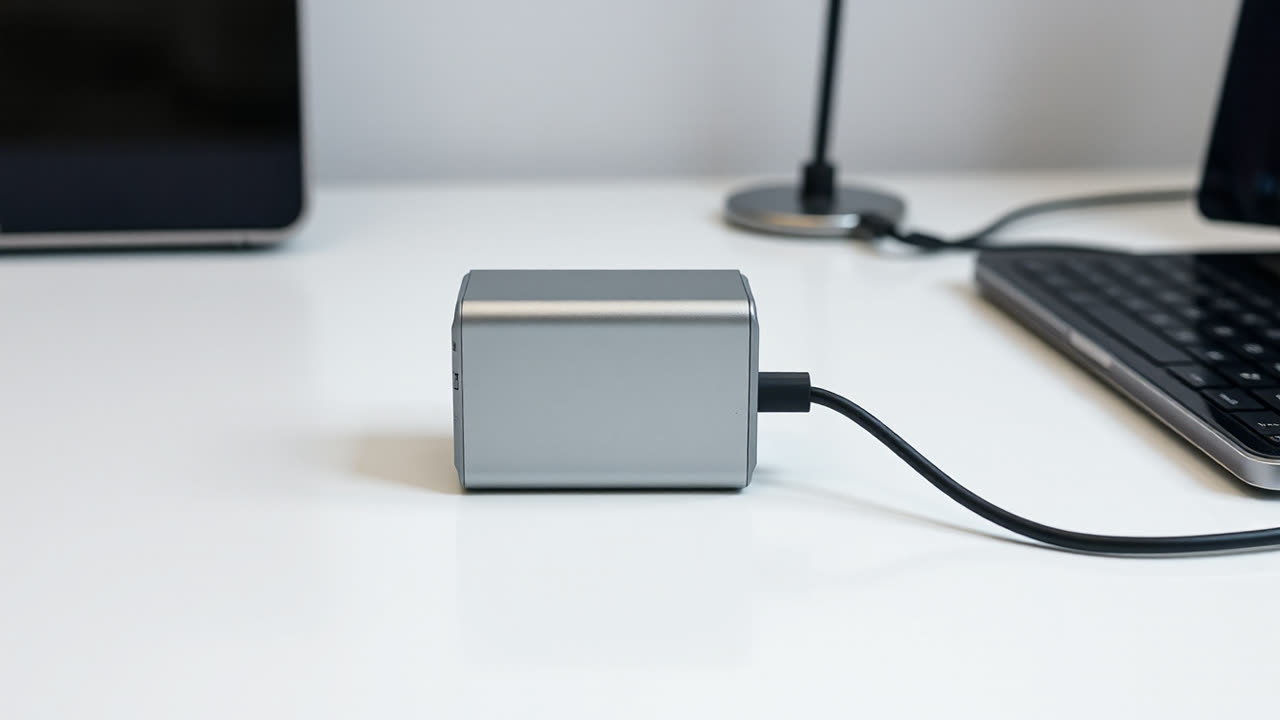
Laptop chargers, once infamous for their cumbersome size and weight, are swiftly becoming a relic of the past. This transformative shift is primarily driven by the synergistic evolution of Gallium Nitride (GaN) technology and USB-C Power Delivery (PD), resulting in power bricks that are dramatically smaller, lighter, and far more versatile than their predecessors.
At the heart of this revolution are GaN semiconductors, which have largely supplanted traditional silicon. GaN transistors are inherently more efficient, enabling them to conduct electricity faster with less resistance and significantly less energy wasted as heat. This allows manufacturers to design power adapters with much more compact internal components, often shrinking the overall charger size by 40 to 50 percent while maintaining or even increasing power output. GaN chargers can achieve up to 99% efficiency, a substantial improvement over silicon's approximate 85%.
Coupled with GaN is the widespread adoption of USB-C Power Delivery. USB-C PD is not merely a reversible connector; it's an intelligent protocol that allows devices and chargers to "negotiate" the optimal power transfer, delivering precisely the wattage required (up to 240W with PD 3.1). This intelligent communication ensures safe and efficient charging for a vast array of electronics, from smartphones and tablets to high-performance laptops, all through a single, standardized port.
For users, this means unprecedented portability and a significant reduction in cable clutter. Travelers no longer need a separate bulky brick for each device; a single GaN-powered USB-C PD charger can handle most of their gadgets. This convergence towards universal charging also brings environmental benefits through reduced electronic waste. While some entry-level laptops may still use older silicon-based charging, the trend is unequivocally clear: GaN technology and USB-C PD are the dominant forces, reshaping how we power our digital lives for the better. The future promises even greater integration and efficiency, further solidifying the end of the bulky charger era.