Geely Unveils 2.2MW Charger, Promising 4-Minute EV Charges
Geely is set to redefine electric vehicle charging with a 2.2-megawatt system and advanced battery technology, enabling unprecedented four-minute charge times and significantly outpacing rival BYD.
✨ This content was summarized and interpreted by AI; it may contain errors — please verify accuracy with the original sources. Learn more
Listen to this story
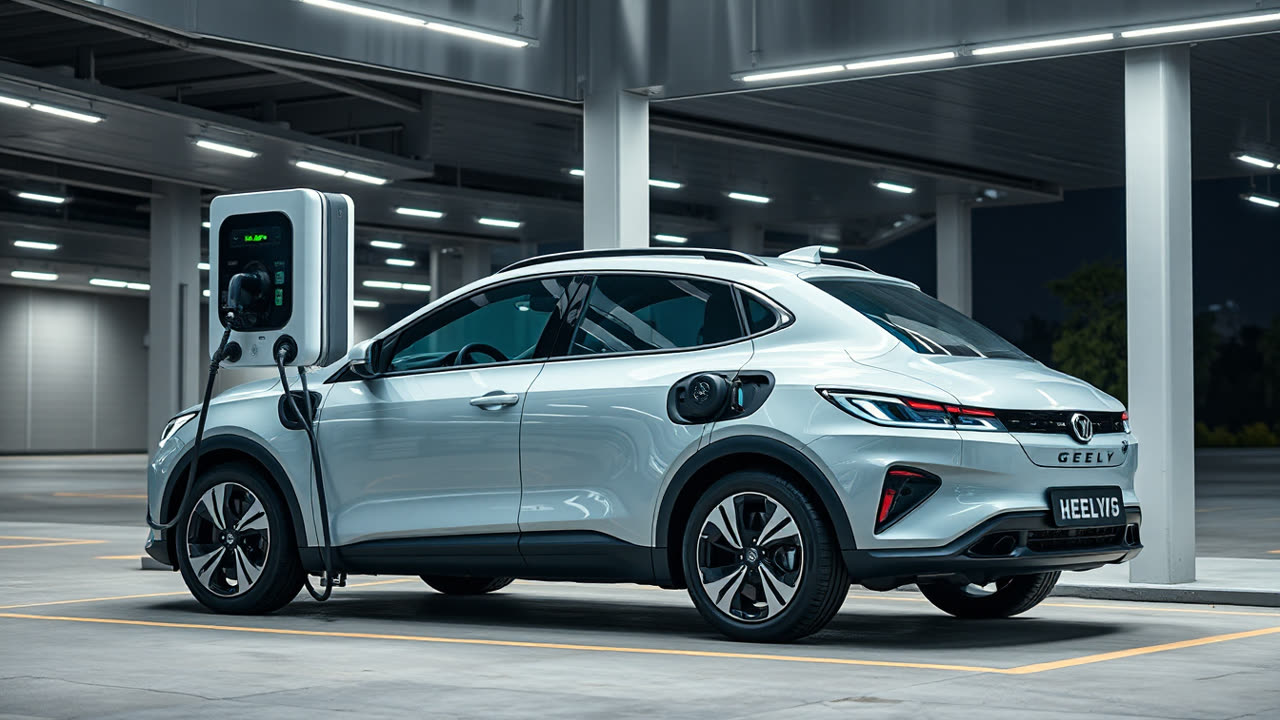
Geely is poised to redefine electric vehicle charging standards with the imminent unveiling of a 2.2-megawatt (MW) charging system and advanced battery technology, promising an unprecedented four-minute charge time. This development, slated for Wednesday, September 23, 2026, positions Geely to significantly outpace its Chinese rival BYD, with charging speeds approximately 50% faster than BYD's "Flash Charging 2.0" system. While the exact details of what "four minutes" entails—typically referring to a 10-70% or 10-80% state of charge (SOC) due to the inherent slowing of charging rates near full capacity—are still emerging, early indications suggest a 10-70% charge in 4 minutes 22 seconds and a 10-97% charge in 8 minutes 42 seconds for Geely's "Golden Brick" battery.
This leap in charging capability matters profoundly for both users and the broader automotive industry, fundamentally addressing "range anxiety" and the perceived inconvenience of EV refueling. For consumers, the psychological barrier of extended charging stops, often cited as a major hurdle to EV adoption, is dramatically reduced to near parity with traditional gasoline refueling. A four-minute charge could mean adding hundreds of kilometers of range during a brief coffee break, transforming long-distance travel for electric vehicles. This level of rapid charging also enhances the practical utility of EVs in urban environments, allowing for quick top-ups without significant disruption to daily routines. The user experience is further improved by innovations like BYD's overhead "zero gravity" rail design and liquid-cooled cables, which reduce the physical burden of handling heavy charging equipment.
Geely's technological prowess stems from a combination of an AI large-model battery management system (BMS), an all-domain 800V platform, and 6C ultra-fast charging capabilities. The new system integrates with Geely's next-generation Aegis Short Blade battery, which will debut in the updated Galaxy E5 model, offering capacities of 61.52 kWh and 70.01 kWh and CLTC-rated ranges of 550 km and 635 km respectively. Geely's Short Blade battery technology has previously demonstrated its ability to overcome high internal resistance and improve fast charging performance through the use of carbon nanotubes and specialized additives. Crucially, Geely claims its "smart charging" technology helps manage battery temperatures and longevity, promising 3,500 charge/discharge cycles with limited degradation, directly addressing concerns about battery health under extreme charging conditions.
The immediate rival, BYD's Flash Charging 2.0, launched on March 5, 2026, currently delivers a peak power of 1.5 MW per charging point. This system, built on a 1,000V high-voltage architecture, allows compatible vehicles to charge from 10% to 70% in just five minutes and to 97% in nine minutes, adding approximately 400 km of range in the initial five-minute burst. BYD's innovation is underpinned by its second-generation Blade Battery, utilizing Lithium Manganese Iron Phosphate (LMFP) chemistry with silicon-carbon anode technology, which boasts over a 5% increase in energy density compared to its predecessor. Furthermore, BYD's system includes an "All-Temperature Intelligent Thermal Management System," enabling a 20-97% charge in 12 minutes even at -30°C. This robust thermal management is critical for sustaining high power delivery without compromising battery safety or lifespan. Both Geely and BYD significantly surpass current widely available charging speeds in markets like the United States and Europe, where typical DC fast chargers, such as Tesla's V4 Superchargers, generally max out between 250 kW and 500 kW. The race for charging supremacy in China, where the industry measures charge times in seconds, has driven this rapid evolution, pushing the boundaries of 800V and even 1000V architectures.
Looking ahead, the proliferation of megawatt-scale charging presents both immense opportunities and significant challenges. The global ultra-fast EV charging systems market is projected to grow from USD 6.13 billion in 2026 to USD 40.66 billion by 2034, with Asia Pacific leading the charge. This growth will necessitate substantial investment in grid infrastructure, as such massive power draws could strain local electrical grids. Both BYD and Geely are addressing this by integrating on-site battery storage buffers with their charging stations, allowing energy to be drawn from the grid at slower rates and then rapidly discharged to vehicles, thereby mitigating grid strain. However, the high installation costs of these advanced chargers and the need for new charging standards (like the Megawatt Charging System, MCS, for larger vehicles) remain hurdles. The industry will likely see continued advancements in battery chemistry, with solid-state batteries anticipated to further enhance energy density and charging speeds. The competitive landscape, particularly in China, suggests an ongoing "arms race" in charging technology, pushing for even shorter charge times and more robust, intelligently managed battery systems. This rapid innovation will not only accelerate EV adoption globally but also necessitate greater standardization and interoperability to ensure a seamless charging experience across brands and regions.