Genki Unveils Manta: A Radical Customizable Controller with Integrated Screen
Genki's Manta controller fundamentally rethinks gamepad design with an integrated 2.9-inch display and extensive physical modularity, challenging industry norms and potentially sparking a new era of interactive, personalized gaming peripherals.
✨ This content was summarized and interpreted by AI; it may contain errors — please verify accuracy with the original sources. Learn more
Listen to this story
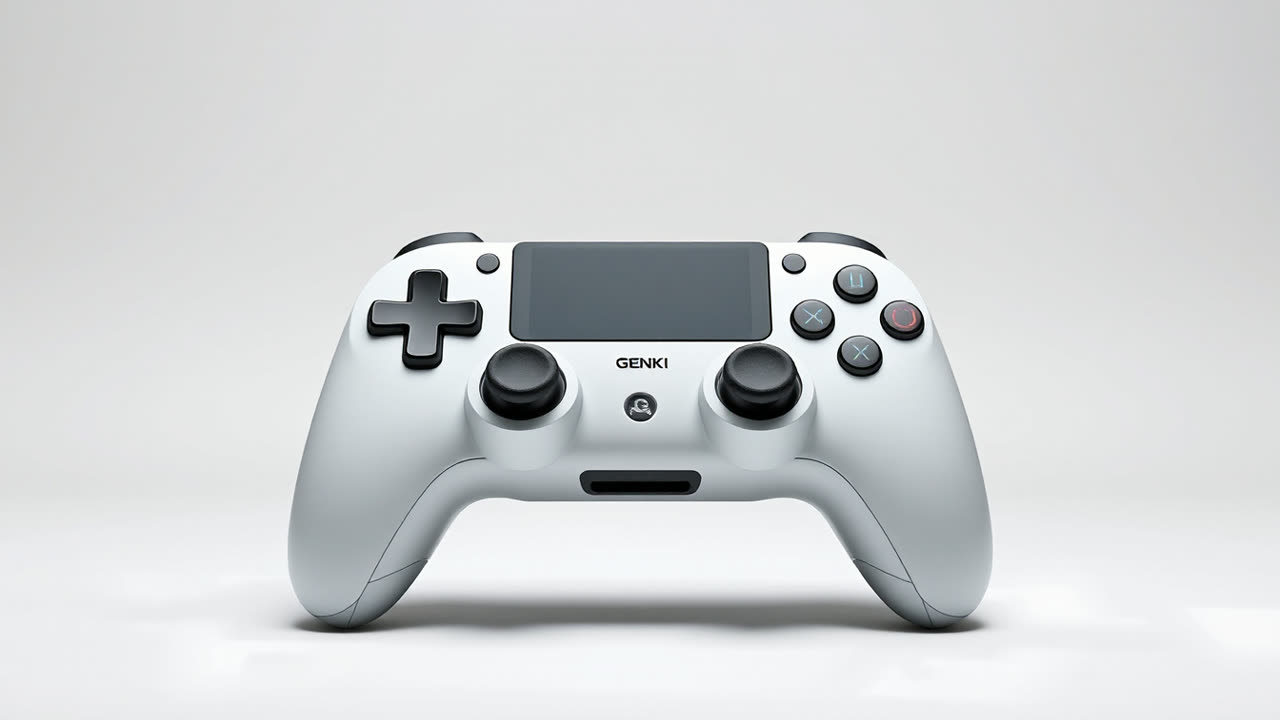
Genki has unveiled the Manta, its first internally designed, ground-up customizable controller, featuring an unorthodox layout that positions its thumbsticks and action buttons above a prominent 2.9-inch LCD screen, a radical departure from conventional gamepad ergonomics and a significant evolution from its prior collaboration with 8BitDo. This innovative design, which Genki touts as a "TMR" (True Motion Ready) display, is not merely for aesthetics but is intended to provide dynamic, context-aware information directly within the player's line of sight, potentially altering how players interact with game interfaces and in-game data. The Manta further distinguishes itself with highly adjustable components, allowing users to swap and reposition thumbsticks, D-pads, and even face buttons, offering a level of physical customization that aims to cater to a broader range of hand sizes and playstyles than fixed-layout alternatives.
The Manta's core innovation — the integrated, customizable display — holds substantial implications for user experience and industry standards. For players, this screen could move vital information, such as inventory, maps, health bars, or even streaming chat, from the main monitor directly to their hands, reducing the need to glance away from the primary gameplay. This could be particularly impactful in competitive gaming, where split-second decisions and constant situational awareness are paramount, providing a persistent, glanceable source of data without obstructing the main view. Furthermore, the ability to dynamically remap and physically adjust button layouts addresses a long-standing demand for greater accessibility and personalized comfort, potentially opening up high-performance gaming to a wider demographic, including those with specific ergonomic needs or preferences for different game genres. For the industry, Genki's move could spark a new wave of innovation in controller design, pushing rivals to consider integrated displays and advanced modularity as standard features rather than niche experiments. It challenges the established paradigm of a controller as a static input device, repositioning it as an interactive, information-rich extension of the game itself.
Genki's previous foray into gamepads, the Genki Covert Dock, was a collaboration with 8BitDo, resulting in the compact SNES-inspired 8BitDo Pro 2 controller, which prioritized portability and retro aesthetics over deep customization. The Manta represents a significant strategic pivot, marking Genki's ambition to move beyond accessory partnerships and establish itself as an independent innovator in controller hardware. While the 8BitDo collaboration offered a solid, reliable gamepad, it lacked the groundbreaking features now central to the Manta. Compared to premium rivals like the Xbox Elite Series 2 or the PlayStation DualSense Edge, which offer swappable thumbstick caps, paddle remapping, and adjustable trigger stops, the Manta's modularity extends far beyond, allowing the physical relocation of primary input elements. These established high-end controllers focus on refining existing designs, whereas the Manta fundamentally rethinks the controller form factor by integrating a screen and allowing extensive physical rearrangement of core inputs. The Manta's wireless connectivity, utilizing Bluetooth, ensures broad compatibility across PC, Nintendo Switch, and mobile platforms. Its announced price point of $199.99 places it directly in competition with these premium first-party offerings, demanding that its unique features justify the investment over more conventional, albeit highly refined, options.
Looking ahead, the success of the Genki Manta will heavily depend on developer adoption and consumer reception to its unorthodox design. For the integrated screen to be truly transformative, game developers will need to create custom overlays and data feeds that leverage its capabilities beyond basic system information. Genki's SDK for developers, allowing integration of in-game data with the Manta's screen, is a critical step in this direction, but widespread adoption is not guaranteed. If developers embrace the Manta's display, it could foster a more immersive and efficient gaming experience, particularly in complex RPGs, strategy games, or flight simulators. Conversely, if support remains limited, the screen could become an expensive novelty, offering little more than static information. The Manta's bold design also poses an ergonomic gamble; while adjustable, the elevated thumbsticks and buttons might require an adaptation period for many users accustomed to traditional layouts. Should the Manta resonate with players and developers, it could catalyze a broader trend toward "smart" controllers with integrated displays and dynamic, physically customizable inputs, pushing the boundaries of what a gamepad can be. Genki's future iterations could explore even more advanced haptic feedback, deeper AI integration for personalized adjustments, or even augmented reality elements, cementing its position as a pioneer in controller innovation.