Gigabyte RTX 3070 Owners Discover Hidden Plastic Films Under VRM Thermal Pads, Causing 30°C Overheating
A Gigabyte RTX 3070 owner's recent discovery of factory-applied protective plastic films beneath the VRM thermal pads, nearly five years after purchase, precipitated a dramatic 30°C drop in GPU hotspot temperatures upon removal, exposing a critical manufacturing oversight that compromised performance and stability for years.
✨ This content was summarized and interpreted by AI; it may contain errors — please verify accuracy with the original sources. Learn more
Listen to this story
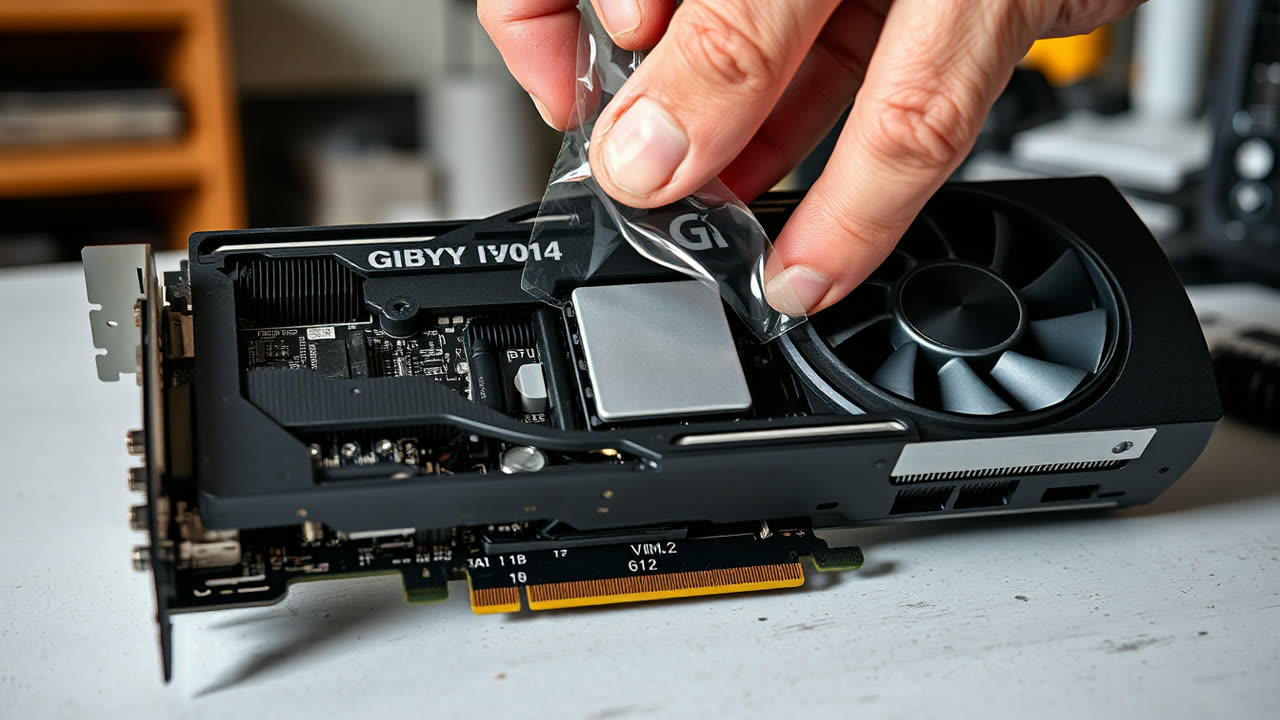
A Gigabyte RTX 3070 owner's recent discovery of factory-applied protective plastic films beneath the VRM thermal pads, nearly five years after the card's initial purchase, precipitated a dramatic 30°C drop in GPU hotspot temperatures upon removal and repasting, exposing a critical manufacturing oversight that directly compromised performance and stability for years. This significant temperature reduction, from potentially throttling levels to far more manageable operating conditions, underscores a profound lapse in quality control that transcends mere cosmetic imperfection, directly impacting a core component responsible for power delivery and overall GPU health. The incident, reported by a user on Reddit and subsequently highlighted across tech media, involved a Gigabyte RTX 3070, though the exact model variant (e.g., Gaming OC, Eagle) was not consistently specified across initial reports, making it challenging to isolate the potential scope of affected units within Gigabyte's extensive product line.
This revelation matters immensely, extending far beyond the isolated frustration of a single user. For consumers, it highlights a hidden vulnerability that can silently degrade performance, induce system instability through frequent black screens or crashes, and potentially shorten the lifespan of an expensive component. Many users, unaware of such a fundamental flaw, might attribute performance issues to driver problems, software conflicts, or general aging, rather than a preventable manufacturing defect. The necessity for a user to essentially "fix" a brand-new, premium-priced GPU years into its service life speaks volumes about the trust implicitly placed in manufacturers' quality assurance processes. Furthermore, for the broader industry, this incident serves as a stark reminder of the critical importance of meticulous assembly and rigorous quality checks. The VRM (Voltage Regulator Module) is paramount for stable power delivery to the GPU core; inadequate cooling dueates to obstructed thermal pads can lead to thermal throttling of the VRMs themselves, which in turn can starve the GPU of consistent power, manifesting as performance degradation even if the GPU core temperature appears acceptable.
Historically, thermal paste application issues or poorly seated heatsinks have surfaced sporadically across various manufacturers and generations, but a factory-applied protective film remaining on a thermal pad for five years represents a particularly egregious and persistent oversight. While thermal pads are generally more forgiving than thermal paste in terms of application, the complete obstruction of heat transfer by a plastic film renders the pad entirely ineffective, transforming a critical cooling component into an insulator. This contrasts sharply with the often-cited "silicon lottery," where performance variances are inherent to chip manufacturing. Instead, this is a clear-cut manufacturing defect that should have been caught during assembly or post-assembly testing. Competing GPU manufacturers like ASUS, MSI, and EVGA (prior to their exit from the GPU market) typically employ automated or semi-automated processes for thermal pad application, coupled with thermal testing during their quality control phases. The fact that a card with such a fundamental thermal flaw could pass these checks and operate for years, albeit sub-optimally, raises serious questions about the efficacy of Gigabyte's quality control protocols for this specific batch or model. Previous generations of GPUs, while perhaps not as thermally demanding as modern high-power cards, still relied on effective thermal management for longevity; such a defect would have been equally detrimental, if not more so, given less sophisticated thermal monitoring tools available to the average user in earlier eras.
Looking ahead, this incident could prompt increased scrutiny from the enthusiast community, potentially leading to more users proactively inspecting their older Gigabyte RTX 3070 cards, and perhaps other models from the same era, for similar issues. While it's unlikely to trigger a widespread recall given the isolated nature of the report thus far, it places pressure on Gigabyte to publicly address the matter, perhaps by acknowledging the possibility of such defects in specific production runs and offering guidance or support. For the broader industry, it reinforces the need for robust, multi-stage quality control checks, especially concerning thermal solutions, which are increasingly vital as GPU power consumption and heat output continue to climb. Future GPU designs might also see more integrated or foolproof thermal solutions that make such errors less probable. The onus will also shift slightly to consumers, who may become more vigilant about monitoring their GPU temperatures and even considering early thermal maintenance, potentially voiding warranties for self-service to ensure optimal performance. This episode serves as a potent reminder that even highly engineered, advanced hardware can harbor elementary flaws, demanding a renewed focus on fundamental manufacturing precision across the entire supply chain.