Google Assistant's Era Ends: Gemini Becomes Default on Android by September 2026
Google is phasing out its decade-old Assistant from most Android devices, making Gemini the default AI experience by September 4, 2026, marking a strategic shift towards generative AI.
✨ This content was summarized and interpreted by AI; it may contain errors — please verify accuracy with the original sources. Learn more
Listen to this story
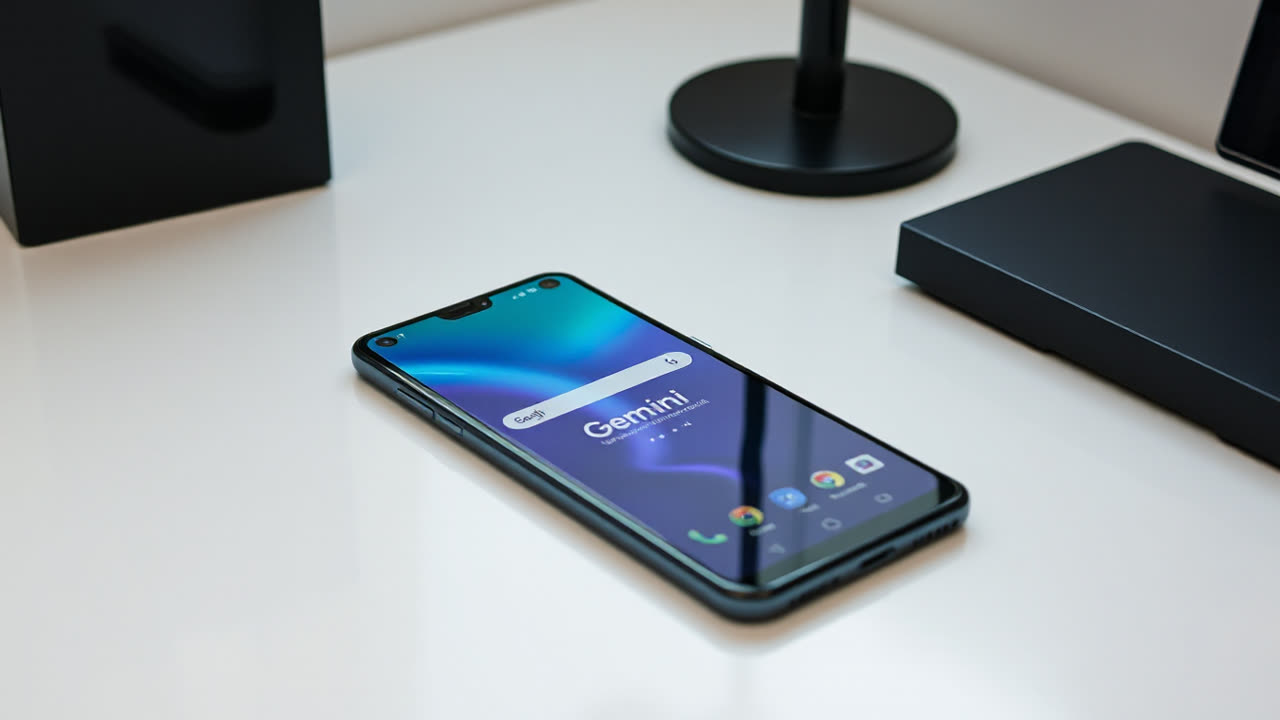
Google Assistant, a ubiquitous presence on Android devices for a decade, will begin its phased retirement on September 4, 2026, marking a pivotal shift in Google's artificial intelligence strategy as Gemini steps in as the default assistant experience. This transition, which Google is notifying users about via email, will see Assistant vanish from Android phones, tablets, Wear OS smartwatches, compatible headphones and earbuds, and Android Auto when projected from a mobile device, with the complete rollout expected to take several weeks. Notably, the legacy Assistant will continue to function on smart displays, smart speakers, and cars with Google built-in, indicating a strategic segmentation of Google's AI offerings across its vast hardware ecosystem.
This wholesale replacement of a foundational mobile feature underscores Google's aggressive pivot towards generative AI, signaling a future where conversational intelligence, not just command execution, defines user interaction. The move is not merely a rebranding but a fundamental architectural overhaul, trading Assistant's rule-based, intent-driven framework for Gemini's large language model (LLM) capabilities. While Google Assistant excelled at specific tasks like setting timers, playing music, or answering direct queries, Gemini is designed for more fluid, context-aware conversations, capable of complex reasoning, summarization, content generation, and multimodal understanding. This leap from a task-oriented helper to a truly conversational partner promises a more intuitive and powerful user experience, allowing for multi-turn dialogues and deeper engagement that was previously impossible. Users will find invoking the assistant via "Hey Google" or long-pressing the power button will now launch Gemini, transforming the entry point to mobile AI.
For the industry, this transition is a clear declaration of Google's intent to lead the generative AI race, leveraging its vast Android user base as a proving ground. The integration of Gemini directly into the core mobile operating system positions it as a formidable rival to other AI assistants, particularly Apple's Siri and Amazon's Alexa, which have yet to fully embrace generative AI at this depth across their primary mobile platforms. While Siri has seen incremental improvements and Amazon has experimented with generative AI for Alexa, neither has undergone such a complete and assertive overhaul of their core mobile assistant experience. Microsoft's Copilot, while a powerful generative AI tool, operates more as an additive layer within Windows and Microsoft 365, rather than a direct, universal mobile assistant replacement. Google's strategy effectively forces competitors to accelerate their own generative AI integrations into their mobile and device ecosystems to avoid falling behind in the intelligence layer that defines modern computing. The delay in Assistant's demise, initially planned for late 2025 before being pushed to 2026, appears to have allowed Google to significantly refine Gemini, making it a "much better Assistant replacement" than it was just months ago.
Looking ahead, the full implications of Gemini's widespread adoption are still unfolding. The segregation of Assistant and Gemini across different device categories suggests a nuanced strategy: maintaining the established, reliable Assistant for smart home devices where task execution is paramount, while deploying the more advanced, resource-intensive Gemini on personal mobile devices where complex, personalized interaction is key. This could lead to a two-tiered AI ecosystem for Google, potentially creating fragmentation or, conversely, allowing each AI to optimize for its specific domain. The success of Gemini will heavily depend on its ability to seamlessly handle the myriad of simple commands Assistant managed, while simultaneously delivering on its promise of advanced conversational AI. Challenges may arise if Gemini struggles with legacy integrations or if its enhanced capabilities demand more processing power or data, potentially impacting older Android devices or user privacy perceptions. However, with Google's commitment to "seamless transition" and continuous improvement, the industry can expect a rapid evolution of mobile AI, pushing the boundaries of what a personal assistant can truly be and setting a new benchmark for intelligent interaction across billions of devices. The September 4 deadline isn't just the end of an era for Google Assistant; it's the definitive dawn of a new, more intelligent mobile computing paradigm.