Google DeepMind Launches Real-Time Sign Language-to-Text on Pixel Devices
Google DeepMind's new SL2T model brings real-time American Sign Language transcription directly to Pixel 11, Gboard, and Live Transcribe, marking a significant step towards mainstream accessibility for Deaf and hard-of-hearing users.
✨ This content was summarized and interpreted by AI; it may contain errors — please verify accuracy with the original sources. Learn more
Listen to this story
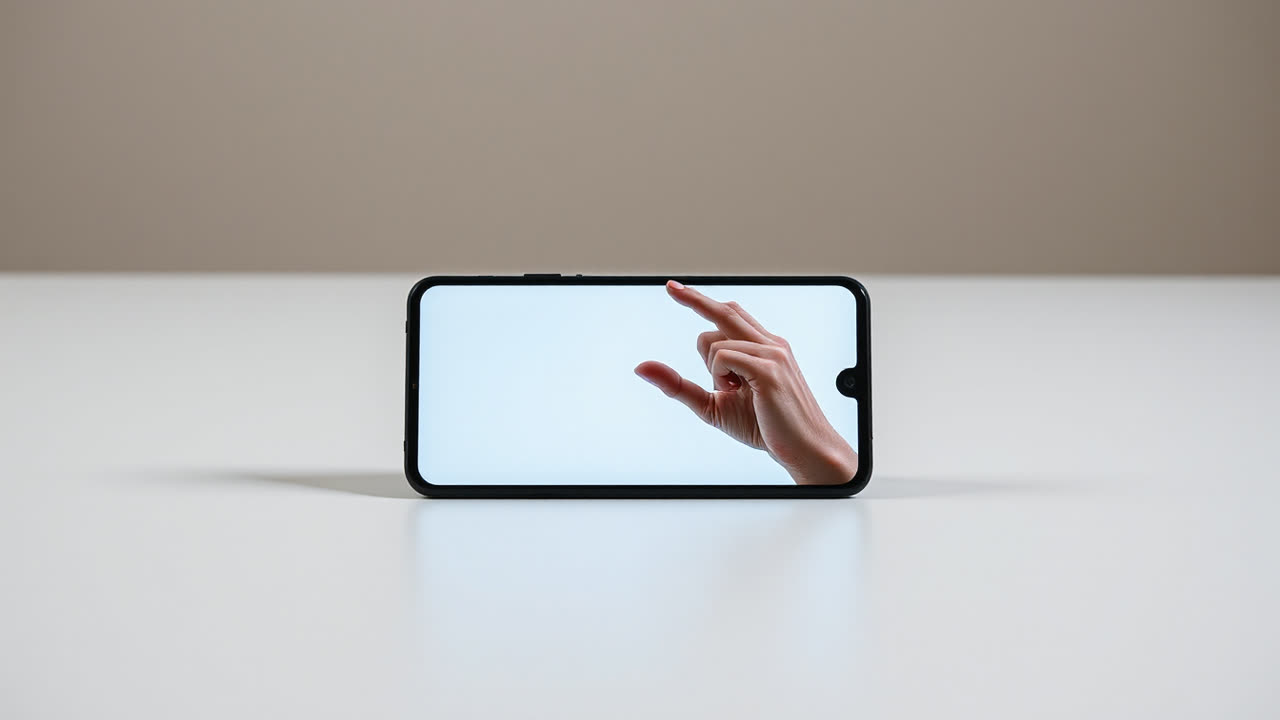
Google DeepMind has introduced a significant advancement in accessibility technology with the launch of its sign-language-to-text (SL2T) model, integrating real-time sign language transcription directly into Pixel 11 devices, Gboard, and Live Transcribe. This marks the first time a sign language AI translation model has been made available within a mainstream consumer product, initially supporting American Sign Language (ASL) to English text. The SL2T model empowers Deaf and hard-of-hearing users to interact with their smartphones using their native language, enabling seamless web searches, message drafting, and conversations with AI assistants like Gemini, mirroring the ease with which hearing users employ voice-to-text functionalities.
The core innovation behind SL2T lies in its sophisticated processing pipeline. Instead of interpreting raw video footage, an on-device model first converts the user's signing into a series of geometric coordinates, creating a "wireframe" representation. This wireframe data is then transmitted to Google's servers for translation, a design choice intended to protect user privacy. Crucially, SL2T bypasses the traditional reliance on "glosses"—intermediate textual representations that often fail to capture the rich, non-linear linguistic elements of sign languages, such as non-manual markers (facial expressions) and spatial constructions. The model was rigorously trained on an extensive dataset comprising over 100,000 hours of multilingual sign language data, with approximately a quarter dedicated to American Sign Language. This substantial training data, combined with a direct translation approach, aims to deliver higher accuracy and a more nuanced understanding of sign language grammar than previous attempts.
This breakthrough carries profound implications for both users and the broader tech industry. For the estimated 70 million Deaf people globally, SL2T represents a crucial step towards dismantling communication barriers that permeate daily life. Digital platforms, despite their ubiquity in education, employment, entertainment, and healthcare, frequently fall short in accommodating ASL users, with captions and transcripts often failing to convey the visual and cultural depth of sign languages. SL2T offers a more intuitive and culturally resonant method of digital interaction, fostering greater autonomy and inclusion by allowing users to communicate in their primary language rather than being forced into a written or spoken modality. From an industry perspective, DeepMind's move signals a necessary shift, elevating sign language processing from niche academic research to a prominent feature in consumer technology. It challenges the prevailing notion of sign languages as "low-resource languages" for AI development, urging other tech giants to invest in equitable accessibility solutions.
However, the introduction of AI in sign language translation is not without its complexities and has met with a mix of hope and apprehension within the Deaf community. Concerns persist regarding AI's ability to accurately capture the full linguistic and cultural nuances of sign languages, which include intricate facial grammar, body posture, and regional variations that can profoundly alter meaning. Critics caution against over-reliance on imperfect technology that could potentially marginalize human interpreters or misrepresent Deaf culture. Organizations like the European Union of the Deaf (EUD) have emphasized the critical importance of involving Deaf people in the development process to ensure these tools are genuinely useful, culturally sensitive, and do not inadvertently repeat historical patterns of exclusion. The consensus among advocates is that AI tools should serve to *complement* human interpreters, especially in high-stakes or sensitive contexts like healthcare and legal settings, rather than replace them.
Historically, sign language recognition systems have faced significant hurdles. Previous generations often struggled with real-time performance, accuracy across diverse signing styles, and the sheer computational complexity of processing continuous sign language. Datasets were typically small, lacked diversity in signers and environments, and were often limited to isolated signs or individual letters, rather than fluent sentences. Accuracy rates in real-world conditions for some earlier systems could drop to as low as 40-60%. While other players like Sign-Speak, Signapse, sign.mt, Hand Talk, and Kara Technologies have developed their own real-time or avatar-based sign language translation solutions, DeepMind's SL2T differentiates itself with its direct translation method and its immediate integration into a widely used consumer device ecosystem. Its foundation on DeepMind's extensive AI research, including related models like SignGemma—another DeepMind model focused on ASL-to-English, also trained on various sign languages and set for release later this year—suggests a robust and evolving technological base.
Looking ahead, Google DeepMind has articulated plans to expand SL2T's capabilities, aiming to support a wider array of the approximately 300 distinct sign languages globally and to deploy the technology across more devices. This ambition, however, will necessitate overcoming persistent challenges such as data scarcity for many sign languages and ensuring models can generalize across diverse linguistic and cultural contexts. The future of sign language AI will undoubtedly involve a hybrid approach, where advanced tools like SL2T provide unprecedented everyday accessibility, while human interpreters continue to play an indispensable role in situations demanding deep contextual understanding, cultural fidelity, and emotional nuance. The emphasis must remain on community-led development, ensuring that technological progress genuinely serves the needs and upholds the linguistic rights of Deaf communities worldwide.