Google DeepMind Unveils Gemini 3.8 Live with Real-Time Multimodal AI and Live Avatar
Google DeepMind's Gemini 3.8 Live and Live Avatar redefine AI interaction with real-time multimodal understanding and dynamic visual presence, challenging competitors with advanced capabilities and strategic pricing.
✨ This content was summarized and interpreted by AI; it may contain errors — please verify accuracy with the original sources. Learn more
Listen to this story
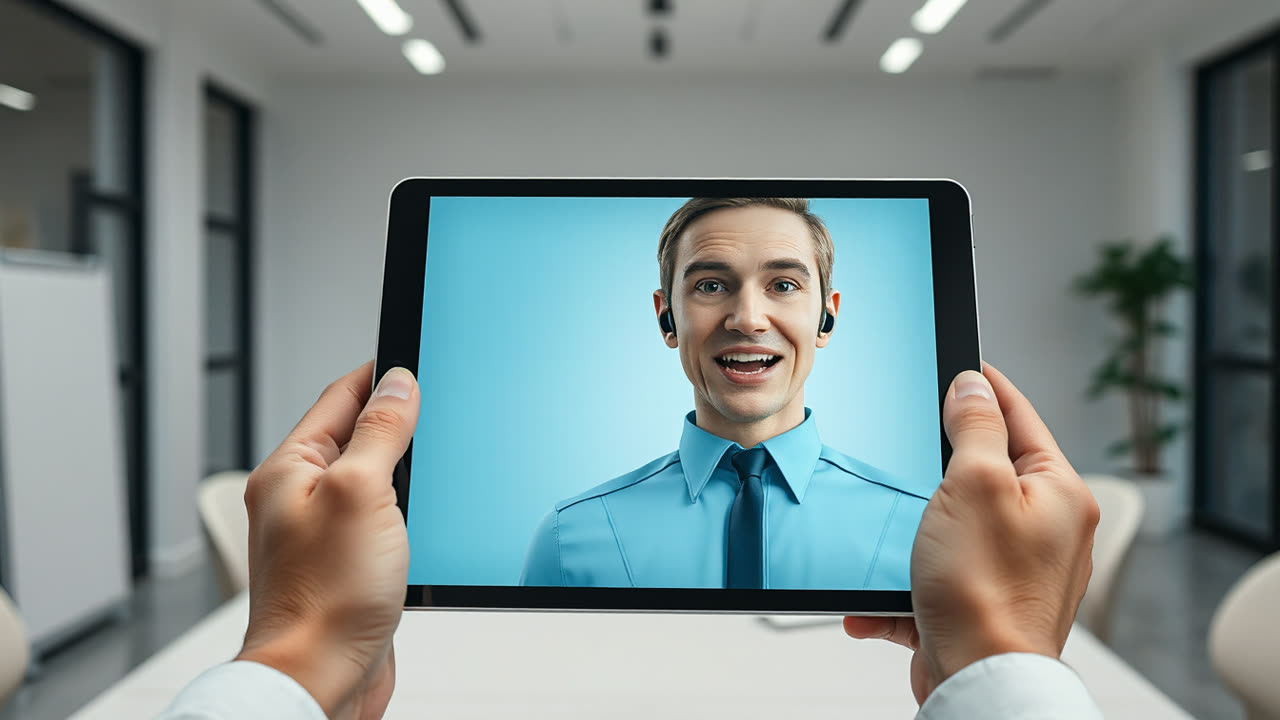
Google DeepMind has unveiled Gemini 3.8 Live and its accompanying Live Avatar feature, marking a significant leap in real-time conversational AI by integrating multimodal understanding with dynamic visual presence. Launched on September 15, 2026, the Gemini 3.8 Live models, comprising Gemini 3.8 Live and Gemini 3.8 Live Extended Thinking, are designed to power voice agents capable of handling complex interactions with unprecedented fluidity, while Live Avatar, generally available in Gemini Enterprise since September 24, 2026, adds a near real-time generated video layer to these conversations. This dual release fundamentally reshapes expectations for AI interaction, moving beyond static text or disembodied voice to a more immersive, visually grounded experience.
At its core, Gemini 3.8 Live is engineered for efficient, high-volume voice-agent deployments, prioritizing speed and cost-effectiveness. Its more sophisticated sibling, Gemini 3.8 Live Extended Thinking, is tailored for intricate, multi-step workflows, capable of reasoning and speaking simultaneously. Both models demonstrate impressive multimodal capabilities, accepting inputs across text, images, video, audio, and PDFs, and generating both text and audio outputs. A standout feature is their ability to process visual context in near real-time, allowing agents to respond to what a user is looking at, not just what they say. Furthermore, they can seamlessly switch among 97 supported languages mid-conversation, maintaining accent consistency, and execute tools or API calls in the background without interrupting the dialogue, a critical advancement for uninterrupted user experience. Benchmarks underscore their performance: Gemini 3.8 Live Extended Thinking secured the top spot on Artificial Analysis' Speech to Speech Quality Index with 82.6% and achieved 68.6% on the τ-Voice benchmark for agentic task completion, while the standard Gemini 3.8 Live placed second in the Speech Agent Arena, lauded for its high user preference and cost-efficiency.
The introduction of Live Avatar amplifies the impact of these models by providing a dynamic visual persona that listens, sees, and speaks with precise lip-syncing, natural expressions, and fluid turn-taking. This visual layer is not merely cosmetic; it is presented as a crucial component for enterprises to expand virtual offerings, enhancing customer service, interactive walkthroughs, and educational tools by transforming digital exchanges into richer, more accessible experiences. For users, this means a more intuitive and engaging interaction with AI, where the digital assistant feels more like a conversational partner than a mere interface. The ability of the AI to acknowledge requests and narrate progress while executing complex tasks in the background, a hallmark of Extended Thinking, drastically reduces perceived latency and friction in AI interactions.
This release represents a significant evolution from previous Gemini iterations, such as Gemini 3.1 Flash Live, by offering ultra-low latency audio-to-audio interactions and streamlining cascaded architectures into a more unified system. In the competitive landscape, Google's Gemini 3.8 Live models directly challenge offerings like OpenAI's GPT-Live-1 Astra. While GPT-Live-1 focuses on a full-duplex voice layer, Gemini 3.8 Live Extended Thinking integrates reasoning directly into the voice model, and the base Gemini 3.8 Live offers a compelling price point, undercutting OpenAI's model significantly at $0.84 per hour of input audio compared to GPT-Live-1's $0.05 per minute for the voice layer alone. This strategic pricing for the base model, coupled with advanced capabilities, positions Google to capture substantial production voice traffic. Unlike many existing AI avatar platforms such as Synthesia, HeyGen, or D-ID, which primarily focus on generating pre-recorded video content or simpler interactive avatars, Google's Live Avatar integrates directly with its advanced live dialogue models to create truly real-time, context-aware visual interactions.
Looking ahead, Gemini 3.8 Live with Live Avatar sets a new benchmark for hyper-personalized and proactive AI assistants. The conversational AI market, projected to reach $41.39 billion by 2030 with a CAGR of 23.7% from 2025, is rapidly shifting towards agentic AI systems that move beyond simple question-and-answer exchanges to goal-oriented planning and execution. This technology paves the way for AI that can seamlessly integrate into daily life and enterprise workflows, from managing complex personal tasks with spoken commands to transforming customer support with empathetic, visually present virtual agents. The next frontier will likely involve further advancements in emotional intelligence, more sophisticated avatar customization, and broader integration across Google's ecosystem and third-party applications. Challenges remain, including ethical considerations surrounding the realism and identification of AI avatars, managing computational costs for widespread deployment, and ensuring robust governance and reliability in critical applications. Nevertheless, Google's latest offering accelerates the vision of AI as a truly intuitive and indispensable collaborator, bridging the gap between human interaction and digital intelligence.
FACTS: Introducing Gemini 3.8 Live with Live Avatar — (kaynak: Google DeepMind, https://deepmind.google/blog/introducing-gemini-38-live-with-live-avatar/)