Google DeepMind Unveils SynthID Bio: Imperceptible Watermarks for AI-Generated Proteins
Google DeepMind introduces SynthID Bio, a pioneering technology embedding imperceptible, verifiable watermarks directly into AI-generated protein sequences and their 3D structures without compromising biological function, addressing crucial biosecurity and provenance concerns.
✨ This content was summarized and interpreted by AI; it may contain errors — please verify accuracy with the original sources. Learn more
Listen to this story
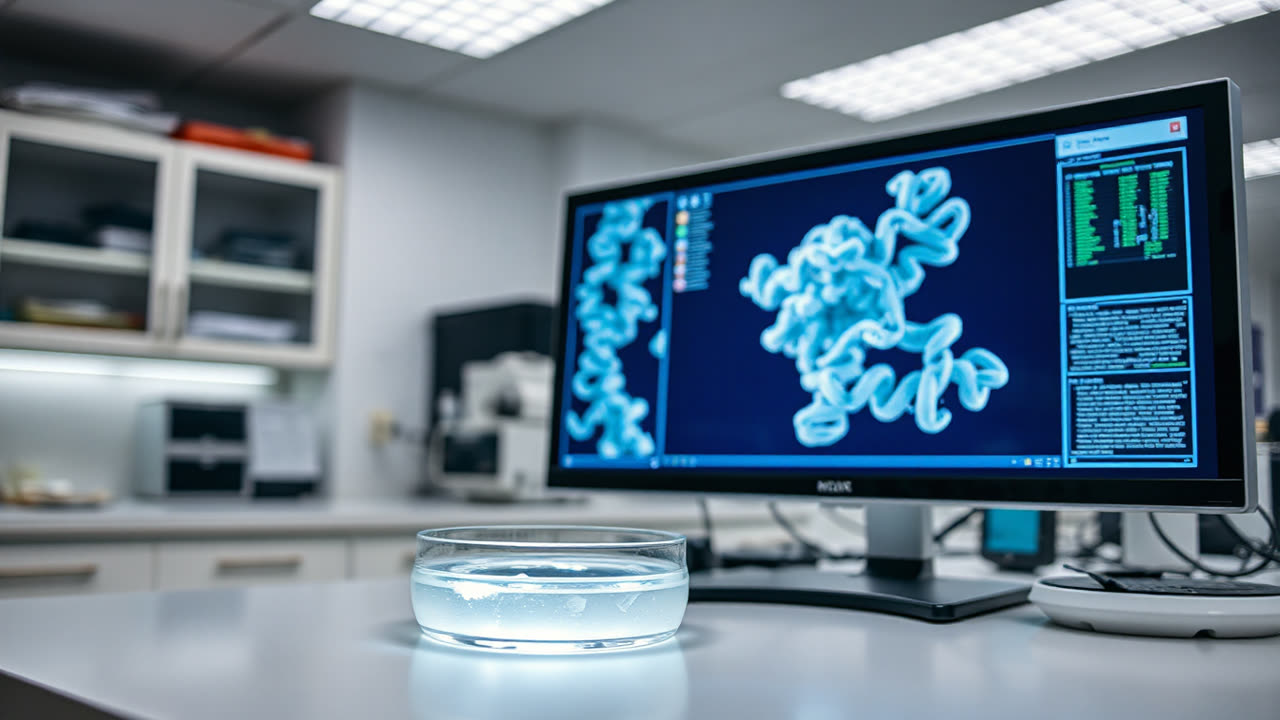
Google DeepMind has unveiled SynthID Bio, a groundbreaking proof-of-concept technology capable of embedding an imperceptible, verifiable watermark directly into AI-generated protein sequences and their predicted three-dimensional structures without compromising their vital biological function. Introduced on September 30, 2026, this innovation marks a significant leap in the burgeoning field of synthetic biology, addressing escalating concerns around the provenance and potential misuse of increasingly sophisticated AI-designed biological entities.
The core mechanism of SynthID Bio involves subtly manipulating the choice of amino acids in a protein sequence or adjusting atomic coordinates in predicted 3D structures, thereby weaving a hidden signal into the very fabric of the biological design. This embedded signature is not mere metadata; it is an intrinsic part of the protein itself, verifiable even after synthesis into a physical molecule and robust against typical biological modifications or integration into larger systems. DeepMind validated this approach through wet-lab testing on three crucial target proteins: VEGF-A, the SARS-CoV-2 spike protein RBD, and PD-L1, demonstrating that watermarked designs retained comparable hit rates, binding affinities, and natural sequence diversity to their unwatermarked counterparts. This preservation of biological utility is paramount, distinguishing SynthID Bio from general AI watermarking solutions where functional integrity is not a constraint.
This development holds profound implications for the synthetic biology and pharmaceutical industries, as well as for global biosecurity. Generative AI models like AlphaFold, AlphaProteo, and ProteinMPNN are rapidly accelerating the design of novel proteins, bacteriophages, and other biological systems, promising breakthroughs in drug discovery, material science, and personalized medicine. However, this power also introduces significant risks. AI-designed proteins can generate entirely new sequences that might bypass traditional DNA synthesis screening methods, raising concerns about intellectual property theft, the spread of mislabeled synthetic data, and, critically, the potential for malicious actors to create novel biological threats. SynthID Bio directly counters these vulnerabilities by providing an immutable record of origin, enabling researchers and synthesis providers to confirm a design's source and ensure its integrity.
For users, including academic researchers and biotech companies, SynthID Bio offers an essential layer of trust and accountability. It establishes clear provenance for AI-generated designs, which is crucial for intellectual property protection in a field where novel creations can have immense value but are difficult to track. Sarah Carter, a biosecurity policy expert, emphasizes its role as an "important piece of the puzzle for tracking the provenance of biological designs," empowering developers with safety leadership and streamlining screening processes for synthesis providers. James Diggans, Vice President of Policy and Biosecurity at Twist Bioscience, views it as a "promising new addition to the biosecurity toolbox," enhancing screening efficiency and allowing for more focused review of sequences. Furthermore, it can help maintain the integrity of critical public databases such as the Protein Data Bank, UniProt, and GenBank, preventing the contamination of scientific knowledge with untraceable or misleading synthetic entries.
SynthID Bio builds upon Google DeepMind's existing SynthID framework, which already provides watermarking capabilities for AI-generated images, audio, and text. While the principle of embedding imperceptible, detectable signals remains consistent, the application to biological entities presents unique challenges, primarily the non-negotiable requirement to preserve biological function. Unlike digital media where minor alterations might be visually or audibly imperceptible, even subtle changes to a protein's sequence or structure can render it biologically inert or, worse, harmful. DeepMind's success in navigating this constraint through careful amino acid selection and coordinate adjustments highlights a significant technical achievement. The broader landscape of AI in biology has seen remarkable progress, with AI becoming integral to accelerating drug discovery, identifying disease targets, and generating new compounds, but it also faces challenges in data quality, real-world biological understanding, and the need for human scientific judgment.
Looking ahead, the path from this proof-of-concept to widespread adoption will involve addressing several key challenges. Enhancing the watermark's robustness against sophisticated, deliberate tampering is a primary focus for future research. Integration with broader provenance metadata standards, akin to C2PA for digital media, or the establishment of central repositories for AI-generated biological data, could further bolster traceability. The ambition extends to applying watermarking to increasingly complex biological objects, pushing the boundaries of what can be secured. This endeavor necessitates continued collaboration across biosecurity experts, gene synthesis companies, and the broader research community to develop comprehensive frameworks for responsible innovation. Ultimately, SynthID Bio represents a crucial step in building a more transparent, trustworthy, and secure ecosystem for AI-driven biological design, balancing the immense potential of generative AI in biology with the critical need for safety and ethical oversight.