Google Expands 'CC' AI Agent into Autonomous Family Manager with Dedicated Account
Google's experimental AI agent, 'CC,' has evolved into a proactive, autonomous household manager operating from its own Google account, delivering daily briefings to up to six family members.
✨ This content was summarized and interpreted by AI; it may contain errors — please verify accuracy with the original sources. Learn more
Listen to this story
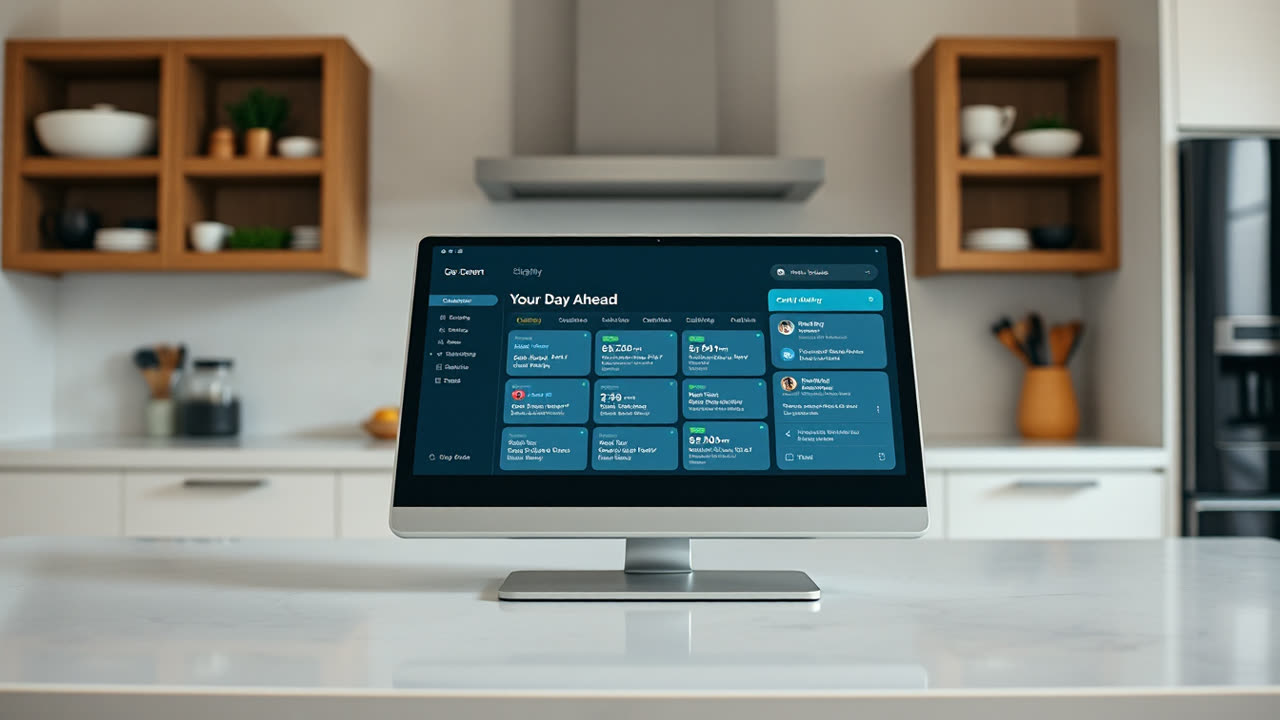
Google has dramatically expanded its experimental AI agent, "CC," transforming it from a personal productivity tool into a dedicated, autonomous AI agent for families and households, operating from its own Google account and delivering a daily briefing to up to six members. This significant evolution, announced on September 17, 2026, marks a pivotal step in Google's strategy to embed advanced AI directly into the fabric of daily domestic life, moving beyond reactive chatbots to a proactive, shared digital concierge.
Initially launched on December 16, 2025, as a personal agent that synthesized information from a user's Gmail, Calendar, and Drive into a "Your Day Ahead" briefing, CC was subsequently integrated into the Gemini app as the "Daily Brief" in May 2026. The latest iteration, however, directly addresses a top user request: to help manage the complexities of a busy home. By granting CC its own Google account, Google establishes a distinct identity and a clear permissions model, allowing family members to selectively share relevant information—such as school emails, activity schedules, or veterinary appointments—without exposing their entire digital lives. This shared context enables CC to generate a comprehensive "Your Day Ahead" brief each morning, ensuring every family member has a clear overview of schedules, tasks, and completed items, thereby centralizing information often scattered across individual inboxes and mental checklists.
The impact on users is profound, primarily by alleviating the immense mental load associated with household coordination. Families frequently grapple with fragmented information—school notices in one parent's email, sports practices in another's calendar, and bills buried in a shared drive. CC acts as a singular hub, automatically tracking important dates and to-dos, pulling them into a shared family calendar or task list, and keeping them current as plans inevitably shift. Beyond simple aggregation, CC demonstrates genuine agentic capabilities by identifying events from shared emails and enriching them with practical details like what to bring or when to arrive. It can also surface hidden to-dos, such as forms needing completion or appointments to book, adding them to a shared list. Furthermore, running on Google's "Antigravity agentic harness" and the latest Gemini models on isolated cloud computers, CC can perform complex logistical work, including pre-filling PDF forms, checking live drive times via the Google Maps API for back-to-back activities, and creating shared documents in Google Docs and Sheets. This level of proactive, automated assistance moves far beyond the reactive query-response model of traditional voice assistants.
For the industry, Google's revamped CC represents a significant strategic play. It deepens Google's integration into the smart home ecosystem and family management sphere, leveraging its vast suite of services like Gmail, Calendar, Drive, and Maps. This positions Google to dominate the "concierge AI" market for households, offering a more deeply integrated and proactive solution compared to rivals. While Amazon's Alexa boasts a massive smart home device ecosystem with over 100,000 compatible devices and highly reliable voice command recognition, its general knowledge and conversational AI are considered weaker, and it's not designed for the complex, proactive productivity tasks CC aims to tackle. Microsoft Copilot, on the other hand, follows a similar integration strategy within its Microsoft 365 ecosystem (Word, Excel, Teams), but primarily targets individual and enterprise productivity rather than specific family management. General-purpose conversational AIs like ChatGPT and Claude, while powerful in reasoning and content generation, remain largely reactive tools that await user prompts, lacking the persistent, autonomous, and multi-user management capabilities of CC. Google's approach with CC highlights a broader industry shift towards "autonomous agents" that don't just answer questions but actively perform tasks and manage workflows in the background.
Looking ahead, the evolution of CC is likely to follow several trajectories. We can anticipate further enhancements in its proactive capabilities, potentially offering more personalized suggestions for individual family members within the shared framework, learning preferences for meal planning, or suggesting activities based on family calendars. Deeper integration with a wider array of smart home devices and third-party services, beyond Google's immediate ecosystem, seems a logical next step to truly become a central household hub. However, as AI agents become more deeply embedded in personal and family life, ethical considerations and data privacy will remain paramount. While Google explicitly states that CC only accesses what each member chooses to share and that personal chats and Google Keep notes remain private unless explicitly shared, continuous transparency regarding data usage and robust privacy controls will be critical for user trust. Google already provides parental controls via Family Link, allowing parents to manage their children's access to Gemini and ensuring conversations from supervised accounts are not used for AI model training. The availability of Gemini benefits for up to six family members under the Google One AI Premium plan, which costs $19.99 per month and includes 2TB of storage, clearly outlines a viable monetization strategy and indicates a future where advanced AI services are a premium offering for integrated digital living. This move solidifies Google's vision of an AI-first future where intelligent agents streamline and simplify the complexities of modern family life.