Google Gemini Live and OpenAI ChatGPT Voice Redefine Natural AI Conversation
New advancements from Google and OpenAI are fundamentally shifting user expectations for interactive AI, offering real-time, multimodal, and emotionally expressive spoken interactions.
✨ This content was summarized and interpreted by AI; it may contain errors — please verify accuracy with the original sources. Learn more
Listen to this story
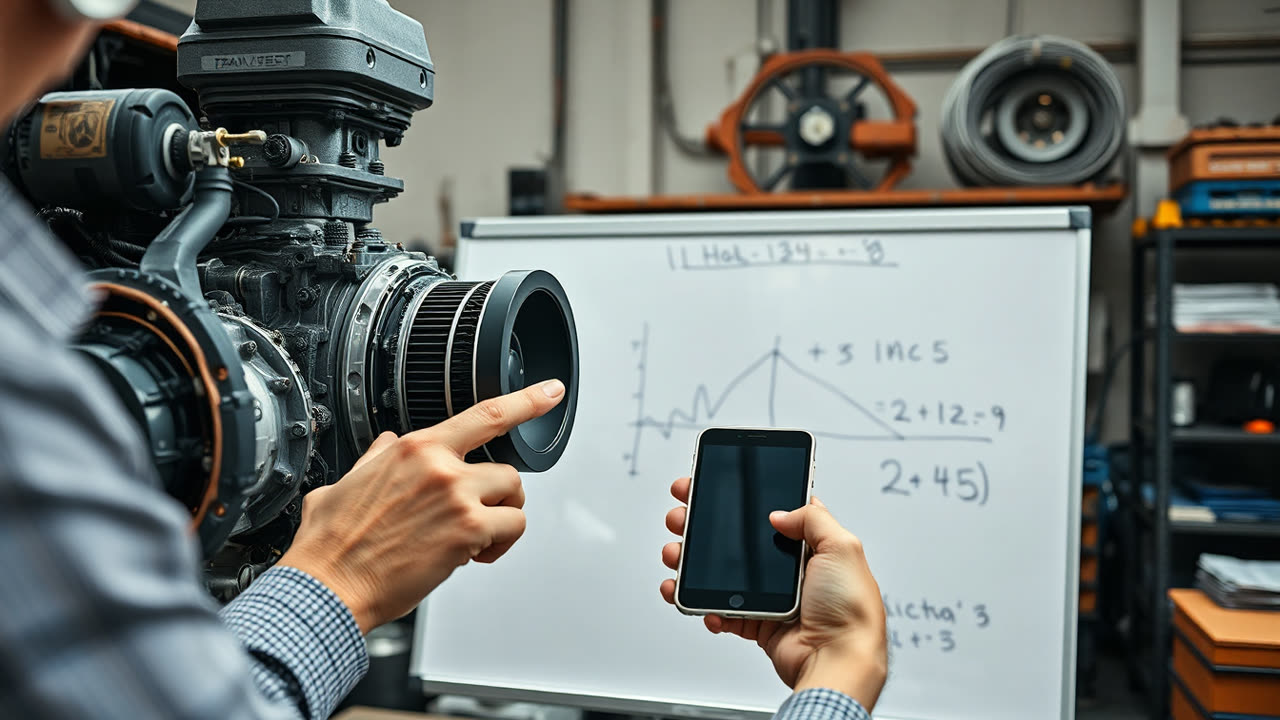
The ability for AI chatbots to engage in genuinely natural, fluid spoken conversation has taken a significant leap forward with the introduction of Google's Gemini Live and OpenAI's ChatGPT Voice, fundamentally shifting user expectations for interactive AI. Google's Gemini Live, unveiled as part of its Project Astra initiative at I/O 2024, promises real-time, multimodal interaction, allowing users to converse with an AI assistant that not only understands spoken language but also interprets visual cues from a camera feed and responds with human-like intonation and minimal latency. Similarly, OpenAI's ChatGPT Voice, powered by the GPT-4o model, aims to eliminate the awkward pauses and robotic cadences that have long plagued AI assistants, offering expressive, emotional vocal responses and the capacity for seamless interruptions.
This pursuit of natural conversation is more than a mere cosmetic upgrade; it represents a profound evolution in human-computer interaction, with far-reaching implications for accessibility, productivity, and the future of digital interfaces. For users, the primary benefit is a dramatically reduced cognitive load. The friction inherent in typing prompts or enduring stilted, turn-based voice interactions has been a major barrier to widespread AI adoption for many tasks. With Gemini Live and ChatGPT Voice, the interaction becomes less like instructing a machine and more like collaborating with a human, enabling quicker information retrieval, more intuitive task execution, and a generally more satisfying user experience. This enhanced naturalness also significantly boosts accessibility for individuals with disabilities, offering a more intuitive and less demanding interface for those who may struggle with traditional input methods. The ability to speak freely and naturally with an AI, without needing to conform to rigid command structures, opens up new avenues for engagement and empowerment.
The industry impact is equally transformative, intensifying the battle for AI interface dominance and accelerating the development of truly multimodal AI. Google's demonstration of Gemini Live at I/O 2024 showcased its capacity to process live video input, understand context from the physical environment, and engage in real-time dialogue about what it sees, such as identifying components of an engine or solving a math problem drawn on a whiteboard. This multimodal capability, which allows the AI to "see" and "hear" simultaneously, moves beyond mere voice interaction into a more holistic understanding of the user's immediate environment. OpenAI’s GPT-4o, while also offering impressive voice capabilities, initially emphasized its ability to understand and generate text, audio, and image inputs and outputs within a single model. Its voice mode particularly shone in its ability to detect and respond to emotional nuances in a user's voice and to maintain a natural conversation flow by allowing users to interrupt the AI mid-sentence without disruption. This "interruptibility" is a critical feature distinguishing these new offerings from prior generations of voice assistants like Siri or Alexa, which typically required users to wait for a full response before interjecting.
Comparing the two, both Gemini Live and ChatGPT Voice represent significant leaps beyond their predecessors and current rivals in terms of conversational fluidity and emotional expressiveness. Older assistants often suffered from high latency, monotonous intonation, and a rigid turn-taking structure that made conversations feel unnatural and frustrating. The new generation aims for near-instantaneous responses, often within milliseconds, and employs sophisticated prosody models to generate speech that mirrors human rhythm, pitch, and emotion. While both excel in these areas, early demonstrations suggest Gemini Live’s integration with real-time visual input potentially gives it an edge in contextual awareness within the physical world, making it a powerful tool for on-the-go assistance or complex problem-solving involving visual data. ChatGPT Voice, on the other hand, has been lauded for its impressive emotional range and ability to quickly adapt to conversational shifts, making it particularly effective for empathetic or dynamic dialogue. The key differentiator often boils down to the underlying model's ability to anticipate and generate relevant, contextually appropriate responses with minimal delay, a challenge both companies are continuously refining.
Looking ahead, the trajectory is clear: AI conversations will become indistinguishable from human ones, not just in sound but in understanding and emotional intelligence. The next phase will likely see even more sophisticated integration of emotional AI, allowing systems to not only detect but also genuinely *respond* to user emotions in a nuanced and helpful manner. Furthermore, the multimodal capabilities demonstrated by Gemini Live will become standard, with AI assistants seamlessly interpreting a symphony of inputs – voice, vision, gestures, and even biometric data – to create a truly immersive and intuitive interaction experience. This will pave the way for AI companions that can assist in complex tasks, provide personalized education, and even offer emotional support, moving beyond mere tools to become genuine digital partners. The competition between Google and OpenAI, and indeed other tech giants, will continue to drive innovation in reducing latency, enhancing contextual understanding, and perfecting the art of natural, empathetic AI conversation, ultimately redefining the way humans interact with technology itself.