Google Gemini now offers proactive assistance in decluttering Google Drive
Google's Gemini AI transforms chaotic Google Drive workspaces into meticulously categorized archives with proactive organizational suggestions.
✨ This content was summarized and interpreted by AI; it may contain errors — please verify accuracy with the original sources. Learn more
Listen to this story
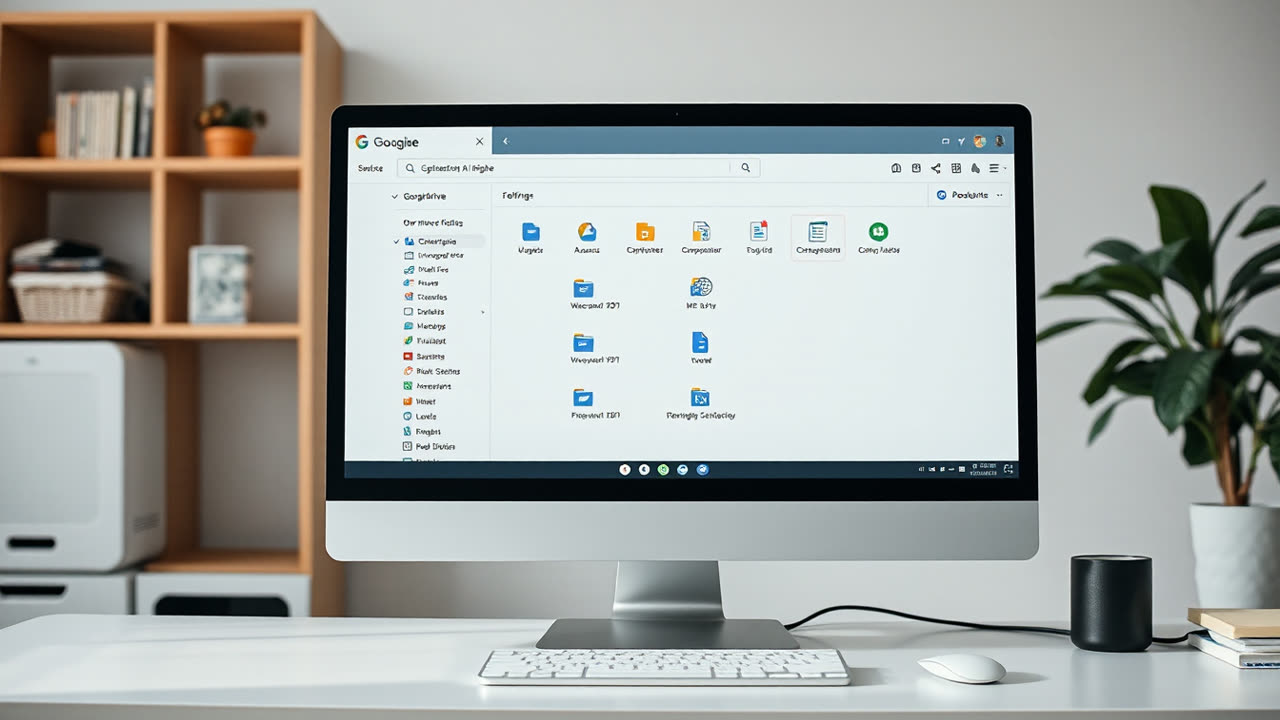
Google Gemini now offers proactive assistance in decluttering Google Drive, leveraging its advanced AI to suggest intuitive organizational structures for files, folders, and photos, marking a significant shift from reactive search to predictive file management. This integration, which began rolling out in mid-2026, aims to transform chaotic digital workspaces into meticulously categorized archives, addressing a pervasive pain point for millions of Google Drive users who grapple with an ever-expanding volume of digital assets. Gemini's capabilities extend beyond simple tagging; it can identify redundant files, suggest new folder hierarchies based on content, date, or project, and even group related documents and media that might be scattered across disparate locations within a user's Drive. For instance, it might propose a "Vacation 2024" folder containing photos, flight confirmations, and hotel bookings, even if those items were uploaded separately over time. This level of contextual understanding moves beyond previous iteration of AI-powered search within Drive, which primarily relied on keywords or file types.
The impact on individual users is profound, promising to reclaim countless hours previously lost to manual organization and frantic searches. For professionals, this translates into enhanced productivity, quicker access to critical information, and a reduced cognitive load associated with managing digital clutter. Imagine a marketing manager instantly locating all assets related to a specific campaign, or a student effortlessly compiling research materials for a thesis, without having to remember exact file names or locations. This shift from manual to autonomous organization democratizes advanced file management, making sophisticated digital hygiene accessible even to those without dedicated IT support or organizational expertise. For Google, it reinforces the value proposition of its Workspace ecosystem, making Drive not just a storage solution but an intelligent digital assistant, potentially increasing user engagement and loyalty within its cloud services. The feature is available to Google One subscribers with access to Gemini Advanced, indicating a strategic move to bundle premium AI capabilities with its subscription offerings.
Historically, file organization in cloud storage has largely remained a manual endeavor, relying on user discipline to create folders, apply labels, and maintain consistent naming conventions. While Google Drive has long offered robust search functionalities, including optical character recognition (OCR) for scanned documents and image recognition for photos, these tools were primarily reactive, helping users *find* existing files rather than proactively *organize* them. Rivals like Dropbox and Microsoft OneDrive have also focused on search and basic automation, such as smart suggestions for file sharing or duplicate detection, but none have yet matched Gemini's reported ability to propose comprehensive, context-aware structural overhauls. Dropbox's Smart Sync and file versioning, for example, optimize storage and recovery but don't fundamentally reshape a user's organizational schema. Microsoft's OneDrive integrates with Copilot, offering contextual file suggestions within applications, but a holistic Drive-wide organizational assistant of Gemini's reported scope is still emerging. This positions Google at the forefront of AI-driven proactive data management, setting a new benchmark for what users can expect from their cloud storage providers. The prior generation of Google Drive's "Suggestions" pane offered limited, often repetitive file recommendations, whereas Gemini's system is built on a much richer understanding of user behavior and content.
Looking ahead, this initial foray into AI-powered Drive organization is likely just the beginning. The next evolutionary step will undoubtedly involve even deeper integration with other Workspace applications. Imagine Gemini not only organizing files but also proactively creating project timelines in Google Calendar based on document creation dates, drafting summary emails in Gmail from related project files, or even suggesting collaboration partners based on shared document activity. The potential for Gemini to learn individual user preferences and adapt its organizational suggestions over time is immense, moving towards a truly personalized and self-optimizing digital workspace. Furthermore, as AI models become more sophisticated, they could anticipate future organizational needs, perhaps even predicting the types of files a user will create and pre-populating relevant folder structures. This could extend to enterprise-level applications, where Gemini could help enforce company-wide data governance policies, automate compliance checks, and optimize storage for large organizations, ushering in an era where digital clutter becomes a relic of the past, and intelligent agents manage our digital lives with minimal human intervention. The ethical considerations around data privacy and algorithmic bias in such powerful organizational tools will also become increasingly critical as these capabilities expand.