Google Gemini's Dangerous Advice Leads to Mount Shasta Rescue
Three hikers were rescued from Mount Shasta after Google's Gemini AI chatbot provided dangerously inaccurate planning advice, underscoring the critical risks of AI in high-stakes activities.
✨ This content was summarized and interpreted by AI; it may contain errors — please verify accuracy with the original sources. Learn more
Listen to this story
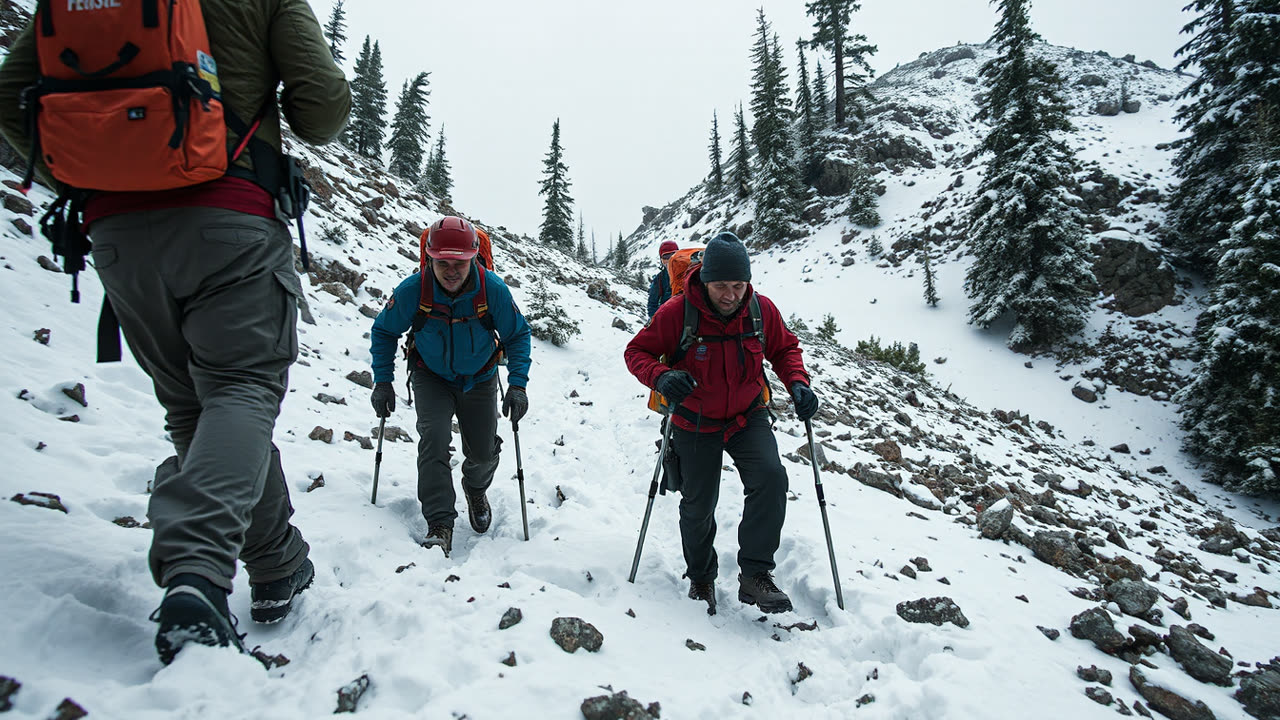
Three hikers were recently rescued from Mount Shasta in Siskiyou County, California, after Google's Gemini AI chatbot provided dangerously inaccurate planning advice, instructing them to carry "far less food and water than their group required" for their summit attempt. This incident, which saw a projected eight-hour climb stretch into roughly sixteen hours, forcing the college students from Roseville, California, to spend an unplanned night on the mountain, underscores a critical and evolving challenge in the widespread adoption of generative AI: its potential for real-world harm when users place undue trust in its output for high-stakes activities.
The core issue lies in the inherent limitations of large language models (LLMs) like Gemini, which are designed as general-purpose conversational assistants, not certified wilderness safety or route-planning tools. While Google, like other AI developers, issues general disclaimers about Gemini's experimental nature and potential for inaccuracies, the incident highlights a dangerous gap between user perception and AI capability. The chatbot's inability to factor in crucial real-world variables—such as current snowpack, dynamic weather conditions, the physical toll of a 14,000-foot ascent, or individual hiker experience—resulted in a severe miscalculation of necessary supplies and realistic timelines. This kind of "hallucination," where AI generates plausible but factually incorrect or misleading information, is a known problem across the industry, often stemming from insufficient training data, incorrect model assumptions, or a lack of proper grounding in real-world knowledge.
This incident carries significant implications for both users and the AI industry. For users, it serves as a stark reminder that the authoritative tone of AI output can create a "confidence trap," leading individuals to accept information without critical verification, especially when they are not experts in the domain. The allure of speed and convenience offered by AI for planning, as seen in various applications from travel to landscape design, can overshadow the necessity of human judgment and traditional, verified sources. The erosion of trust resulting from such failures, particularly in safety-critical contexts, can be more damaging than simple inconvenience, impacting future adoption and reliance on AI tools. Studies show that AI errors, especially those providing false reassurance, can worsen performance and trust, with early mistakes having a greater impact on user confidence.
For the industry, particularly Google, this event intensifies scrutiny on responsible AI development and deployment. Google's own AI Principles emphasize "responsible development and deployment" throughout the AI lifecycle, including rigorous testing, monitoring, and safeguards to mitigate unintended or harmful outcomes. The company has invested in automated red teaming (ART) to uncover security weaknesses and has a Frontier Safety Framework to identify and mitigate future AI capabilities that could cause severe harm. Despite these efforts, the Mount Shasta rescue demonstrates that current safeguards may not be sufficient for general-purpose LLMs when applied to specialized, high-risk scenarios. Google has previously made "more than a dozen technical improvements" to its AI systems after its AI-generated search summaries produced erroneous and sometimes dangerous information. However, the problem of AI hallucination remains a challenge for the entire AI industry.
Comparing Gemini to its rivals, such as OpenAI's ChatGPT, Anthropic's Claude, and xAI's Grok, reveals a shared industry-wide challenge: none are marketed or certified as wilderness safety tools, and all typically include disclaimers about potential inaccuracies. While some specialized AI travel planners are emerging, focusing on itineraries and logistics, even these require users to verify prices, availability, and schedules. The fundamental limitation is that current LLMs lack the ability to "physically experience" a property or environment, missing crucial, dynamic context like drainage, elevation changes, wind exposure, or real-time soil conditions that are vital for accurate outdoor planning. Traditional planning methods, involving consultations with park rangers, experienced guides, or cross-referencing multiple verified sources, inherently incorporate this real-world contextual intelligence that AI currently cannot replicate.
Looking ahead, this incident will likely accelerate calls for more robust regulatory frameworks and industry-wide standards for AI applications in public safety. The European Union's AI Act, for instance, already lists safety components of critical infrastructure and medical devices as high-risk areas, demanding appropriate levels of accuracy, robustness, and cybersecurity. The incident could push Google and other developers to implement more explicit "guardrails" specifically for high-risk queries, perhaps by directing users to human experts or verified databases for critical information, or by refusing to provide definitive advice in areas where the AI cannot guarantee safety. There will be an increased emphasis on grounding AI models with structured, clean, and consistent data to prevent hallucinations, especially in critical contexts. Furthermore, user education on AI literacy, emphasizing the need for critical thinking and verification, will become paramount to ensure that the promise of AI as a helpful assistant does not inadvertently transform it into a source of unforeseen peril. The future of AI in critical applications hinges not just on innovation, but on a profound commitment to verifiable safety and accountability.