Google Home Transforms into Agentic Platform with MCP Integration
Google Home is evolving from a reactive voice assistant to a proactive, autonomous smart home platform through the integration of the open-source Model Context Protocol (MCP) standard.
✨ This content was summarized and interpreted by AI; it may contain errors — please verify accuracy with the original sources. Learn more
Listen to this story
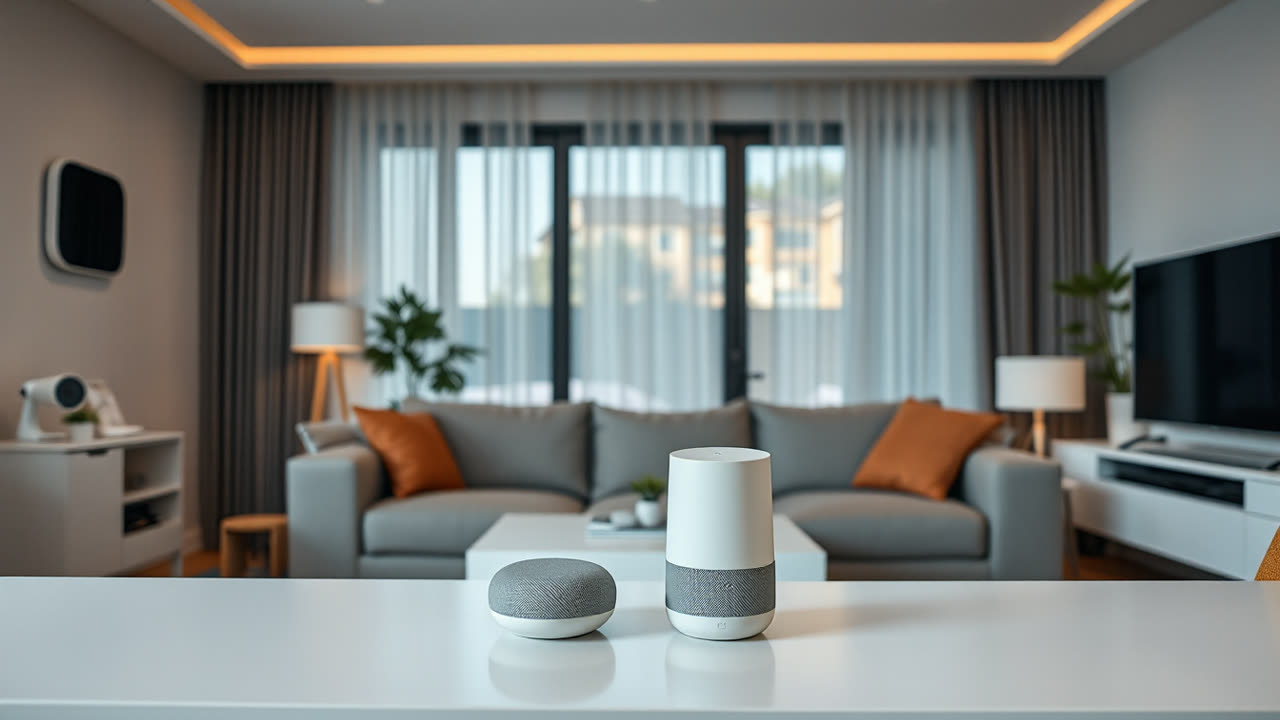
Google Home is set to transcend its traditional role as a voice-activated assistant, evolving into a truly "agentic" platform through the integration of the open-source Model Context Protocol (MCP) standard, with an early access build arriving for Premium Advanced users in the US in the coming weeks. This move signifies a profound shift from a reactive smart home, waiting for direct commands, to a proactive, autonomous ecosystem capable of perceiving its environment, reasoning through complex situations, making decisions, and executing multi-step actions without constant human intervention.
The core of this transformation lies in the Model Context Protocol, an open standard designed to enable AI models and chatbots to seamlessly communicate with, and fetch data from, various applications and services. Rather than requiring bespoke integrations for every AI model and smart device, MCP establishes a common language, allowing an AI host to discover capabilities, expose resources, and exchange structured messages with MCP servers. For Google Home, this means the platform will gain an MCP connector, fundamentally altering how users interact with their connected living spaces. Users will no longer be confined to Google's own Gemini AI; they can, for instance, swap it for alternative AI chatbots like Claude or leverage Google's Antigravity, OpenClaw, and Hermes agents to manage their smart home. This new capability extends beyond simple commands, enabling natural language queries to monitor activity across various cameras, review summaries, control devices, and even construct custom smart home dashboards. Access to this advanced functionality will initially be limited to Google Home Premium Advanced subscribers in the US, a tier costing $20 per month or $200 annually.
This agentic leap carries substantial implications for both users and the smart home industry. For users, the promise is a genuinely intelligent home that anticipates needs, learns habits, and optimizes living spaces without explicit instruction. Imagine a home that autonomously adjusts thermostats based on your schedule and external weather data, dims lights as bedtime approaches, or even schedules appliance maintenance before a breakdown occurs, all based on learned patterns and real-time context. The ability to choose preferred AI agents introduces an unprecedented level of personalization and flexibility, moving away from vendor lock-in that has long plagued smart home adoption. However, this enhanced autonomy also introduces new considerations, particularly around security and privacy. While agentic AI can proactively identify and act on security threats, such as isolating a potential data breach, concerns have been raised about MCP's potential security flaws, including a reported lack of enforced authentication that has led to data breaches in other applications of the standard. Balancing convenience with robust security will be paramount for user trust.
From an industry perspective, Google's embrace of MCP is a powerful endorsement of open standards in a historically fragmented market. Interoperability has been a persistent Achilles' heel for smart homes, with devices from different manufacturers often struggling to communicate effectively. While the Matter protocol has made significant strides in device compatibility, MCP addresses the layer of AI interaction, allowing diverse AI agents to interface with a wide array of smart home devices through a standardized interface. This open approach could foster a more competitive and innovative ecosystem, encouraging developers to build specialized AI agents that can seamlessly integrate with Google Home and, potentially, other MCP-compatible smart home platforms like Home Assistant, which already includes MCP server integration. The shift towards agentic AI also redefines the competitive landscape, moving beyond the reactive voice assistants offered by rivals like Amazon's Alexa+, which still largely relies on voice and smart home integration as its core differentiator. Even Apple's HomeKit ecosystem is seeing third-party MCP integration via tools like HomeMCPBridge, allowing AI assistants like Claude to directly control HomeKit devices.
Looking ahead, the integration of agentic AI into Google Home is merely a precursor to broader trends shaping the future of smart living. The market is already witnessing a significant push towards on-device AI, the Matter protocol for universal compatibility, and a heightened focus on energy efficiency and health monitoring. Gartner predicts that agentic AI will be embedded in 33% of enterprise software applications by 2028, a dramatic increase from less than 1% in 2024, signaling its inevitable pervasive presence in consumer technology. The next generation of AI agents will be increasingly multi-modal, capable of processing and generating text, images, audio, and video simultaneously, transforming how smart homes interpret and respond to their environment. This could mean AI agents analyzing video feeds for nuanced security monitoring or responding intelligently to visual cues from a user. The ultimate vision is a "Zero Labor Home," a concept already being pursued by companies like LG with their advanced AI agents, where homes proactively manage tasks, anticipate needs, and continuously optimize living conditions, making the smart home truly autonomous and a genuine partner in everyday life. However, the industry must diligently address the security concerns associated with new open standards like MCP to ensure that this future of unparalleled convenience does not come at the cost of user privacy and data integrity.