Google Open-Sources Entire Noto 3D Emoji Library
Google has made its nearly 4,000 Noto 3D emojis freely available as raw .OBJ files, fundamentally reshaping digital expression and creative freedom.
✨ This content was summarized and interpreted by AI; it may contain errors — please verify accuracy with the original sources. Learn more
Listen to this story
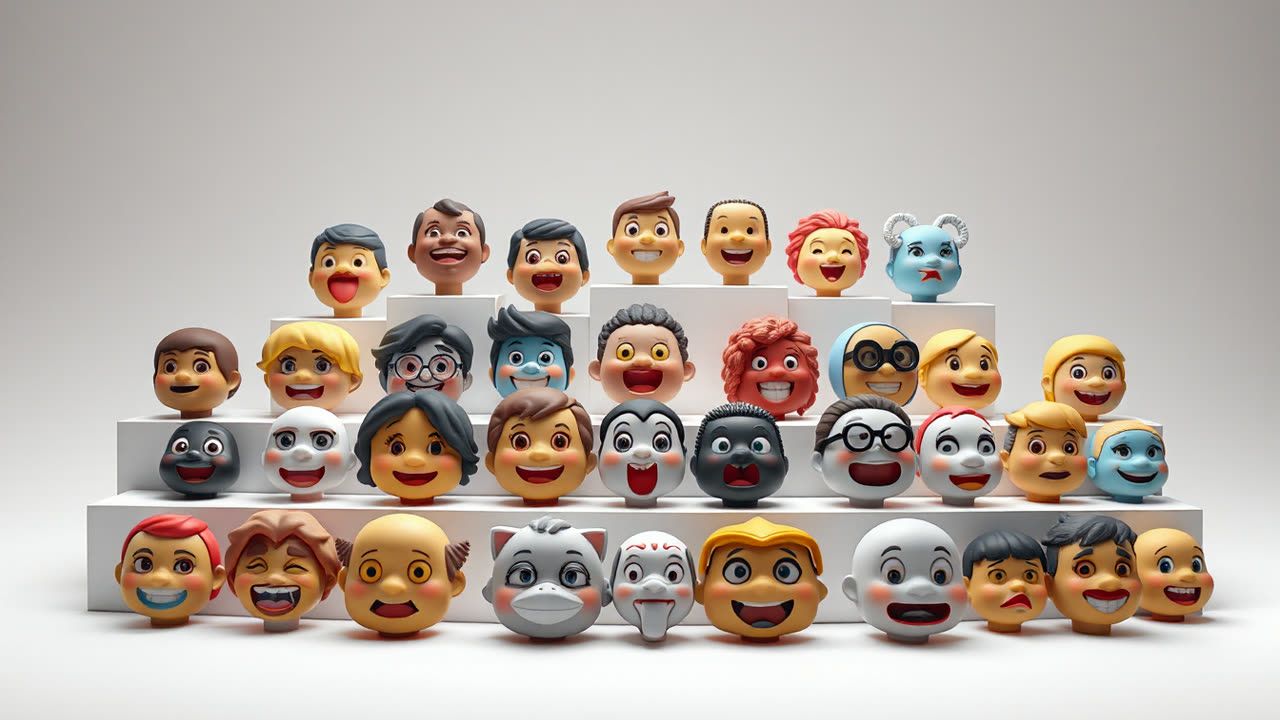
Google has dramatically reshaped the landscape of digital expression by open-sourcing its entire library of Noto 3D emojis, making nearly 4,000 intricately designed three-dimensional pictograms freely available as raw .OBJ files for creators worldwide. Announced on World Emoji Day, July 17, 2026, this move follows a preview at The Android Show in May and marks a significant shift in how digital communication assets are developed and shared. The Noto 3D collection, licensed under the SIL Open Font License, Version 1.1, represents a complete aesthetic overhaul, moving away from flat designs to introduce a tangible sense of depth, lighting, and shadow. These new emojis are slated to debut on Pixel phones later this year, before a broader rollout across Google's ecosystem, including Gboard, YouTube, and Gmail.
This open-sourcing initiative is far more than a mere design update; it's a profound statement on the future of digital interaction and creative freedom. For individual users and creators, it democratizes access to high-quality 3D assets previously confined within Google's proprietary ecosystem. Developers of indie apps, designers building virtual worlds, and even meme artists now have the foundational elements to integrate Google’s expressive 3D emojis into their projects, fostering a new wave of digital creativity and customization. This accessibility is poised to enhance digital communication, as Google's design philosophy for Noto 3D explicitly aims to add a "pulse and a soul" to these pictograms, allowing for richer expressions and reducing the ambiguity often inherent in text-based interactions. The company articulates this as the "difference between a message received and a presence felt," emphasizing the emotional nuance that 3D can convey. Furthermore, Google has integrated accessibility features, employing AI-powered tools to ensure high-contrast options for dark mode, making these new emojis visible and inclusive for all users, regardless of screen settings or visual impairments.
The industry-wide implications are equally substantial. Google's commitment to open-sourcing these sophisticated 3D models could catalyze a broader trend in digital asset sharing, echoing the benefits seen in other sectors like 3D printing and fashion design, where open-source libraries accelerate design cycles, reduce development costs, and foster collaborative innovation. While major platforms like Apple have largely maintained a distinct, flat aesthetic for their emojis, and Microsoft's ambitious 3D emoji previews in 2021 ultimately shipped as 2D flat versions, Google's move provides actual, usable 3D models. This stark differentiation could compel other tech giants to re-evaluate their own emoji strategies, potentially sparking an "emoji arms race" where visual fidelity and open access become competitive advantages. The shift from a flat, two-dimensional icon to a fully rendered 3D object could also set a new benchmark for how digital symbols are expected to function in increasingly immersive environments, from augmented reality (AR) to virtual reality (VR), which are already anticipated to integrate dynamic 3D emojis.
Google's emoji journey has been one of continuous evolution, reflecting the changing nature of digital communication itself. Its early black-and-white designs gave way to the distinctive, often controversial, "blob" emojis between 2013 and 2017, which, despite their unique personality, suffered from cross-platform inconsistency. The subsequent era, from 2017 to 2020, saw Google's designs, notably the Noto Color Emoji set, adopt a flatter, more uniform style, often aligning closely with Apple's aesthetic to improve clarity across devices. The Noto 3D initiative, however, marks a deliberate departure, forging a distinct visual identity that prioritizes emotional expression over hyper-realism. Google's design team, led by Creative Director Jennifer Daniel, conducted extensive user studies to inform the Noto 3D overhaul, discovering universal preferences such as full-bodied animals over floating heads, and identifying how minor tweaks could lead to significant misinterpretation. This meticulous approach, which begins with 2D drawings before addressing complex "architectural questions" in 3D, underscores a commitment to both artistic integrity and user comprehension.
Looking ahead, the open-sourcing of Noto 3D emojis signals a pivotal moment for digital communication. The availability of these assets will undoubtedly accelerate innovation in interactive content, providing a rich toolkit for developers exploring the burgeoning fields of spatial computing and the metaverse. As emojis continue to evolve as a universal language, the Unicode Consortium's ongoing efforts to introduce more nuanced and inclusive symbols will likely be further amplified by the creative possibilities offered by open 3D models. Moreover, the increasing sophistication of generative AI, already being used by Google for accessibility in Noto 3D, suggests a future where AI-powered tools could not only suggest appropriate emojis but also dynamically create and modify 3D assets, blurring the lines between human design and algorithmic generation. The challenge for the industry will be to harness this newfound creative freedom responsibly, ensuring that the enhanced expressiveness of 3D emojis genuinely enriches communication without introducing new layers of visual clutter or misinterpretation.