Google Pics Launches, Bringing Advanced AI Design to Workspace
Google's new AI-powered design suite, Google Pics, integrates Gemini capabilities directly into Workspace, aiming to democratize professional visual content creation for businesses and challenge platforms like Canva.
✨ This content was summarized and interpreted by AI; it may contain errors — please verify accuracy with the original sources. Learn more
Listen to this story
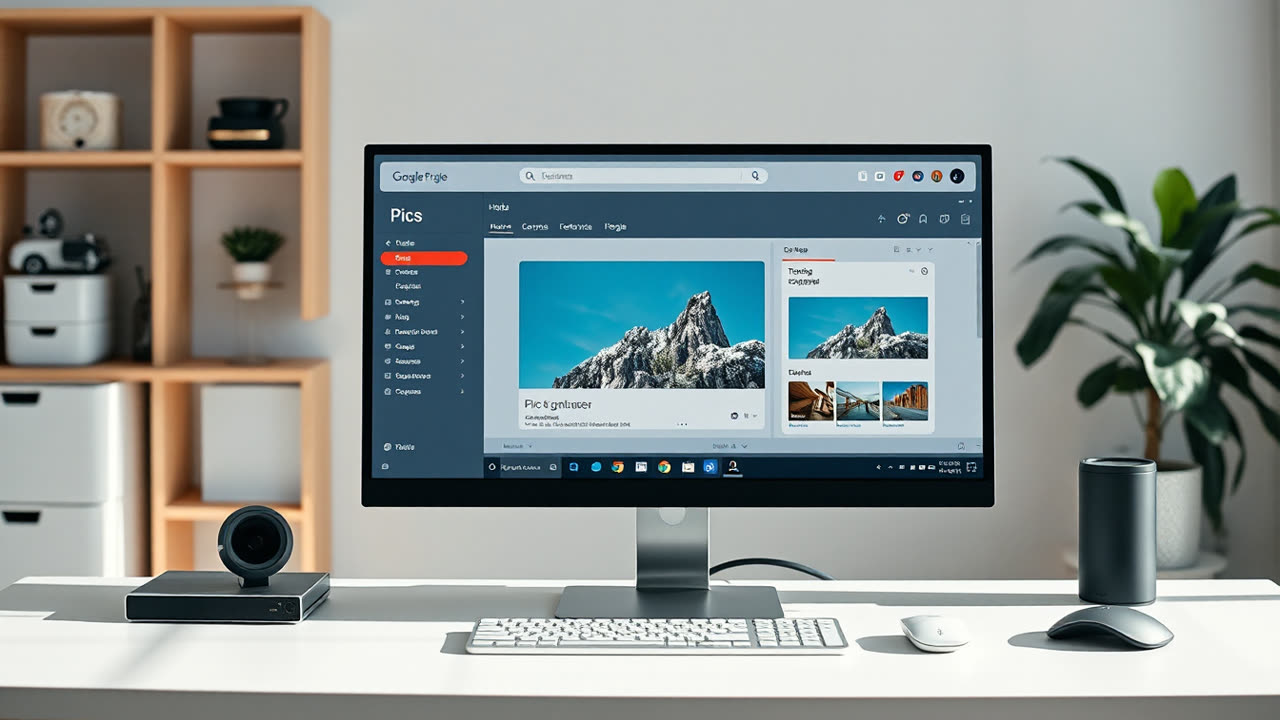
Google has launched Google Pics, a comprehensive suite of AI-powered creative design tools integrated directly into Google Workspace, fundamentally reshaping how businesses approach visual content creation. This new offering, leveraging the advanced capabilities of the Gemini large language model and an as-yet-unnamed, highly efficient proprietary image generation engine, aims to democratize professional-grade design for enterprises, moving beyond simple templates to truly intelligent, context-aware image generation and editing. Positioned as a direct competitor to established platforms like Canva, Google Pics distinguishes itself with a deeper integration of generative AI, promising to significantly reduce the time and expertise required to produce high-quality visual assets for marketing, presentations, and internal communications.
The significance of Google Pics extends far beyond a mere feature update; it represents a strategic pivot for Google in the competitive enterprise software landscape, seeking to capture a larger share of the creative workflow market. For users, the impact is immediate and transformative: mundane tasks like background removal, object manipulation, and style transfers are automated with unprecedented precision, while novel functionalities allow for "text-to-image" and "image-to-image" generation based on natural language prompts. A key differentiator is the ability to generate imagery consistent with a company's brand guidelines by feeding the AI existing assets and style guides, ensuring brand fidelity across all generated content without manual oversight. This level of intelligent adherence to brand identity could save businesses countless hours in revisions and ensure a cohesive corporate image, a critical pain point in distributed work environments. Furthermore, its integration within Workspace means seamless access from Google Docs, Slides, and Sheets, eliminating the friction of exporting and importing files between disparate applications.
Historically, creative design tools have demanded specialized skills and often come with steep learning curves, creating bottlenecks in content pipelines for non-design professionals. While platforms like Canva revolutionized accessibility with user-friendly interfaces and extensive template libraries, they largely remained tools for assembling pre-existing elements or applying filters. Google Pics, by contrast, is engineered to *generate* original content from scratch or significantly alter existing images with sophisticated AI algorithms. It moves beyond the "drag-and-drop" paradigm to a "prompt-and-refine" model, where users articulate their vision, and the AI drafts the visual, iteratively improving it based on feedback. This represents a generational leap, akin to moving from desktop publishing to intelligent content creation. Compared to the prior generation of Google's own image editing capabilities within Workspace, which were basic at best, Google Pics offers a completely reimagined, AI-first approach. The underlying Gemini model provides nuanced understanding of context and intent, allowing for more creative and accurate outputs than earlier, less sophisticated generative AI models.
The competitive landscape is intensifying, with Adobe also heavily investing in generative AI features through its Firefly models integrated into Creative Cloud, and Canva continuously enhancing its own AI capabilities. However, Google's deep integration within the Workspace ecosystem provides a distinct advantage, potentially making Google Pics the default choice for millions of existing business users who prioritize seamless workflow over standalone, high-fidelity design applications. While Adobe still caters to professional designers requiring pixel-perfect control, Google Pics targets the broader business user who needs rapid, high-quality visual content without extensive training. Early access reports suggest a tiered pricing model, with basic AI features included in standard Workspace subscriptions and advanced generative capabilities available through a premium add-on, priced competitively at approximately $15-$25 per user per month for the full suite.
Looking ahead, Google Pics is poised to become an indispensable tool for businesses navigating the ever-increasing demand for visual content. The next iteration will likely see further refinements in AI accuracy, expanded style libraries, and potentially even integration with 3D object generation and video editing capabilities, leveraging Google's broader AI research. The platform's ability to learn and adapt to specific organizational styles will only grow, potentially leading to fully automated brand asset generation that requires minimal human intervention. This could redefine the roles of in-house designers, shifting their focus from execution to strategic oversight and creative direction, while empowering every employee to contribute visually compelling content. The long-term trajectory suggests a future where the line between content creation and content generation blurs entirely, with AI becoming a co-creator rather than just a tool, fundamentally altering the economics and dynamics of creative production across industries.