Google Pixel 11 Pro Fold Review: Better, Not Best
Google's latest foldable, the Pixel 11 Pro Fold, arrives at $1,900 with a new 2nm Tensor G6 chip and refined AI cameras, facing intense competition in a rapidly evolving market where incremental improvements may not secure leadership.
✨ This content was summarized and interpreted by AI; it may contain errors — please verify accuracy with the original sources. Learn more
Listen to this story
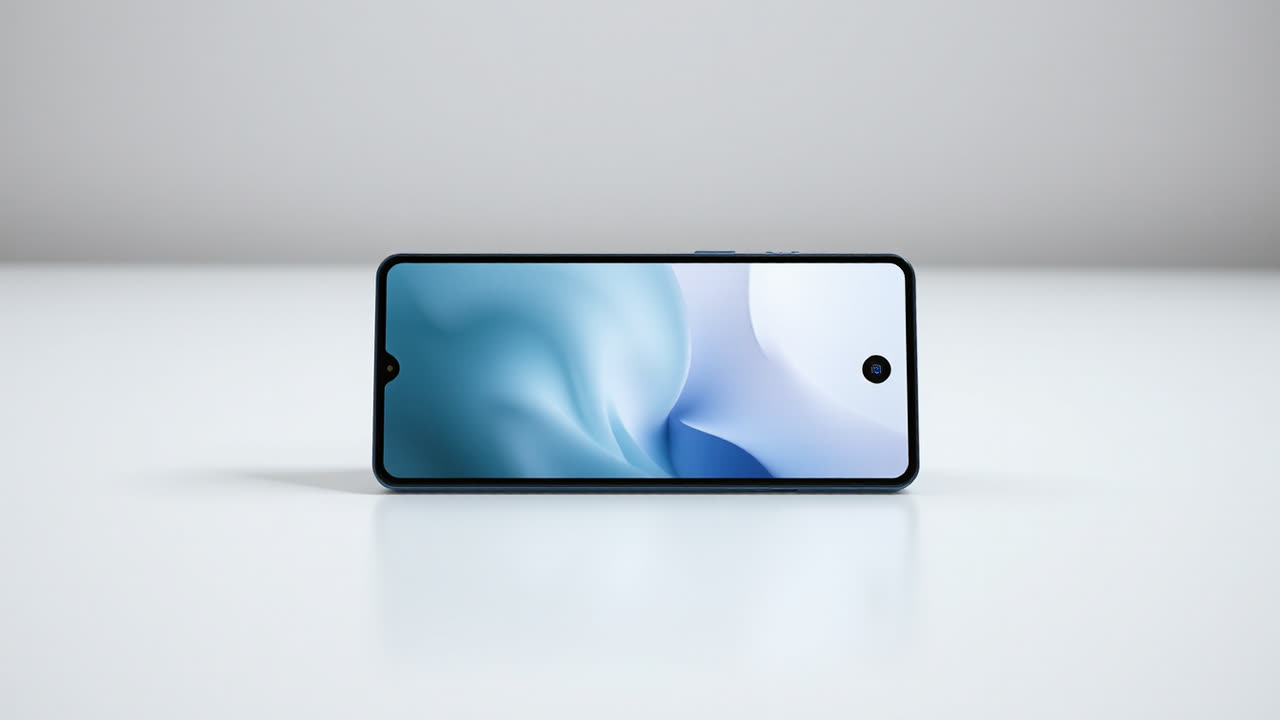
The Google Pixel 11 Pro Fold arrives with a starting price of $1,900, marking a $100 increase over its predecessor and positioning it in a rapidly intensifying foldable market where "better" no longer guarantees market leadership. Unveiled in August 2026 alongside the rest of the Pixel 11 lineup, Google’s latest foldable aims to refine the user experience with significant hardware and software enhancements, yet it faces formidable competition from established players and aggressive newcomers.
At its core, the Pixel 11 Pro Fold is powered by the new Tensor G6 chip, officially announced on August 12, 2026. This 2nm processor is a critical upgrade, potentially making Google the first to market with a chip on this advanced manufacturing node, even ahead of Apple's anticipated iPhone 18. However, previous Tensor generations, like the G5, while strong in AI and machine learning, have lagged behind rivals in raw benchmarks and battery efficiency. The Pixel 11 Pro Fold promises a base storage of 256GB, 30 hours of battery life, and faster wireless charging, addressing key user demands. Its cameras feature a slimmer profile, more powerful zoom, and advanced AI capabilities, including a "Magic Capture" mode for automatic photo and video sequences, and "Instant Night Sight" for quicker low-light photography on Pro models. Google has also introduced "Camera Looks," offering users greater control over photo processing, moving beyond the often-criticized overly clean, HDR-heavy output of past Pixel phones.
This suite of improvements matters profoundly for both users and the industry. For consumers, the Pixel 11 Pro Fold offers a more polished and capable device, addressing some pain points of earlier foldables, such as potentially better battery life and refined camera control. Google's continued emphasis on AI, with features designed to simplify daily tasks, reinforces its unique software-first approach. However, the $1,900 price tag, a $100 bump from the previous year, places it firmly in the ultra-premium segment, making the "Better, Not Best" sentiment particularly salient. In a market increasingly saturated with sophisticated foldables, incremental improvements, even significant ones, might not be enough to sway buyers seeking a truly disruptive experience or a more compelling value proposition.
Compared to its direct predecessor, the Pixel 10 Pro Fold, this new iteration likely builds upon a foundation that, while "playing it safe" on design, notably introduced IP68 water resistance and a substantial battery. The Tensor G6 represents a generational leap over the G5, and the camera system appears to be more versatile and user-customizable. However, the wider foldable market has not stood still. Samsung, a long-standing leader, continues to innovate with devices like the Galaxy Z Fold 7, an Editors' Choice winner known for its massive inner screen and a remarkably svelte design, weighing just 7.58 ounces (215.0 g) and unfolding to a mere 0.17 inches (4.2 mm) thick. The Z Fold 7 also boasts a brighter 6.5-inch outer display and an 8.0-inch inner display with superior peak brightness of 2600 nits, compared to the Pixel 10 Pro Fold's 1450 nits on its inner display. Samsung is also pushing boundaries with its expected Galaxy Z Trifold in early 2026.
Beyond Samsung, competitors like Honor and OnePlus are fiercely challenging the premium foldable space. The Honor Magic V6, launched in 2026, sets new benchmarks for durability with IP68 and IP69 ratings and an aerospace-grade Super Steel hinge rated for 500,000 folds. It packs an industry-leading 6660mAh silicon-carbon battery, a powerful Snapdragon 8 Elite Gen 5 chip, and impressive camera specs including a 50MP main and 64MP periscope telephoto lens. The Magic V6 also boasts stunning displays, with an outer screen reaching 6,000 nits peak brightness and an inner display at 5,000 nits, alongside a "much reduced crease." Priced around $1,946, it presents a compelling alternative. The OnePlus Open 2, also a strong contender, offers 16GB of RAM and a competitive price point, further squeezing Google's market position.
Looking ahead, the foldable smartphone market is projected to grow by 20% in 2026, driven significantly by the anticipated entry of Apple, which is expected to capture a substantial 28% market share in its first year. This influx of competition, coupled with innovations like tri-fold designs from Huawei, underscores that the foldable segment is maturing rapidly. For Google, the Pixel 11 Pro Fold’s "better, not best" standing, combined with its premium price, suggests that while Google is committed to the foldable form factor, it may need to pursue more aggressive pricing or truly groundbreaking innovations beyond software refinement to carve out a dominant niche. The battle for foldable supremacy in 2026 is less about incremental gains and more about delivering a standout experience that justifies the cost and differentiates from a crowded, high-performing field.