Google Pixel 11's 'HiLight' Feature Poised to Revolutionize Ambient Smartphone Interaction
Google's upcoming Pixel 11 will introduce 'HiLight,' an innovative multi-color LED system on its rear that illuminates when the device is face down, transforming traditional notifications into a sophisticated, ambient visual language.
✨ This content was summarized and interpreted by AI; it may contain errors — please verify accuracy with the original sources. Learn more
Listen to this story
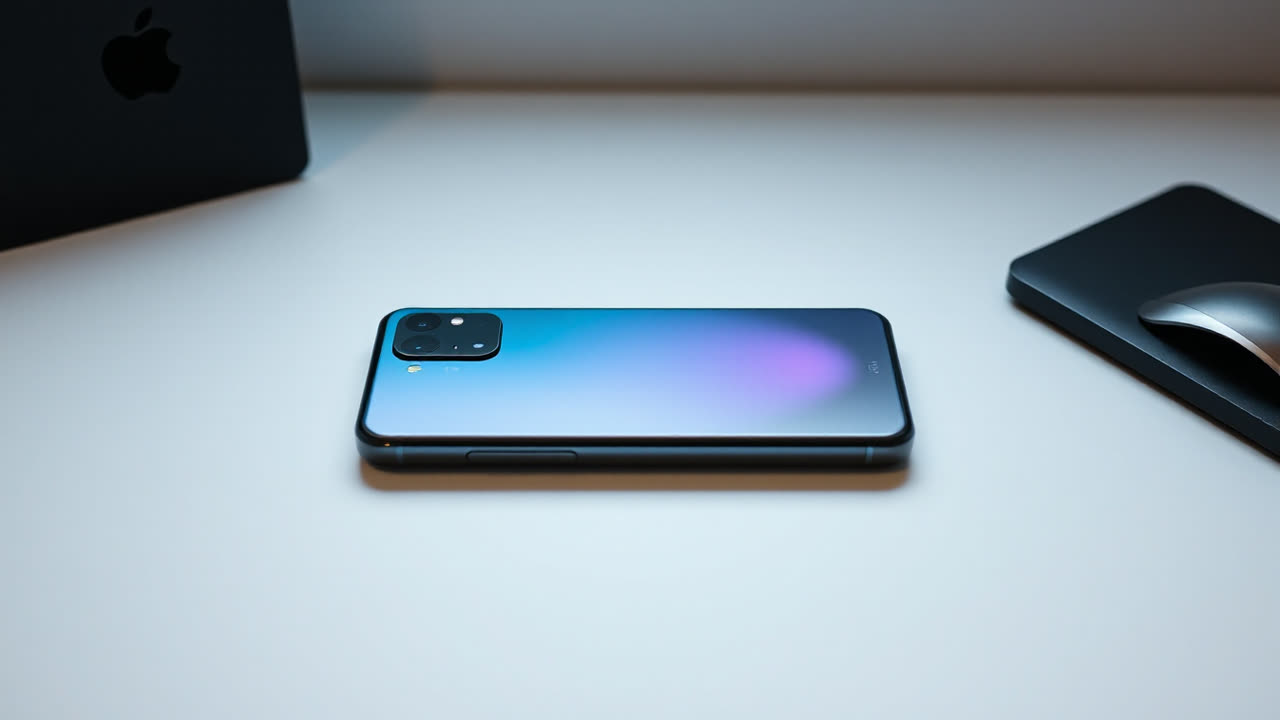
Google's upcoming Pixel 11 is poised to redefine ambient smartphone interaction with its innovative "HiLight" feature, evolving the traditional camera flash into a sophisticated, multi-color LED system designed to illuminate when the device rests face down. This marks a significant departure from conventional notification paradigms, transforming the phone's often-ignored rear panel into an active, communicative surface. Far from a mere aesthetic flourish, HiLight represents Google's strategic intent to enhance user awareness without demanding constant screen engagement, addressing a growing fatigue with always-on displays and intrusive alerts.
The core innovation lies in HiLight's dynamic capability to emit a spectrum of colors, each potentially correlated with specific notification types, contacts, or app activities. While precise customization options are yet to be fully detailed, early indications suggest users will be able to assign distinct hues to differentiate urgent messages from social media pings, or even recognize incoming calls from specific individuals without ever needing to flip the device over. This subtle yet powerful visual language aims to create a more intuitive and less disruptive way for users to triage information in environments where screen-gazing might be impractical or inappropriate, such as during meetings or social gatherings. The evolution from a singular, utilitarian camera flash to a versatile, multi-purpose LED array underscores a shift in design philosophy, repurposing existing hardware for enhanced user experience rather than introducing entirely new components.
For users, HiLight promises a more mindful digital existence. In an era dominated by constant digital interruptions, the ability to glean critical information through ambient light rather than bright, attention-grabbing screens offers a tangible benefit. It could reduce the impulse to check every notification, fostering a healthier relationship with technology by providing information at a glance, without pulling the user entirely out of their present environment. This "glanceable information" paradigm has been explored in various forms, from smartwatches to always-on display widgets, but HiLight brings it to the physical presence of the device itself, leveraging its orientation. Furthermore, the feature could prove invaluable for accessibility, offering a non-auditory and non-vibratory notification method that is visually distinct and easily discernible, particularly for users with hearing impairments or those who prefer silent alerts.
Industrially, HiLight sets a new benchmark for smartphone ambient intelligence and notification design. While rivals like Apple have focused on Dynamic Island for front-facing contextual information and Samsung has experimented with edge lighting for notifications, Google is uniquely leveraging the device's rear, traditionally a passive surface. This approach could spur a new wave of innovation in rear-panel functionality, potentially inspiring competitors to explore similar ambient lighting solutions or even integrate small, low-power displays on the back of devices for expanded functionality. Prior generations of Pixel phones have included features like "Now Playing" which subtly identifies music around the user, showcasing Google's long-standing interest in ambient computing; HiLight extends this philosophy to visual notifications. The shift from a binary on/off flash to a multi-color LED also signifies a deeper integration of lighting elements into the device's core operating system and user interface, moving beyond simple utility to expressive communication.
Looking ahead, HiLight could be just the beginning of a broader trend in "smart surfaces" on smartphones. Imagine future iterations where these rear LEDs are not only multi-color but also capable of displaying simple patterns, animations, or even acting as a rudimentary ambient light sensor to adjust screen brightness more intelligently. This technology could extend beyond notifications, potentially indicating charging status with a pulsating green, or even serving as a subtle visual cue for augmented reality interactions when the phone is placed on a surface. The potential for third-party developers to integrate HiLight into their applications, allowing for unique, app-specific visual alerts, also opens up a new frontier for personalized smartphone interactions. As smartphones become increasingly integrated into our daily lives, features like HiLight represent a crucial step towards making these devices more intuitive, less intrusive, and ultimately, more harmoniously integrated into our physical and social environments.