Google Pixel Watch 5 Review: More Health, More AI
With smarter gym tracking, new health alerts, and offline Gemini, the Pixel Watch 5 fine-tunes a winning formula—for a price.
✨ This content was summarized and interpreted by AI; it may contain errors — please verify accuracy with the original sources. Learn more
Listen to this story
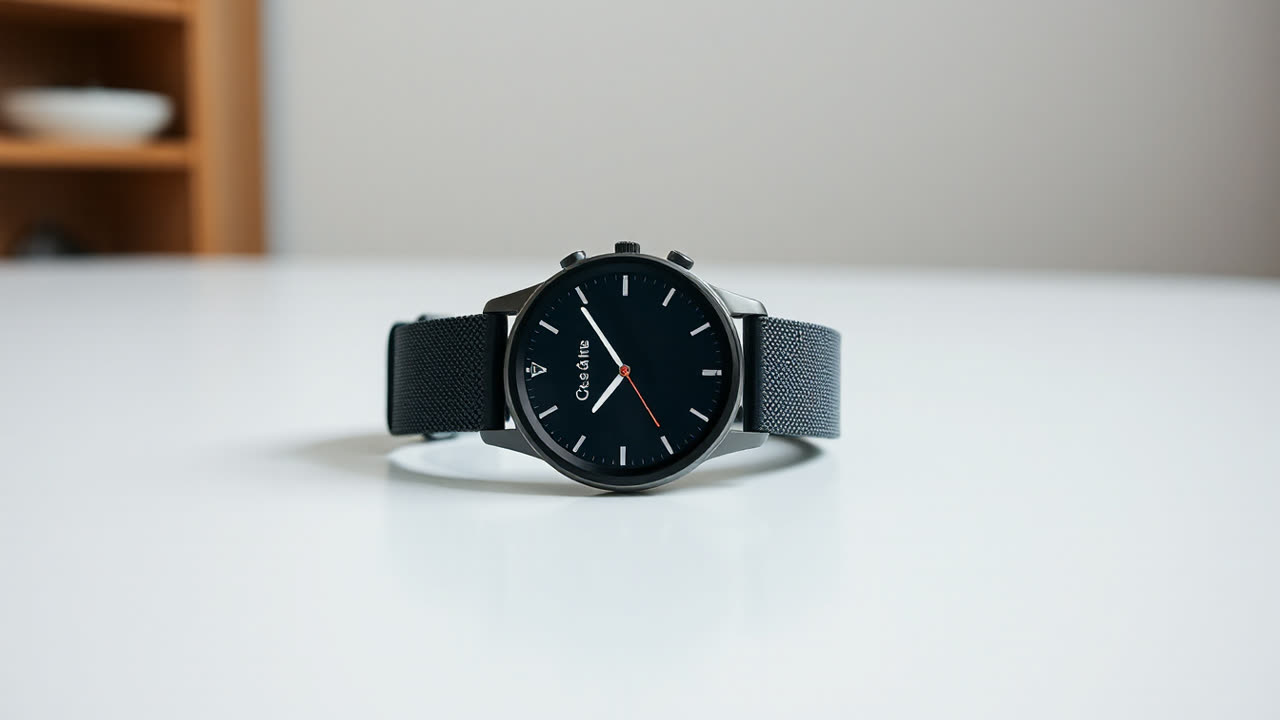
The Google Pixel Watch 5 reportedly elevates wearable intelligence and health monitoring to an unprecedented level with its introduction of sophisticated gym tracking, proactive health alerts, and, most notably, offline Gemini integration, signaling a significant evolution for Google's wearable ecosystem. This suite of enhancements aims to fine-tune a winning formula, positioning the device as a formidable contender in the competitive premium smartwatch market, which was estimated at USD 48.4 billion in 2025 and is projected to reach USD 95.2 billion by 2035, driven largely by rising health consciousness.
The "smarter gym tracking" feature on the Pixel Watch 5 moves beyond rudimentary activity logging, reportedly offering granular insights such as automatic rep counting, form analysis, and real-time feedback to optimize strength training routines. This represents a substantial upgrade from the Pixel Watch 2, which, while showing improvements over its predecessor in heart rate accuracy during activities like weightlifting, still wasn't deemed perfect, with some users experiencing minor issues during indoor cycling. Competitors like the Samsung Galaxy Watch 7 also offer enhanced exercise tracking and wellness tips powered by AI, but the Pixel Watch 5's reported depth in gym-specific metrics could provide a significant edge, democratizing access to personalized training insights typically requiring a human coach. This level of detailed feedback can empower users to prevent injuries, maximize workout efficiency, and achieve fitness goals more effectively, transforming the watch from a simple tracker into an intelligent personal trainer.
Complementing advanced fitness capabilities are the "new health alerts," which promise to transition the wearable from a reactive data aggregator to a proactive health sentinel. These alerts are expected to go beyond the Pixel Watch 2's existing capabilities, which include heart rate tracking, SpO2 monitoring, and ECG functionality, albeit with some user reports of "inconclusive" readings and accuracy concerns for AFib detection. The Pixel Watch 5's new alerts could leverage enhanced sensors and AI to detect subtle physiological anomalies indicative of emerging health conditions, potentially even predicting illness or chronic disease progression before overt symptoms appear, aligning with broader industry trends towards non-invasive continuous glucose monitoring and lactate detection. Such proactive intervention holds immense potential for early disease detection and personalized preventative care, profoundly impacting user well-being and potentially reducing healthcare costs, though it also raises questions about the balance between constant monitoring and user anxiety, as well as the need for stringent medical validation for these advanced alerts.
Perhaps the most transformative innovation is the integration of "offline Gemini." By embedding Google's advanced AI directly onto the device, the Pixel Watch 5 facilitates instantaneous, privacy-preserving processing of sensitive health and activity data without constant reliance on cloud connectivity. This "edge AI" capability ensures faster personalized insights, reduces latency for voice commands and data analysis, and maintains critical functionality even in environments with poor or no internet access. This contrasts with many existing AI-powered wearables, including Samsung's Galaxy Watch 7, where full AI functionality often implies a cloud-dependent model. Offline Gemini addresses a key user concern regarding data privacy, as sensitive biometric information can be processed locally on the device rather than being continuously uploaded to remote servers. This shift significantly enhances user trust and positions the Pixel Watch 5 as a more autonomous and secure personal health companion.
The introduction of these advanced features comes "for a price," underscoring Google's strategy to compete in the premium smartwatch segment, which constituted 45.6% of the total market share in 2025 and is experiencing a 7.3% CAGR from 2026 to 2035. The Pixel Watch 2 retailed for $349-$399, and the Pixel Watch 5 is likely to maintain or exceed this price point, reflecting the increased hardware and software sophistication. While Apple led the global smartwatch market with a 23% share in Q1 2026, and Samsung remains a strong competitor, Google's Wear OS is forecast to achieve the fastest growth in the North American smartwatch market, advancing at a 17.25% CAGR through 2031. This indicates a growing appetite for Google's ecosystem and Wear OS, driven by continuous innovation.
Looking ahead, the Pixel Watch 5's advancements signal a clear direction for Google and the broader wearable industry: a convergence of deep health insights, personalized fitness guidance, and sophisticated on-device AI. The challenge for Google will be to ensure the consistency and medical-grade accuracy of its "new health alerts," building user confidence where previous iterations faced skepticism regarding ECG reliability. The offline Gemini integration represents a pivotal step towards truly intelligent, independent wearables that offer rich, real-time insights with enhanced privacy. Future iterations will likely see even more seamless integration of AI, potentially leading to predictive health models that anticipate user needs and offer truly personalized, context-aware assistance, further blurring the lines between consumer tech and personal medical devices. The industry is poised for continuous growth, with smartwatches increasingly becoming indispensable tools for holistic health management rather than mere smartphone accessories.