Google Play Store Welcomes Rival Aptoide in US, Ending Monopoly on Android App Distribution
Following a landmark court order stemming from its legal battle with Epic Games, Google has opened its Play Store to third-party app marketplaces in the U.S., with Aptoide being the first rival store to become directly downloadable.
✨ This content was summarized and interpreted by AI; it may contain errors — please verify accuracy with the original sources. Learn more
Listen to this story
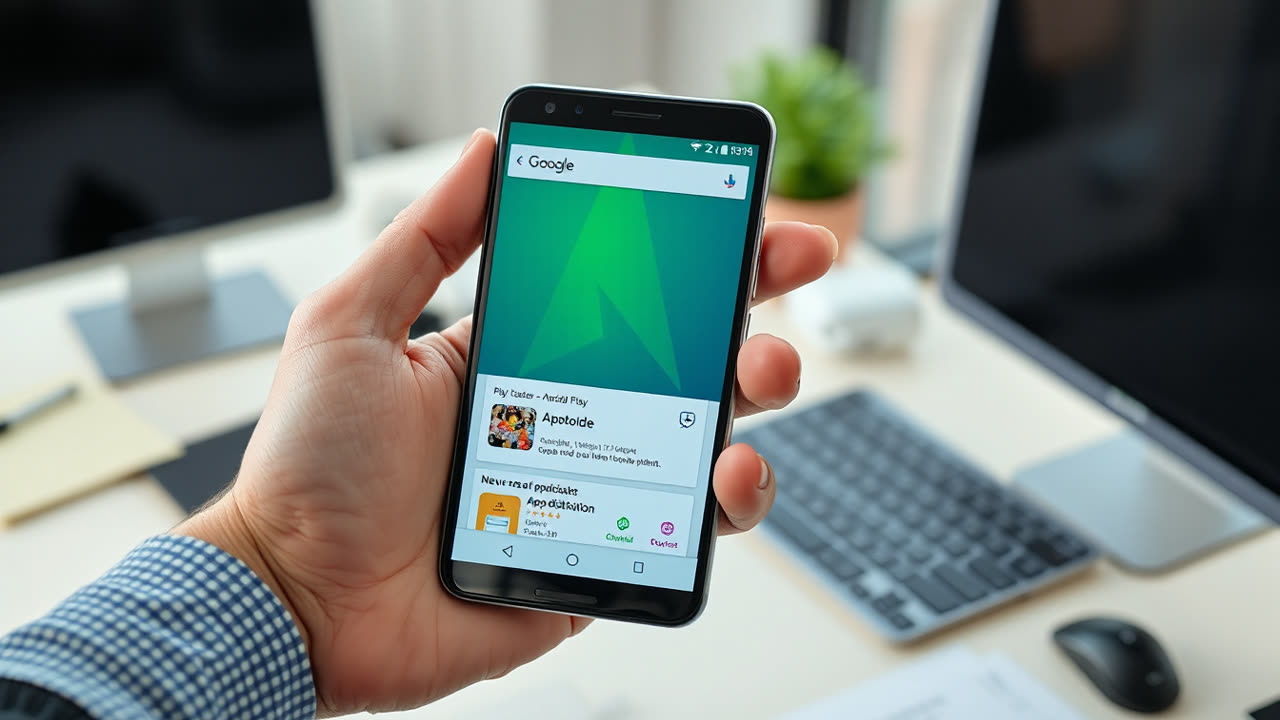
The digital distribution landscape for Android in the United States has fundamentally shifted with the arrival of Aptoide, a third-party app store specializing in mobile games, directly within Google's Play Store. This unprecedented move, which officially took effect on July 22, 2026, marks the first time a rival app marketplace can be downloaded by U.S. Android users without resorting to sideloading or proprietary device stores. The development is a direct consequence of Google's protracted legal battles with Epic Games, which culminated in a U.S. court order compelling Google to open its ecosystem.
This change is far more than a mere technicality; it represents a profound rebalancing of power within the Android ecosystem. For years, Google Play has maintained a near-monopoly on app distribution for most Android users, handling 95% of U.S. Android app downloads as of 2020. While Android has always technically allowed sideloading, the process was often cumbersome and fraught with security warnings, deterring most users. The direct availability of Aptoide on the Play Store removes this significant barrier, offering a legitimate and easily accessible alternative.
The impact on users is immediate and tangible, promising increased choice and potentially better value. Aptoide Games, as its name suggests, focuses on a curated collection of mobile games, offering features like exclusive bonuses on in-app purchases, often up to 20%, and a gamified system that reinvests Aptoide's revenue share back to users as credits. This directly contrasts with Google Play's traditional revenue model, where developers typically faced a 15% to 30% commission on in-app transactions, though Google has recently reduced its baseline commission for new app installs to 10% in the US, EEA, and UK, with an additional 5% billing fee if using Google's system. Aptoide's developer-friendly revenue share, ranging from 75% to 90% (or an effective 91.48% to 93% with its "Revenue Boost" for direct-to-consumer models or via distribution channels), could incentivize developers to offer lower prices or more generous in-game rewards to users on its platform. However, users must be diligent; while Aptoide employs malware detection systems and "Trusted" badges, the fragmented landscape could also introduce new security risks if users are not careful about which alternative stores they trust.
For the industry, this shift is monumental. Google's concession follows a jury verdict in December 2023 that found the company had unlawfully maintained monopoly power in Android app distribution. The court's injunction, affirmed on appeal in 2025, specifically mandated that Google cease preventing rival Android stores from being distributed through Google Play and provide them access to its app catalog. Google's new "Play Catalog Access Program," which commenced on July 22, 2026, requires third-party stores to pay a $5,000 annual review fee, adhere to strict security and policy requirements, and maintain malware install rates below defined limits. Developers are automatically opted into sharing their app listings with these third-party stores unless they explicitly opt out. This means alternative stores effectively gain an instant, pre-populated storefront without having to build their developer relationships from scratch, a significant competitive advantage.
This U.S. development runs parallel to, yet distinct from, regulatory pressures seen in Europe with the Digital Markets Act (DMA). While the DMA also aims to foster competition by requiring "gatekeeper" platforms like Google and Apple to allow alternative app stores and payment systems, the U.S. changes stem from antitrust litigation rather than proactive legislation. This distinction is crucial; the U.S. approach, while opening the door, still leaves Google with mechanisms to manage its ecosystem, such as continuing to apply its service fee for downloads completed through Play's infrastructure, even if initiated from a third-party store.
Looking ahead, the implications are vast. The entry of Aptoide is likely just the beginning. Other major players, including Epic Games itself, Amazon, and Microsoft Xbox, could follow, potentially launching their own specialized stores within Google Play. This could lead to a highly fragmented but more competitive app distribution market, forcing Google to continually refine its Play Store offerings and commission structures to retain developers and users. Developers, particularly those in the gaming sector, will gain unprecedented leverage, able to choose platforms that offer the most favorable revenue splits and promotional opportunities. This could spur innovation in app monetization models and user acquisition strategies.
However, the proliferation of app stores also presents challenges. Users may face a more complex experience managing multiple stores, subscriptions, and payment methods. Security remains a paramount concern, as a fractured ecosystem could inadvertently create new attack vectors for malware, despite Google's and individual stores' efforts to vet apps. The long-term success of this new era of Android app distribution will hinge on how effectively alternative stores can differentiate themselves, how Google balances openness with platform integrity, and how users navigate this expanded, yet potentially more complex, digital landscape.