Google Rolls Out Critical Android Auto Update to Fix Widespread Disconnection and Freezing Issues
Google has released Android Auto version 17.4 and a June 2026 patch, directly addressing persistent user complaints of frustrating disconnections, freezing, and service interruptions across various car models and phone brands.
✨ This content was summarized and interpreted by AI; it may contain errors — please verify accuracy with the original sources. Learn more
Listen to this story
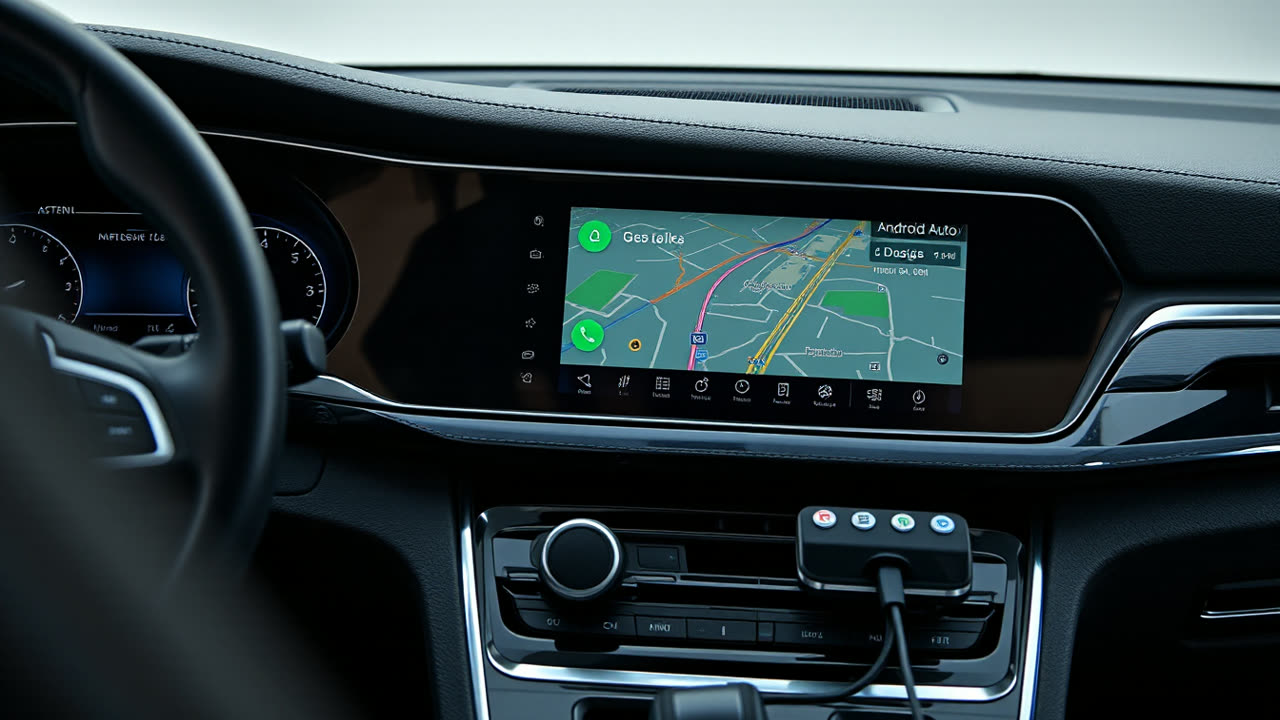
Google recently rolled out Android Auto version 17.4, addressing widespread complaints of frustrating disconnections, freezing, and sudden service interruptions that plagued users across various car models and phone brands, including Pixel and Samsung devices. This critical update, alongside a June 2026 patch via Google Play Services version 26.22, aims to stabilize a platform that, despite its ubiquity, has consistently struggled with the fundamental reliability of its connection.
The core issue often stems from a fragile handshake between the smartphone and the vehicle's infotainment system. Wired connections frequently falter due to inadequate USB cables; older USB 2.0 or even early USB 3.0 cables are no longer sufficient to handle the data throughput required for modern features like 4K rendering and multi-stream media, necessitating modern USB 3.2 Gen 2 cables with foil shielding, ideally shorter than six feet. Beyond hardware, software inconsistencies contribute significantly. Users have reported issues like the "Car Not Detected" bug, often a firmware handshake failure in vehicles from 2024-2026, requiring OEM head unit updates. The Android Auto app itself can suffer from corrupted cache or storage, necessitating a manual clear-out through the phone's settings. Wireless connections, while offering convenience, introduce their own complexities, demanding stable Bluetooth and Wi-Fi signals, and often requiring re-pairing to force a fresh connection. Even Google's advanced AI, Gemini, has introduced specific bugs in its 2026 integration, such as unexpectedly reverting to the "Classic Assistant" in version 16.7 or causing "oops, something went wrong" errors due to message summary conflicts. Furthermore, late 2025 updates introduced an "Advanced Protection" security mechanism on Pixel phones, preventing Android Auto from launching unless "Start Android Auto while locked" is enabled.
These persistent connectivity woes significantly impact the user experience, transforming what should be a seamless extension of smartphone functionality into a source of distraction and frustration. For the 83% of Americans who actively use Apple CarPlay or Android Auto when available, these systems are no longer optional conveniences but essential tools for navigation, communication, and entertainment during commutes and longer journeys. A black screen, a frozen map, or a sudden disconnect during a critical navigation point not only disrupts the flow of a drive but can also compromise safety, pushing drivers to interact with their phones directly—precisely what these systems are designed to prevent. From an industry perspective, such reliability issues challenge Google's reputation in the automotive space and could influence manufacturers' long-term strategies, especially as they weigh deeper integration options.
The evolution of in-car infotainment has been a century-long journey, from rudimentary AM radios in the 1920s to the sophisticated multimedia hubs of today. The 2010s marked a pivotal shift with the introduction of smartphone projection systems like Android Auto and Apple CarPlay, which transformed car dashboards into personalized, app-driven interfaces. Compared to its primary rival, Apple CarPlay, Android Auto often struggles with a perception of lesser reliability. CarPlay's closed ecosystem, with Apple controlling both hardware and software, generally leads to more consistent and quicker connections, with fewer reported disconnections. Android Auto, by contrast, must contend with hundreds of different Android phone models, varying Android versions, and diverse manufacturer skins, resulting in a more varied and sometimes less stable user experience.
However, Android Auto counters with its superior customization options, broader third-party app support, and the powerful integration of Google's services. The 2026 updates bring significant enhancements, including a Material 3 design refresh, customizable widgets, and immersive 3D navigation in Google Maps—hailed as the biggest Maps upgrade in a decade. The platform now supports HD video playback at 60 frames per second in 4K resolution while parked, with apps like YouTube, and is rolling out Dolby Atmos support for a more immersive audio experience in compatible vehicles from brands like BMW, Ford, Genesis, and Volvo. While Apple's CarPlay Ultra, launched in May 2025, offers a complete takeover of all car screens for a unified interface controlling climate and vehicle status, its adoption remains limited to luxury models like Aston Martin, with broader availability from Hyundai, Kia, and Genesis anticipated in late 2026. Android Auto, by contrast, is supported in over 250 million cars as of 2025, demonstrating its vast reach, compared to CarPlay's presence in 98% of new US cars.
Looking ahead, Google's strategy extends beyond phone projection. The true "next big thing" is Android Automotive OS (AAOS), a full operating system built directly into the car's hardware, independent of a smartphone. AAOS, already adopted by manufacturers like Volvo, Polestar, and Ford, allows for native app installation and deeper control over vehicle functions, including air conditioning. Critically, General Motors announced it is dropping Android Auto from its EVs and plans to phase it out from all future vehicles, instead opting for its own Gemini AI-powered conversational system built on AAOS. This move signals a significant shift, as automakers seek greater control over the in-car experience and leverage AI for more integrated solutions. While Android Auto will continue to evolve with features like enhanced Gemini AI capabilities for ordering food or answering vehicle questions, its long-term future may see it increasingly coexist with, or even be superseded by, native Android Automotive OS implementations that offer a more deeply embedded and seamless digital cockpit experience. The ongoing battle for the dashboard will increasingly be fought not just through smartphone mirroring, but through comprehensive, car-native operating systems.