Google's AI Mode Transforms into Personalized Fantasy Football Consultant
Google's AI Mode now directly integrates with Yahoo Fantasy and Sleeper, offering real-time, context-aware fantasy football advice for the 2026 season.
✨ This content was summarized and interpreted by AI; it may contain errors — please verify accuracy with the original sources. Learn more
Listen to this story
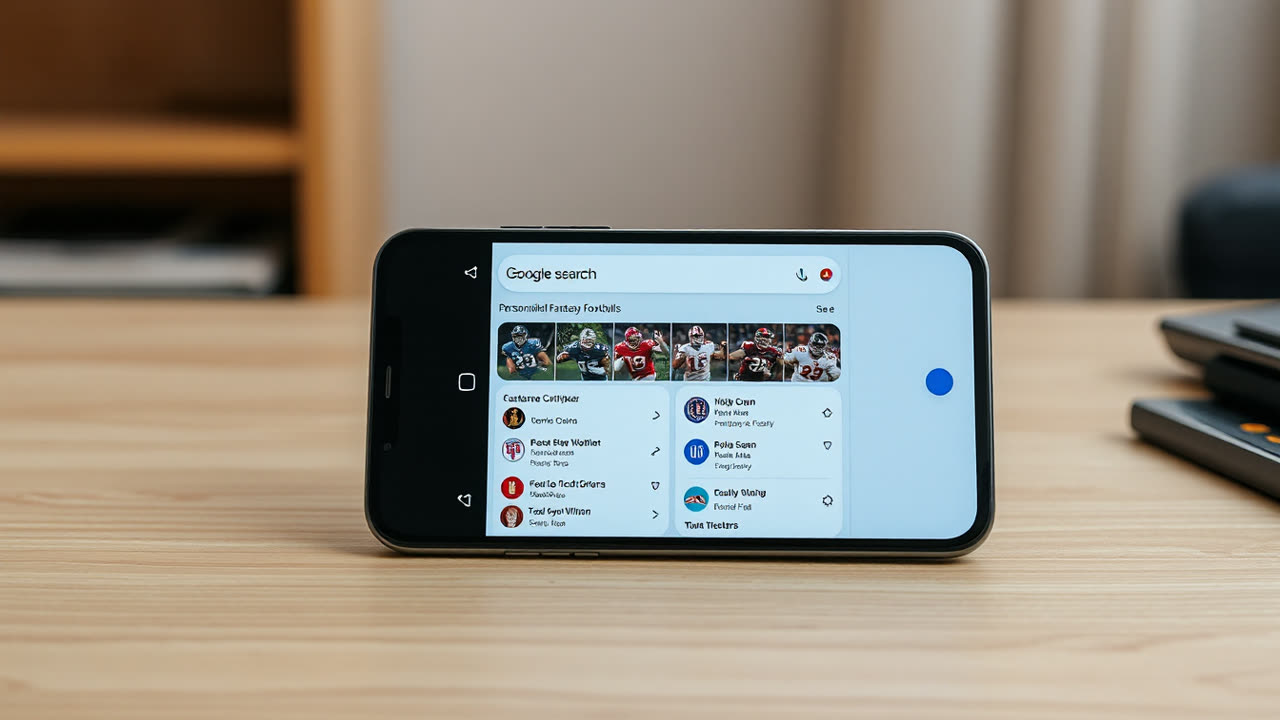
Google has significantly upgraded its AI Mode to function as a personalized fantasy football consultant for the 2026 season, directly integrating with popular fantasy platforms like Yahoo Fantasy and Sleeper. This marks a substantial evolution from generic AI assistance, offering users real-time, context-aware recommendations for their specific leagues and rosters. The core functionality allows users to connect their fantasy accounts to Google Search's AI Mode, enabling it to provide tailored advice on crucial decisions such as start/sit recommendations, waiver wire targets, draft-pick assessments, and weekly league recaps without requiring manual data entry or screenshots. This personalized approach leverages the AI's ability to understand a user's live roster and league settings, moving beyond static rankings to dynamic, actionable insights.
This development matters profoundly for several reasons. For fantasy football users, it promises to democratize expert-level analysis, making sophisticated decision-making tools accessible to a broader audience. Casual players, often overwhelmed by the sheer volume of data and conflicting advice, can now receive simplified, yet highly relevant, guidance directly from Google's AI. This could significantly lower the barrier to entry for new players and enhance the engagement of existing ones by reducing the time commitment traditionally required for in-depth research. The convenience of having an AI assistant that "knows" your team and league context, rather than needing constant explanation, is a game-changer for user experience. However, it also raises questions about the enjoyment derived from the "grind" of fantasy football; for some, the challenge of research and strategizing is a core part of the fun, and offloading this to AI could diminish that aspect.
For the industry, Google's deeper foray into personalized sports analytics through its AI Mode signals a significant strategic move. It positions Google not just as a search engine, but as an indispensable intelligent agent embedded directly into users' daily workflows and leisure activities. By integrating with Yahoo Fantasy and Sleeper, Google is acknowledging the established ecosystems while simultaneously inserting itself as a powerful intermediary. This could compel other fantasy platforms and sports media companies to accelerate their own AI development or risk being overshadowed by Google's pervasive reach. The broader AI in sports market is already experiencing rapid growth, projected to exceed $22 billion by 2030, with generative AI playing a crucial role in enhancing decision-making, performance, and fan engagement. Google's move reinforces the trend of hyper-personalization, where AI delivers customized training, tailored broadcasts, and interactive experiences.
In comparison to previous generations of fantasy football tools, which largely consisted of static rankings, expert articles, and basic statistical aggregators, Google's AI Mode represents a leap forward into truly conversational and context-aware assistance. While dedicated fantasy AI tools like FantasyPros Coach AI, RotoBot AI, Oddsmyth, and Scoutcast.ai have emerged, offering features like draft simulation, live recommendation engines, and league-sync personalization, Google's integration within its dominant Search platform offers unparalleled accessibility and convenience. These specialized tools often require separate subscriptions or apps, whereas Google's offering is woven directly into a platform many users already interact with daily. For instance, FantasyPros Coach AI provides personalized recommendations based on a user's league and team context, assisting with player recommendations and start/sit decisions, similar to Google's offering but as a standalone product. RotoBot AI, another advanced tool, offers open-ended chat and a draft board that recomputes value for a user's specific league settings. The key differentiator for Google is its ability to seamlessly combine these advanced capabilities with its existing search infrastructure and user base.
Looking ahead, the implications are vast. The success of Google's fantasy football AI could pave the way for similar integrations across other niche interests and industries, demonstrating the power of generative AI to offer highly personalized, expert-level advice within everyday digital environments. We can anticipate further refinements to the AI's predictive capabilities, potentially incorporating more nuanced factors like player psychology, team chemistry, and even real-time biometric data as it becomes more accessible. The global AI in sports market is projected to grow to $2.61 billion by 2030, indicating a significant investment in this innovation across the board. Beyond fantasy sports, this trend suggests a future where AI acts as a ubiquitous personal assistant, not just retrieving information, but actively processing personal context to offer proactive, intelligent recommendations across various domains, from personal finance to health and entertainment. The ethical considerations around data privacy and the potential for AI to diminish human decision-making in leisure activities will also become increasingly prominent as these tools become more sophisticated and integrated into our lives.