Google’s Dual Pixel Strategy: New Flagships Launch Alongside Discounted Mid-Range 10a
Google simultaneously launches its premium Pixel 11 series, featuring the new Tensor G6 chip and a foldable model, while significantly discounting the Pixel 10a to capture a broader market segment.
✨ This content was summarized and interpreted by AI; it may contain errors — please verify accuracy with the original sources. Learn more
Listen to this story
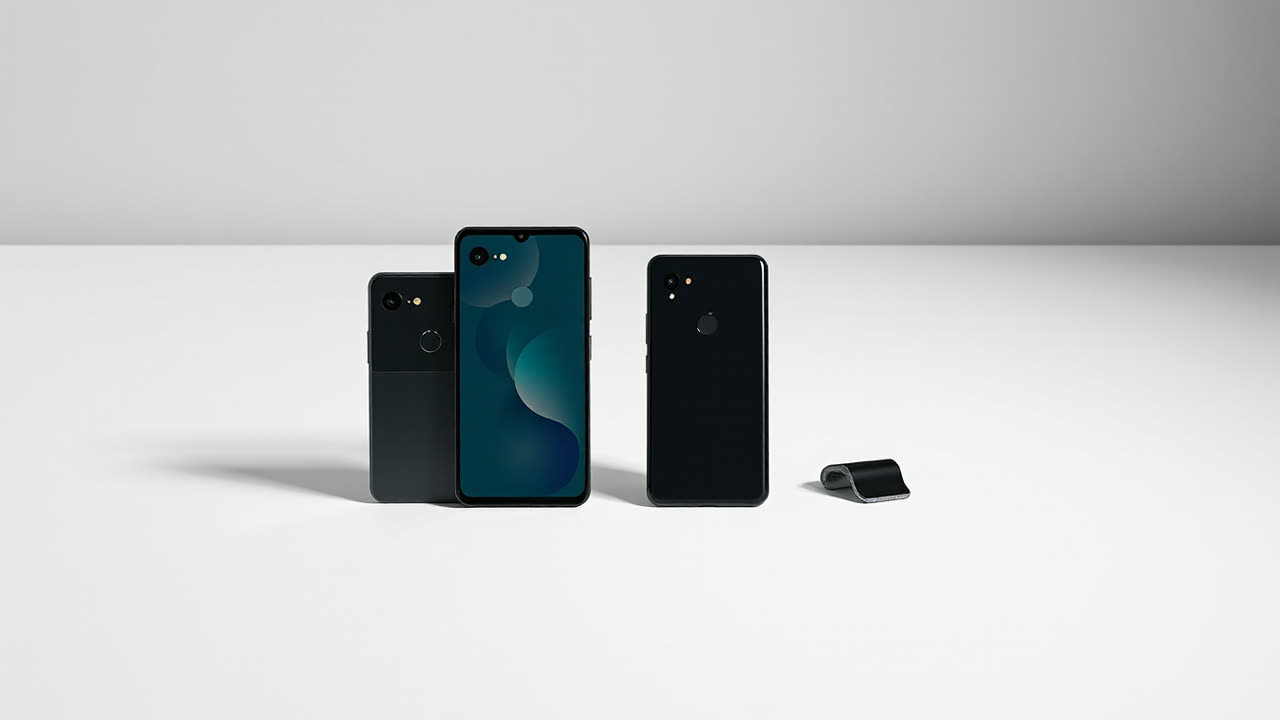
Google’s Pixel 10a, a device that carved out a niche for accessible premium features, is currently available at a compelling 15 percent discount, significantly altering its value proposition just as the company unveils its next-generation flagships. This move positions the 10a as an even more attractive budget-friendly option, retailing at approximately $373.15, down from its original $439 price point, while simultaneously navigating the market debut of the $899 Pixel 11, the $1,099 Pixel 11 Pro, and the ambitious $1,899 Pixel 11 Pro Fold. The simultaneous launch of the Pixel 11 series, featuring Google’s latest Tensor G6 processor and a consistent 12GB RAM starting point for both the standard and Pro models, underscores a strategic duality: maintaining a strong foothold in the fiercely competitive mid-range segment while pushing the boundaries of high-end and foldable smartphone technology.
The immediate impact for consumers is a complex decision matrix. For those prioritizing raw performance and cutting-edge features, the Pixel 11 and its Pro variant offer substantial upgrades, including potentially enhanced camera systems on the Pro model, building upon Google’s already acclaimed computational photography prowess. The Pixel 11 Pro Fold, with its sophisticated hinge mechanism and expansive flexible display, targets early adopters and power users seeking productivity and immersive entertainment in a single device. However, the Pixel 10a’s discounted price presents an undeniable value, offering a near-flagship software experience, reliable camera performance, and Google’s robust security updates at a fraction of the cost. This creates a compelling dilemma, particularly for users upgrading from older devices who may not require the absolute latest in silicon or camera technology but still desire a smooth, modern Android experience without significant financial outlay.
Industry-wide, Google’s strategy reflects a calculated approach to market segmentation. The aggressive pricing of the Pixel 10a, even two generations after its initial release, demonstrates a clear intent to capture a larger share of the mid-range market, a segment where affordability often trumps bleeding-edge specifications. This move directly challenges rivals like Samsung’s A-series and OnePlus’s Nord lineup, which have historically dominated this price bracket with strong feature sets and competitive pricing. By keeping the 10a actively discounted, Google ensures a consistent entry point into its ecosystem, potentially attracting users who might otherwise opt for competing brands or older, refurbished flagships. This also serves as a funnel, introducing users to the Pixel experience with the hope that they will upgrade to higher-tier Pixel devices in the future.
The Pixel 11 series, conversely, aims to solidify Google's position as a premium smartphone innovator. The Tensor G6 processor, a focal point of the new lineup, is expected to deliver significant advancements in AI and machine learning capabilities, further differentiating Pixel phones through features like real-time language translation, advanced photo editing, and more intuitive user interfaces. The Pixel 11 Pro, with its enhanced camera array, directly challenges Apple’s iPhone Pro models and Samsung’s Galaxy S Ultra series, vying for the top spot in mobile photography and video. The Pixel 11 Pro Fold’s steep $1,899 price tag, while premium, positions it squarely against established foldables from Samsung and emerging competitors, signaling Google’s serious commitment to a form factor that is still in its nascent stages but holds immense potential for growth and innovation.
Compared to its immediate predecessor, the Pixel 10a, the Pixel 11 series represents a generational leap in processing power, display technology, and potentially camera hardware, particularly for the Pro models. The Pixel 10a, while still a capable device with its Tensor G4 chip, would naturally fall behind the G6 in benchmarks and AI-driven tasks. However, its continued relevance lies in its optimized software and the core Google experience it delivers. The Pixel 10 series, launched previously, likely set the stage for the 11’s advancements, with each generation refining the Tensor chip and camera capabilities. The Pixel 11 Pro Fold is Google’s second foldable, building on the lessons learned from the original Pixel Fold, aiming to refine the user experience, durability, and software optimization for the unique form factor.
Looking ahead, Google’s dual-pronged strategy suggests a clear trajectory. The continued support and aggressive pricing of older A-series models indicate a sustained effort to expand market share at lower price points, recognizing the global demand for affordable yet capable smartphones. This could lead to an even more diversified Pixel A-series lineup in the future, potentially with more frequent updates or variations. Concurrently, the Pixel 11 series, particularly the Pro and Fold models, signifies Google's ambition to be at the forefront of mobile innovation, pushing the boundaries of AI, computational photography, and novel form factors. Success in the high-end, especially with foldables, will hinge on Google’s ability to deliver not just cutting-edge hardware, but also a seamless and intuitive software experience that justifies the premium cost and addresses user concerns around durability and app optimization. The battle for smartphone supremacy will increasingly be fought not just on raw specifications, but on the integrated ecosystem and the intelligent software that powers it.