Google's Fitbit Edge Leaks: Mid-Range Tracker Revives Fitbit Line
Google's strategic re-entry into the crucial mid-range fitness tracker market is definitively marked by the leaked Fitbit Edge, a device poised to succeed the long-dormant Charge line and fill a critical void in the company's wearable ecosystem.
✨ This content was summarized and interpreted by AI; it may contain errors — please verify accuracy with the original sources. Learn more
Listen to this story
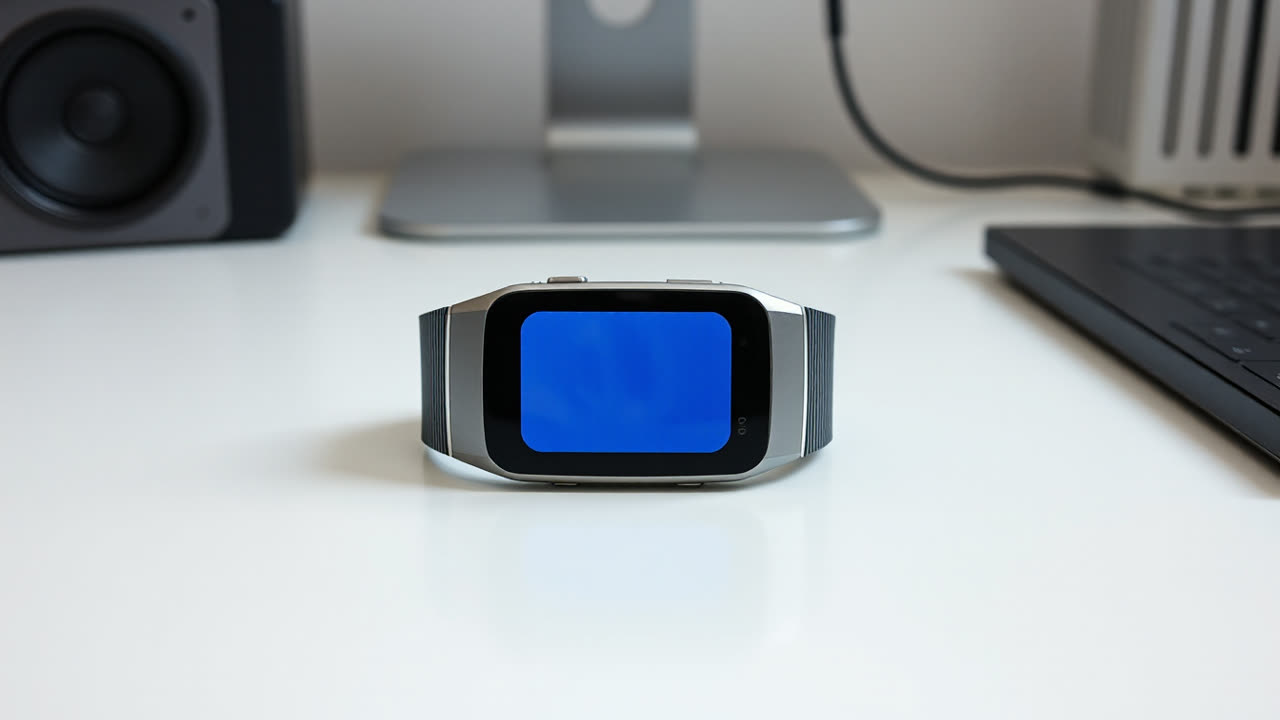
Google's strategic re-entry into the crucial mid-range fitness tracker market is now definitively marked by the leaked Fitbit Edge, a device poised to succeed the long-dormant Charge line and fill a critical void in the company's wearable ecosystem. Exclusive images and details, prominently featured by Android Headlines on October 4, 2026, confirm the existence and key specifications of this new tracker, revealing a thoughtful blend of advanced fitness capabilities and select smart features. Expected to launch this month with an estimated price range of $149 to $199, the Edge is designed to carve out a distinct identity between the screen-less Fitbit Air and the full-fledged Pixel Watch 5.
The Fitbit Edge presents a sleek, elongated form factor, featuring a bulbous, oval color display that draws aesthetic cues from the Pixel Watch 5 but adapts them to a slimmer, band-style design. Available in colors matching the Pixel 11 Pro series—Obsidian (black), Olive (green), and Canyon (orange)—the device underscores Google's commitment to a cohesive hardware aesthetic across its product lines. Beyond its appearance, the Edge boasts impressive functional specifications: up to seven days of battery life, directly matching the Fitbit Air and significantly outperforming the Pixel Watch 5. It integrates precise, reliable built-in GPS, an altimeter for elevation tracking, and automatic activity recognition, positioning it as a robust tool for dedicated fitness enthusiasts. Crucially, the Edge will support a limited but highly practical set of Google applications, including Google Maps, YouTube Music controls, and Find My Phone, enhancing its utility without overwhelming users with smartwatch complexity. The inclusion of metal strips on its sides also suggests potential for ECG readings, further solidifying its health monitoring capabilities.
This launch is more than just a product release; it's a calculated move to solidify Google's multi-tiered wearable strategy and capture a rapidly expanding segment of the market. For users, the Fitbit Edge addresses a long-standing desire for a device that offers comprehensive fitness tracking with a screen and essential smart features, without the bulk, cost, or daily charging demands of a premium smartwatch. The Charge 6, Google's last mid-range tracker before the Edge, was released in 2023 and, despite being lauded as the "best overall" fitness tracker in early 2026, was due for a successor. The Edge’s seven-day battery life, in particular, stands as a significant advantage over smartwatches like the Pixel Watch 5, which offers considerably less. Furthermore, its compatibility with both Android and iOS devices ensures a broad appeal, unlike the Android-exclusive Pixel Watch line. This inclusivity is vital for capturing a wider user base that might not be fully entrenched in Google's mobile ecosystem.
From an industry perspective, the Fitbit Edge allows Google to fiercely compete in the mid-range fitness tracker market, a segment projected to expand at a compound annual growth rate of 18.04% between 2026 and 2035. This tier is increasingly attractive to consumers seeking genuine analytical value and comprehensive health insights without the premium price tag of a full smartwatch. The Edge’s positioning directly challenges rivals like Garmin’s Vivosmart series and Xiaomi’s Mi Bands, offering a more integrated Google experience than the former and potentially more advanced health tracking than the latter. Its feature set also bridges the gap between the minimalist Fitbit Air, launched in May 2026 as a screen-less, continuous health monitor, and the advanced Pixel Watch 5. This strategic differentiation prevents cannibalization within Google's own portfolio while maximizing market coverage.
The decision to equip the Edge with a specialized Fitbit OS rather than full Wear OS, as indicated by leaks and its cross-platform compatibility, is particularly insightful. While Google has been actively integrating Fitbit's health expertise into Wear OS for its premium smartwatches since the 2021 acquisition, it appears the company recognizes the value of maintaining a distinct, power-efficient operating system for its fitness-first devices. This allows the Edge to deliver its impressive battery life and focused fitness experience without the higher processing and power demands of a full smartwatch OS. The device will likely pair with the Google Health app, which replaced the Fitbit app in May 2026 and now includes an AI-powered Health Coach driven by Gemini, offering personalized insights and guidance. This integration highlights Google's broader strategy of leveraging AI and ambient computing to enhance health and wellness monitoring.
Looking ahead, the Fitbit Edge is a crucial piece in Google's evolving wearable puzzle. It signals a clear commitment to the Fitbit brand, assuring users that the acquisition was not solely about absorbing technology into the Pixel Watch line, but also about cultivating a diverse portfolio that caters to varying user needs and price points. The success of the Edge will likely influence future iterations of both Fitbit trackers and potentially even inform the direction of more fitness-centric Wear OS developments. As the global fitness tracker market continues its rapid expansion, fueled by increasing health awareness and technological advancements, Google's timely introduction of the Fitbit Edge positions it strongly to capture a significant share, further embedding its AI-driven health ecosystem into the daily lives of millions. This launch is not just about a new device; it’s about Google's long-term vision for ambient health intelligence on the wrist.