Google's Gemini 3.5 Transcribe Automatically Filters 'Ums' and 'Ahs', Recognizes Jargon
Google's latest AI transcription service, Gemini 3.5 Transcribe, significantly enhances audio processing by removing verbal fillers and accurately capturing specialized terminology across over 85 languages.
✨ This content was summarized and interpreted by AI; it may contain errors — please verify accuracy with the original sources. Learn more
Listen to this story
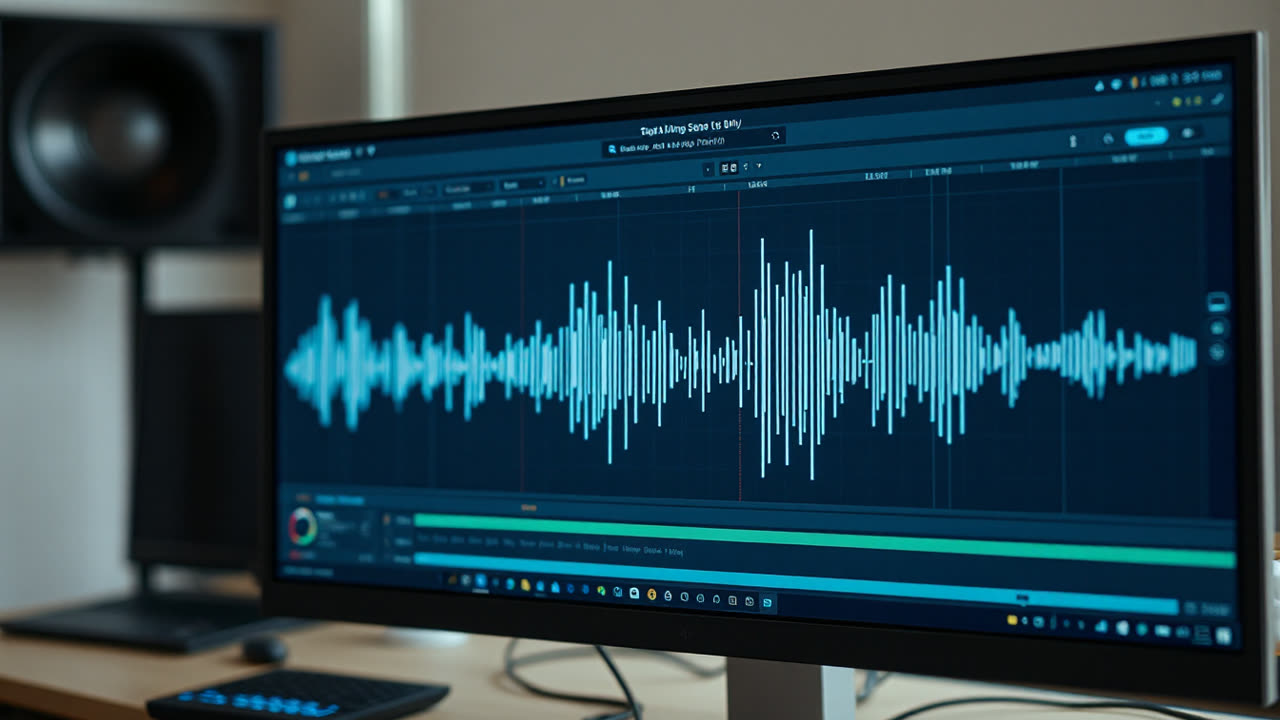
Google has significantly advanced its artificial intelligence transcription capabilities with the introduction of Gemini 3.5 Transcribe, a new service engineered to automatically filter out verbal fillers like "ums" and "ahs" while accurately recognizing specialized jargon across more than 85 languages. This latest addition to the Gemini family, following the recent launch of Gemini 3.5 Live Tr, marks a critical evolution in how digital audio is processed, moving beyond mere word-for-word conversion to offer a polished, more readable transcript.
The immediate impact on users is profound, particularly for professionals in media, education, and corporate communications who rely on accurate and clean transcriptions. Content creators, podcasters, and journalists often spend considerable time manually editing out conversational clutter from interviews and recordings. Gemini 3.5 Transcribe promises to dramatically reduce this post-production effort, delivering a more concise and professional output from the outset. For instance, a researcher transcribing a technical interview will find scientific or industry-specific terminology correctly captured, rather than being misinterpreted or flagged as errors, a common pitfall for less sophisticated models. This accuracy extends to multilingual environments, enabling seamless transcription of global meetings or international content without requiring manual language switching or multiple passes. The system’s ability to handle over 85 languages means a broader range of global users can benefit from high-quality, AI-powered transcription, fostering greater accessibility and cross-cultural communication.
From an industry perspective, Google's move intensifies the competitive landscape in the rapidly growing AI transcription market. Companies like OpenAI, with its highly regarded Whisper model, and established players such as Amazon Transcribe, Microsoft Azure AI Speech, Otter.ai, and Descript, have been vying for market share with varying degrees of accuracy, language support, and feature sets. OpenAI's Whisper, for example, is renowned for its robust performance across multiple languages and its open-source availability, which has fostered a large developer community. However, Google's explicit focus on "ums" and "ahs" removal and specialized jargon detection directly addresses pain points that many generic transcription services still struggle with. While other platforms offer some level of filler word removal, Gemini 3.5 Transcribe's integration with the broader Gemini ecosystem suggests a deeper, more context-aware processing capability, potentially leveraging Google's vast language models for superior understanding. This specialized refinement elevates the utility of transcription from a raw data output to a more refined, ready-to-use asset, directly challenging rivals to enhance their own post-processing and contextual understanding features.
The lineage of Gemini 3.5 Transcribe is rooted in Google's ongoing advancements in conversational AI and real-time processing. The preceding Gemini 3.5 Live Tr, launched earlier, focused on real-time transcription, enabling immediate text conversion during live events or conversations. Gemini 3.5 Transcribe builds upon this foundation by adding a layer of intelligent post-processing and refinement, moving beyond the immediacy of live transcription to deliver a more polished, edited final product. This two-pronged approach allows Google to cater to both instantaneous transcription needs and scenarios requiring high-quality, edited transcripts. Compared to prior generations of Google's own audio transcription services, which often required manual intervention for jargon correction or filler word removal, Gemini 3.5 Transcribe represents a significant leap in autonomous refinement. The integration of advanced Gemini models implies a more nuanced understanding of speech patterns, context, and intent, leading to fewer errors and a more natural-sounding text output.
Looking ahead, the implications of Gemini 3.5 Transcribe extend beyond mere convenience. This technology paves the way for more sophisticated AI-driven content generation and summarization tools. Imagine AI models capable of not only transcribing a lengthy meeting but also autonomously generating executive summaries, action items, and even draft reports, all free of conversational detritus. This could fundamentally alter workflows in corporate environments, reducing the need for human note-takers and freeing up valuable time for strategic tasks. Furthermore, the enhanced accuracy in specialized jargon detection will accelerate AI's utility in highly technical fields such as medicine, law, and engineering, where precise terminology is paramount. The next logical step for Google and its competitors will likely involve even deeper semantic understanding, perhaps allowing the AI to identify speaker sentiment, prioritize key discussion points, or even translate and transcribe simultaneously with contextual accuracy. As AI models continue to grow in complexity and understanding, the distinction between human-edited and AI-generated transcripts will become increasingly blurred, pushing the boundaries of what is considered an "original" document in the digital age. This ongoing evolution will not only refine existing applications but also unlock entirely new possibilities for human-computer interaction and knowledge management.