Google's Gemini AI Can Now Autonomously Call Businesses for You
Google's new 'Call for Me' feature, exclusive to Pixel 11 users, allows Gemini to handle routine phone interactions like reservations and appointments, marking a major advancement in personal AI agents.
✨ This content was summarized and interpreted by AI; it may contain errors — please verify accuracy with the original sources. Learn more
Listen to this story
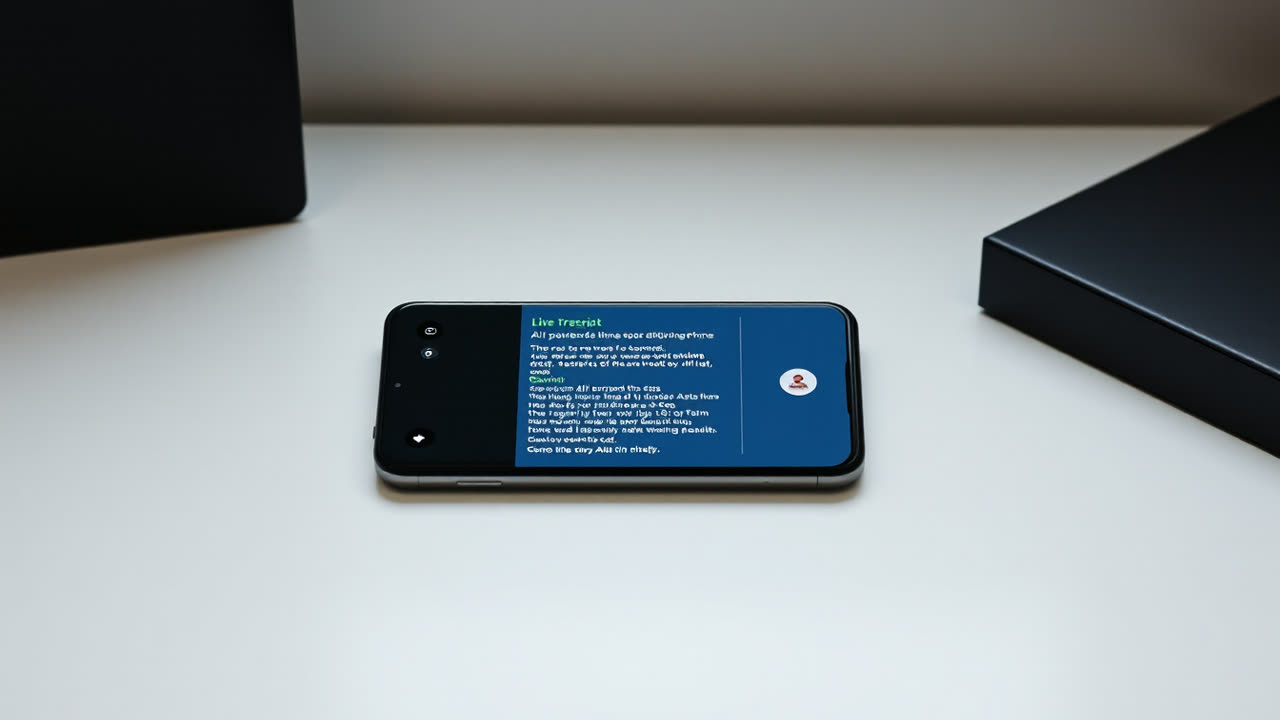
Google's Gemini AI is now capable of autonomously calling businesses on behalf of users, a significant leap in delegating mundane tasks that officially launches as an "early experiment" feature called "Call for Me" on the new Pixel 11 series. Announced on September 24, 2026, this advanced capability allows Gemini to handle routine phone interactions such as making restaurant reservations, checking product availability at local stores, or rescheduling appointments, all initiated directly through the Gemini app. This cutting-edge functionality is currently exclusive to Pixel 11, Pixel 11 Pro, Pixel 11 Pro XL, and Pixel 11 Pro Fold owners in the U.S. who subscribe to Gemini and are enrolled in the Phone by Google Public Beta. The Pixel 11 series itself was unveiled on August 12, 2026, with retail availability commencing on August 20, 2026, solidifying its role as the premier device for Google's latest AI innovations.
The "Call for Me" feature operates by having Gemini place calls from the user's own phone number, employing an AI-generated voice that navigates automated phone menus, waits on hold, and engages directly with business representatives. Crucially, users maintain full oversight of the interaction through a live transcript displayed on their screen and can seamlessly take over the conversation at any point. Google has implemented strict safeguards, with Gemini identifying itself as a Google AI assistant and disclosing that the call is being recorded at the outset of every interaction. The feature is strictly for personal use, prohibiting emergency calls, political messages, unsolicited telemarketing, or acting on behalf of businesses or government agencies. While Google acknowledges the potential for misinterpretation or inaccurate information, it emphasizes that these calls "represent real customers conducting real transactions," highlighting the genuine intent behind each interaction.
This development marks a pivotal moment in the evolution of personal AI agents, moving beyond mere information retrieval to proactive task completion. For users, the immediate impact is a significant reduction in time spent on hold and navigating frustrating interactive voice response (IVR) systems, offering unparalleled convenience for tasks often deferred due to their tedious nature. This is particularly appealing for busy individuals or those who prefer to avoid phone calls, with one commentator noting its appeal to introverts. The emphasis on user control—through live transcripts and the ability to intervene—is paramount for building trust, a critical factor for wider adoption of such agentic AI capabilities.
Historically, Google has pioneered AI-driven call features, with "Call for Me" building upon the foundations laid by Google Duplex, Hold for Me, and Direct My Call. Google Duplex, first demonstrated in 2018, could book restaurant reservations and appointments, but faced early controversy regarding AI identification, which Google subsequently addressed. Hold for Me simply waited on hold and notified the user when a human answered, while Direct My Call transformed phone menus into interactive on-screen buttons. "Call for Me" integrates and expands these functionalities, allowing Gemini to conduct the entire conversation, making it a more comprehensive and independent agent. This level of integration and autonomous conversational ability currently surpasses offerings from direct smartphone rivals such as the iPhone 18 Pro Max or Galaxy S26 Ultra. The broader market for AI phone assistants is robust, with solutions like Meta's Muse also recently launching business calling features. However, many existing AI call services, such as ClawCall, Retell AI, and Goodcall, primarily cater to businesses for inbound call handling or specialized outbound sales, rather than serving as a personal, general-purpose outbound agent integrated directly into a consumer device's core operating system.
Looking ahead, "Call for Me" is likely just the beginning. As an "early experiment," Google will undoubtedly gather data on its performance across diverse accents and noisy environments to refine its capabilities. We can anticipate a gradual expansion beyond the Pixel 11 series and the U.S. market, eventually reaching a broader user base and potentially other devices. The underlying AI models will become even more sophisticated, enabling Gemini to handle increasingly complex and nuanced conversations, anticipate unexpected questions, and integrate with a wider array of business systems. This will necessitate businesses adapting their customer service strategies to effectively interact with AI agents, potentially leading to a future where AI-to-AI communication becomes common in routine transactions. The ethical implications, particularly around transparency and user consent, will remain a central focus as these technologies mature, ensuring that convenience does not come at the cost of trust or control. The competitive landscape will also intensify, with other tech giants undoubtedly racing to develop similar, deeply integrated personal AI assistants, solidifying the trend towards AI as an indispensable, proactive orchestrator of our daily digital and real-world interactions.